






Washington – Said Arikat – 20/4/2026
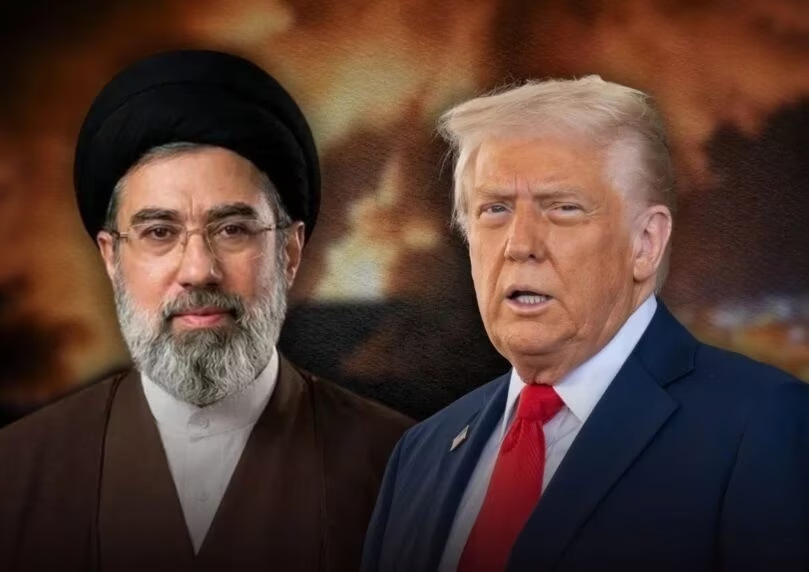
US President Donald Trump said on Monday that he "does not object" to meeting Iranian leaders, expressing confidence that the anticipated talks between Washington and Tehran would proceed in Islamabad, even though Tehran has not yet decided on its participation. Trump's statements came at a highly sensitive moment, coinciding with an escalation in naval confrontation and the approaching end of the fragile ceasefire between the two parties.
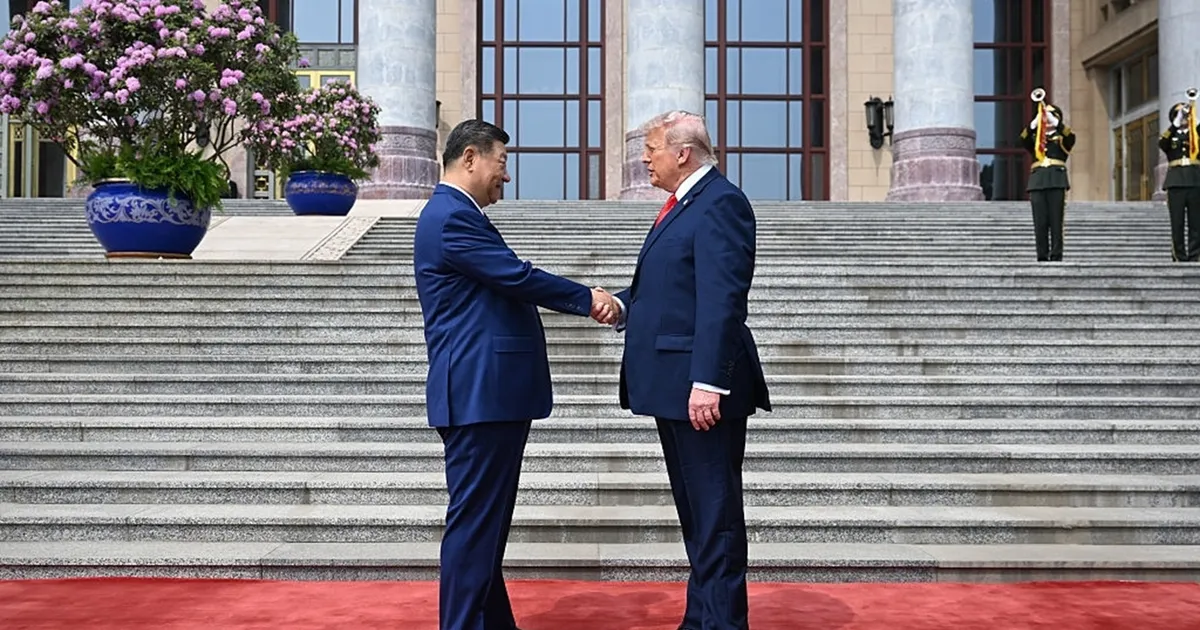
In an interview with the New York Post, Trump said he would not object to meeting the Iranian leadership if they wished, adding that he has "very competent people" to negotiate. However, this conciliatory tone seemed to contradict escalating field policies pursued by Washington at the same time, reflecting a familiar duality in international crisis management.
In contrast, the United States had fired upon and detained an Iranian cargo ship as part of its blockade of Iranian ports, prompting Tehran to threaten retaliation. Trump had also previously threatened to destroy Iranian infrastructure, including bridges and power plants, if Tehran did not agree to a new deal. Between the rhetoric of threat and the rhetoric of openness, the American message appears confused, even lacking strategic coherence.
Iranian Foreign Ministry spokesman Ismail Baqaei announced that his country had not yet made a decision regarding participation in Tuesday's round, stressing that Tehran would not change its stated demands and would not accept a policy of deadlines or ultimatums. He added that the United States talks about diplomacy but engages in behavior that contradicts any serious negotiation.
For his part, Iranian President Masoud Pezeshkian expressed initial support for the idea of negotiation, but stressed that dealing with Washington must be done with extreme caution, considering that sanctions and the blockade prove that the United States is reproducing previous patterns of "betrayal of diplomacy," according to Iranian official media.
Islamabad talks gain special importance because they come just one day before the end of the two-week ceasefire in the ongoing war between the United States and Israel on one side, and Iran on the other. The absence of Israel from these talks, despite being a key party to the conflict, raises serious questions about the utility of any understandings that might result.
In this context, Pakistan appears determined to make the meeting a success, having intensified its contacts with both the American and Iranian sides, and deployed about twenty thousand police, paramilitary forces, and army personnel in and around the capital. It also imposed extensive security measures and traffic restrictions in Islamabad and Rawalpindi.
Pakistani Interior Minister Mohsin Naqvi met with US Chargé d'Affaires Natalie Baker, where the two sides discussed security arrangements and strengthening bilateral relations. Baker, according to official statements, praised Pakistan's role in de-escalating regional tensions and facilitating dialogue.
Later, Reuters quoted a senior Iranian official as saying that Tehran was "positively considering" participating in the talks, but he stressed that no final decision had been made. He also confirmed that Iran's missile program and defensive capabilities are not on the table for negotiation, meaning that one of Washington's most prominent demands remains outside the discussion.
However, the broader picture indicates that the crisis goes beyond a mere disagreement over a negotiating agenda. The American administration seeks to impose an equation based on military pressure and economic blockade, then demand that the opposing party sit at the table under unequal terms. This formula has proven its limited effectiveness over past decades, especially with countries that consider their national security non-negotiable.
Trump's statements once again reveal a personal tendency in managing American foreign policy, where complex issues are reduced to the president's mood and daily statements. Instead of a clear institutional strategy, relations with Iran seem hostage to conflicting media messages: threat in the morning, openness in the evening. This pattern not only confuses adversaries but also weakens the trust of allies, making any negotiating path fragile from its inception. Successful diplomacy requires clarity and continuity, not political improvisation governed by American domestic calculations and media showmanship.
Washington insists on presenting itself as a mediator and peacemaker, while at the same time continuing to use tools of blockade and naval power. This contradiction empties American discourse of its credibility, because those who impose economic strangulation and detain ships cannot easily claim neutrality or good faith. Perhaps the deeper problem is that the United States still deals with the Middle East with a dictatorial mindset, ignoring that regional power balances have changed, and that deterrence tools are no longer exclusive to one party as they once were.
The choice of Islamabad as the venue for the talks reflects a growing trend towards moving crisis management away from traditional Western capitals. But it also reveals Washington's declining ability to bring adversaries under its direct umbrella. When the United States needs regional mediators to facilitate dialogue with its adversary, this is an indicator of the erosion of its political influence, even if its military superiority remains. Should this round fail, it will solidify the image of a superpower that possesses weapons but is unable to produce stable settlements.

Share your opinion
Trump Does Not Object to Meeting Iranian Leaders, Confusion Over Fate of Negotiations