







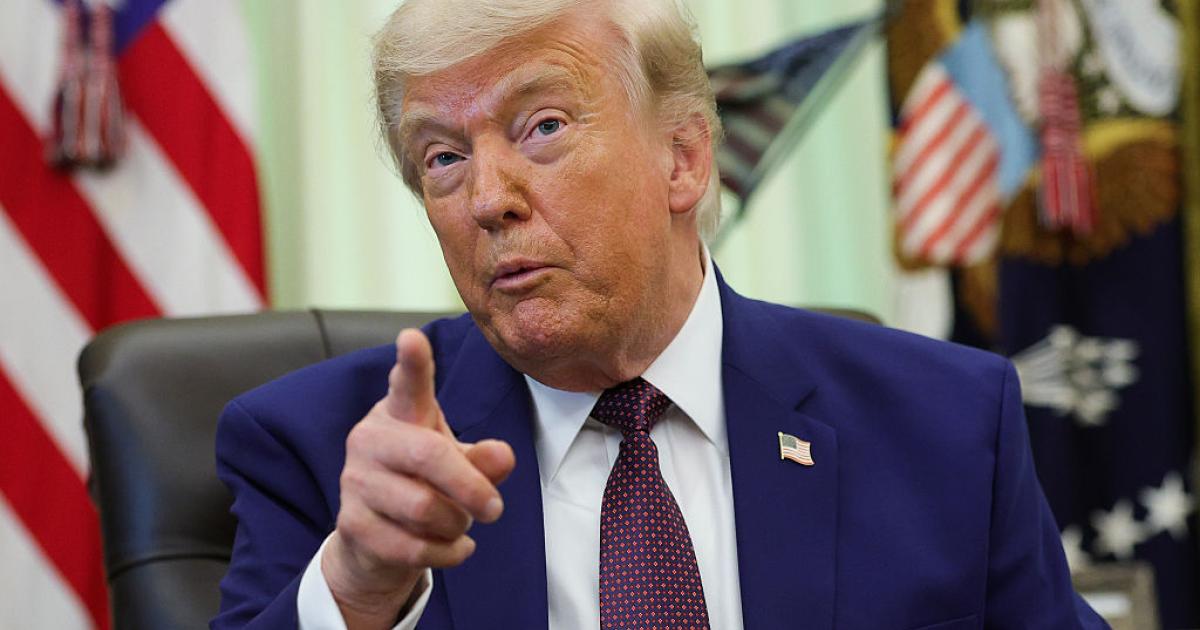
The personality of US President Donald Trump dominates the international scene with his volatile mood and tendency towards hegemony, which directly reflects on production relations and international markets. Observers believe that Trump's approach represents the culmination of a path started by his predecessors to employ superior American military power in the service of direct economics, which has undermined the rules and treaties upon which the international system has been built since World War II.
In the context of geopolitical shifts, the relationship with the Zionist entity stands out as the sole exception to the stability of American policy, as it becomes clearer day after day that Trump's rise is a product of the growing influence of Zionist lobbies. This system, characterized by greed and dominance, found in Trump's racist and authoritarian personality an ideal tool to implement its expansionist agendas in the region without international restrictions or controls.
Historically, the Lebanese arena has been a primary target for American adventures, with military and political interventions recurring since 1958 to support pro-Washington authorities. Significant milestones such as the 1982 invasion and the 2006 aggression witnessed strenuous American attempts to translate Israeli military gains into internal political coups that would ensure Beirut's subservience to American decisions.
In recent developments, sources revealed that Trump, under Zionist pressure, backed down from including Lebanon in the regional ceasefire decision announced on April 8th. This decision comes at a time when Washington, through side agreements, authorized the Israeli enemy to continue military operations despite the Resistance's unilateral commitment to a ceasefire.
The United States is currently managing a well-crafted plan that includes political, media, and security aspects, aimed at enabling the occupation to achieve its strategic goals in Lebanon. This plan primarily seeks to eliminate the Resistance and transform the country into an Israeli protectorate under direct American supervision, in a repetition of scenarios after the 1983 invasion and the May 17th agreement.
American efforts, in cooperation with regional and local parties, have led to tangible changes in the structure of Lebanese authority, including the presidency and the composition of the government. These new balances aim to create a political environment consistent with American and Israeli conditions, weakening the state's ability to uphold its sovereign elements of strength in the face of external threats.
The features of the American-Israeli vision for Lebanon were clearly evident in the corridors of the US State Department recently, where the focus was on the necessity of stripping Lebanon of the right to resistance. Washington is striving to deny the Lebanese people's right to liberate their land and is working to impose a political reality that prevents the exercise of full sovereignty over all Lebanese territories.
In contrast, the official authority in Lebanon entered negotiations in a position described as weak, lacking any internal or external elements of strength to support its stance. The authorities invoked a request for a ceasefire that was practically rejected, reflecting a state of confusion in managing the negotiation file amidst increasing international pressures.
Washington exploited the crisis of Lebanese representation and the debate over Tehran's role in negotiations to justify Lebanon's exclusion from regional de-escalation, which fully serves Israeli interests. This scenario was not accidental but rather the fruit of a conspiratorial path that began with imposing external guardianship and reconstituting the executive authority to meet the occupation's security demands.
The positions of some local forces align with these schemes, openly calling for reliance on the American plan to reconsider Lebanon's system and regional position. This conflict extends beyond Lebanese borders to include confronting Iran's influence as a force opposing American projects, in an attempt to decide the fate of the entire region in favor of the aggressive alliance.
In conclusion, Lebanon remains a key link in the chain of resistance that has always confronted projects of hegemony and occupation, achieving significant field and political accomplishments. Despite the magnitude of sacrifices and grave responsibilities, observers believe that the growing Zionist influence in Washington may be the most prominent indicator of the beginning of the American empire's crack and the collapse of its global influence.
Trump's rise and his approach are the fruit of the growing role and influence of Zionist lobbies in the most powerful country in the world, where American policies have become fully aligned with the agenda of the extreme Israeli right.
Share your opinion
The American Strategy in Lebanon: From the Exception of De-escalation to Attempts to Impose Guardianship