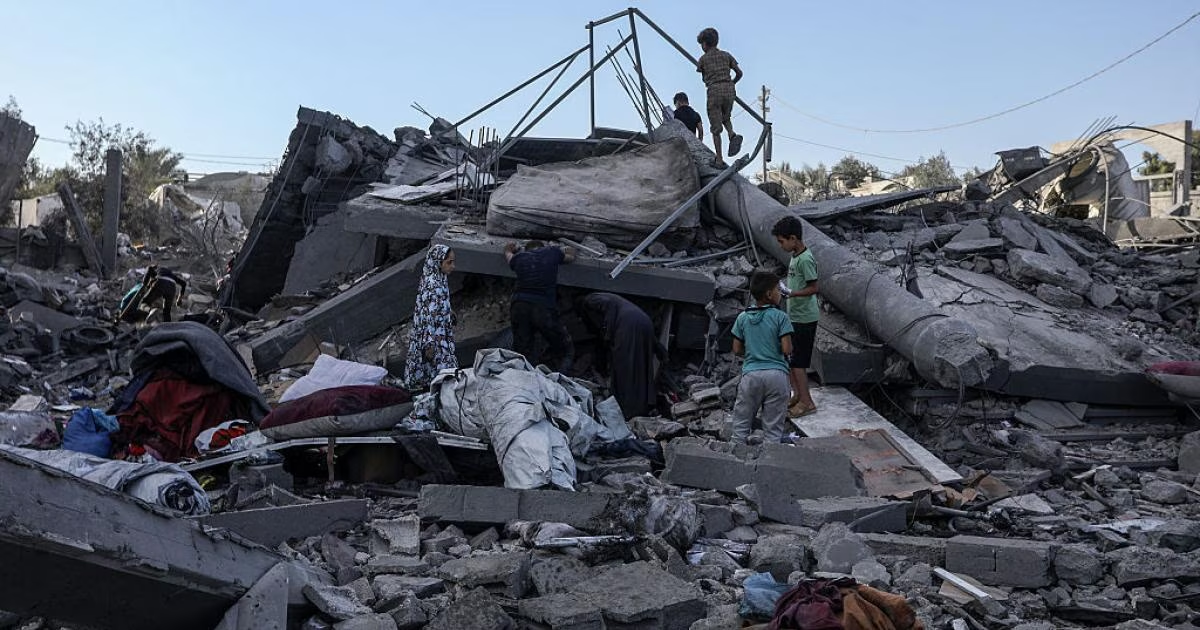







The Egyptian capital, Cairo, hosted an extensive meeting that included high-level officials from the mediating countries, namely Egypt, Qatar, and Turkey, along with representatives from Palestinian factions. The discussions focused on formulating a practical roadmap aimed at completing the implementation of the ceasefire agreement in the Gaza Strip and overcoming obstacles hindering the path to calm.
Informed sources reported that the meeting saw the participation of the head of the Egyptian General Intelligence Service, Minister Hassan Rashad, and the Prime Minister and Minister of Foreign Affairs of Qatar, Sheikh Mohammed bin Abdulrahman Al Thani, in addition to the head of Turkish Intelligence, Ibrahim Kalin. The attendees sought to coordinate regional efforts to push ongoing negotiations towards implementing the second phase of the framework agreement.
The statement issued after the meeting described the atmosphere as 'positive,' with a consensus among the participating parties on the necessity of adhering to the outcomes of the Sharm El Sheikh Peace Summit. Participants also expressed their appreciation for Egypt's pivotal role and the intensive efforts made by all concerned parties to end the humanitarian suffering in the Strip.
The attendees emphasized the importance of all parties assuming their responsibilities to ensure the achievement of sustainable calm, which paves the way for the initiation of large-scale reconstruction operations. Participants considered that the success of this roadmap would directly reflect on improving the deteriorating living conditions of Palestinians facing harsh circumstances.
These diplomatic moves come at a time when mediating parties are striving to break the stalemate that has affected the implementation of the Sharm El Sheikh agreement. Sources confirmed that there is insistence on completing the provisions of the peace plan proposed by US President Donald Trump, with a focus on a smooth transition between the different phases of the agreement.
In a related context, Egyptian Foreign Minister Badr Abdel Aty held a bilateral meeting with his Qatari counterpart, Sheikh Mohammed bin Abdulrahman Al Thani, in Cairo. The two sides discussed ways to enhance joint cooperation and coordinate positions on regional issues, emphasizing the priority of the Palestinian file and safeguarding Arab national security in light of current challenges.
During their meeting, the two ministers affirmed the necessity of implementing the requirements of the first phase of the proposed peace plan, which includes an immediate cessation of military operations. Both sides indicated that adherence to this phase is a cornerstone for moving to more advanced steps that ensure regional stability and the protection of civilians.
The requirements of the first phase, according to the proposed vision, include the entry of large quantities of humanitarian aid and early recovery supplies into all areas of the Strip. The plan also includes starting the rehabilitation of essential infrastructure and hospitals that have been severely damaged by ongoing military operations.
The proposed roadmap stipulates a gradual withdrawal of Israeli forces from populated areas in the Gaza Strip, to enable local authorities to resume their role. It also provides for empowering the National Committee for Gaza Administration to carry out its temporary administrative tasks from within the Strip to ensure the provision of basic services to the population.
Among the discussions, the idea of deploying an international stabilization force emerged, tasked with monitoring the ceasefire and ensuring that the agreement is not violated by any party. This measure aims to create a safe environment that allows the Palestinian people to exercise their right to self-determination, leading to the establishment of their independent state on the June 4, 1967 borders.
Hamas had sent a leadership delegation to Cairo earlier this week to engage in these technical and political discussions. Sources affiliated with the movement stated that the meetings aim to evaluate what has been achieved in the first phase and discuss mechanisms for an immediate transition to the second phase, which includes a broader exchange of prisoners.
The roots of the current agreement date back to the initiative announced by the US President in September 2025, which received initial acceptance from the concerned parties at the time. That initiative included a comprehensive ceasefire, a mutual release of detainees, with a guarantee of 600 aid trucks flowing daily to meet urgent needs.
Despite the Palestinian factions' commitment to the understandings of the first phase, field reports indicated violations and reneging on some commitments. This prompted mediators in Egypt, Qatar, and Turkey to intensify their pressure to ensure that the negotiation track does not collapse and return to a full-scale escalation.
The mediators hope that the current round of discussions in Cairo will lead to a specific and clear timeline for the implementation of all phases of the agreement without partiality. The ongoing bet is on the extent of the field parties' response to the international guarantees provided, and the ability of the mediators to bridge the remaining gaps in the withdrawal and reconstruction files.
The meeting discussed a proposed roadmap for completing the implementation of the agreement in a positive atmosphere, with the aim of achieving sustainable calm and reconstructing the Strip.

Share your opinion
Discussions in Cairo to Draw a Roadmap to End the Stalemate in the Gaza Agreement