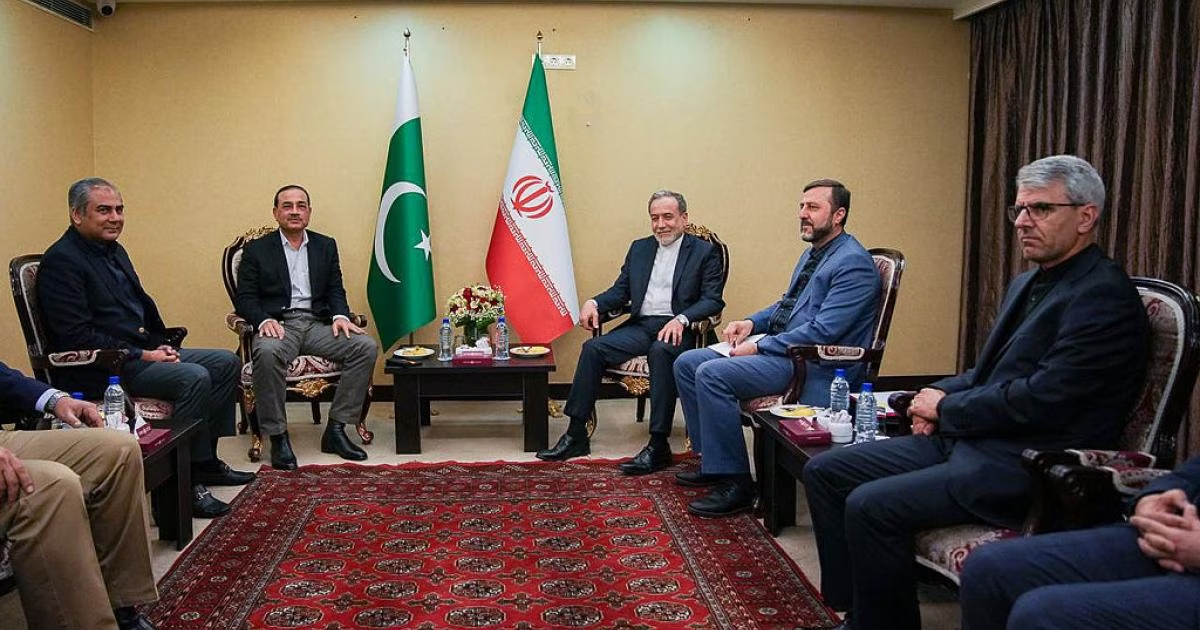







A high-ranking Iranian official revealed positive signs and relative progress in diplomatic efforts aimed at reaching a comprehensive agreement with the United States of America to end the ongoing state of war. The official clarified that this progress comes despite the persistence of thorny issues and fundamental disagreements that have not yet been resolved, foremost among them issues related to Iran's nuclear program, coinciding with more than half of the two-week temporary truce period having passed.
Informed sources reported that the visit of Pakistan's Army Chief, General Asim Munir, to the capital Tehran last Wednesday, played a pivotal role in overcoming some obstacles and narrowing the gap of disagreement between the two parties. These results have boosted hopes in political circles for the possibility of extending the current ceasefire, paving the way for the resumption of new rounds of direct or indirect talks in the coming phase to ensure regional stability.
In a related context, media sources in Tehran indicated that the Iranian side is keeping the details of the discussions held by the Pakistani Army Chief with Iranian officials under strict secrecy and extreme discretion. It appears that Tehran is operating from a position of strength in these negotiations, declaring its adherence to the diplomatic option as the sole means of resolving disputes, which Iranian President Masoud Pezeshkian emphasized in his recent statements regarding his country's commitment to de-escalation.
For its part, the Pakistani Ministry of Foreign Affairs reiterated Islamabad's full support for all efforts for peace and regional stability, following a round of negotiations described as important and sensitive. The Pakistani Foreign Ministry called on all concerned parties to adopt a positive spirit and respect all commitments arising from the current truce, considering that adherence to pledges is the only way to reach a permanent and sustainable settlement that ends the state of tension.
Amidst this intensive activity, the Pakistani Prime Minister is preparing for a high-level diplomatic tour starting from April 15 and continuing until April 18, which is scheduled to include official visits to the Kingdom of Saudi Arabia, the State of Qatar, and the Republic of Turkey. This tour aims to coordinate regional and international positions and mobilize the necessary support for de-escalation initiatives led by Pakistan in the region, ensuring broad political coverage for these moves.
Contacts made by the Pakistani Prime Minister with Saudi Crown Prince Mohammed bin Salman primarily focused on ways to ensure the success of mediation between Tehran and Washington. Islamabad praised Riyadh's leading role in containing regional crises, emphasizing that Saudi-Pakistani cooperation represents a fundamental pillar in attempts to defuse the major crises currently afflicting the region.
It is worth noting that this Pakistani diplomatic activity was not limited to regional countries but also included extensive contacts with officials from more than 20 countries, international powers, and global organizations over the past two weeks. Through this international mobilization, Islamabad seeks to promote the option of direct dialogue as an alternative to military confrontation, emphasizing that diplomacy is the most effective tool for achieving international security and peace under current circumstances.
Iran feels it has the upper hand in the current negotiations, and it is fully committed to the diplomatic path, as confirmed by President Masoud Pezeshkian.


Share your opinion
Pakistani Mediation Achieves Relative Progress in Negotiations Between Tehran and Washington