







The American-Israeli war on Iran entered its sixth week since its outbreak in late February, amidst increasing indications of the stalling of the 'shock and awe' strategy that Washington and Tel Aviv had relied upon. The plan aimed to paralyze the Iranian administration through targeted strikes against the leadership, betting on a sequential collapse of state institutions and a severe vacuum in the political and security decision-making center.
Field realities proved that the Iranian state did not enter the expected state of paralysis; instead, the first strike turned into a factor of comprehensive national mobilization. Instead of the regime disintegrating, Tehran showed a high capacity to absorb the shock and reposition itself, transforming the battle in popular consciousness from a political dispute into a battle for national survival and existence that transcends internal divisions.
The second failure in Western calculations was the bet on mobilizing separatist groups, especially in Kurdish areas, to open border breaches that would multiply pressure on the interior. However, Iranian border cohesion prevented the creation of a new field reality, and border cities remained under full control, which shattered the illusion of a 'short war' in which parties quickly collapse.
On the social level, the American-Israeli project collided with a hard truth: the vast majority of Iranians rejected external war. Despite political differences, the masses placed national sovereignty at the forefront of priorities, which thwarted attempts to mobilize the street to overthrow government institutions from within, described by observers as 'the suicide of hostile psychological and propaganda bets'.
Sources reported that the current military stalemate pushed the political and military minds in Washington and Tel Aviv to consider higher degrees of dangerous escalation. Talk of using tactical nuclear or chemical weapons emerges as evidence of the strategic impasse, as the attacking powers seek to compensate for their inability to achieve a conventional decisive victory through unprecedented destructive tools.
Meanwhile, Tehran continues to impose strict restrictions on navigation in the Strait of Hormuz, with clear exceptions granted to Chinese and Indian vessels. This measure aims to pressure the global economy while maintaining strategic alliances that ensure the flow of essential supplies, at a time when the Iranian leadership insists on receiving full compensation for war damages.
Iranian Supreme Leader Mojtaba Khamenei clearly threatened to confiscate the assets of 'enemies' if the required compensations were refused, a stance supported by Mohsen Rezaei, who conditioned the lifting of sanctions as an entry point for any political path. These demands reflect Iranian confidence in its ability to endure long-term and turn the burden of war into a heavy political and financial cost for the aggressor.
Internationally, the repercussions of the conflict began to appear clearly in energy and commodity markets, with gold reaching record levels in the Arab region, and the price of 21-carat gold in Egypt reaching 7150 pounds. This economic turmoil places additional pressure on the American administration, which faces increasing international criticism for targeting infrastructure and civilians in Iran.
China, for its part, prepared early for this crisis by strengthening its oil reserves and increasingly relying on local coal for the production of chemicals and fertilizers. Beijing has become a pivotal player in mitigating the impact of the blockade on its allies, while countries such as Vietnam and the Philippines have requested its assistance to cope with severe energy shortages resulting from the closure of waterways.
Regionally, Qatar demanded that Iran bear its legal responsibilities and pay compensation for damages, in an attempt to balance international legal positions. These demands are based on United Nations documents that define forms of reparation and compensation, although the United States still refuses to recognize the jurisdiction of the International Court of Justice in this context, considering it 'politicized'.
The shift from the logic of military decisiveness to the logic of 'expanding pain' on civil society reflects a clear strategic bankruptcy, according to analysts. A state that fails to achieve victory on the battlefield usually resorts to destroying the foundations of daily life, which creates a historical stigma without guaranteeing the achievement of the political goals for which the war erupted.
The war that Washington and Tel Aviv wanted to be swift and decisive has turned into an attrition that revealed the limits of material power against the will of peoples. The current experience has proven that Iran is not an 'easy target', and that betting on dismantling states through assassinations or economic pressures often leads to counterproductive results that increase the cohesion of the internal front.
Ultimately, the great strategic truth remains that wars are not decided solely by the military arsenal armies possess, but by the ability of nations to persevere. As the war enters its sixth week, Iranian will appears to have shown unexpected resilience, placing planners in Washington before choices, the least bitter of which is withdrawal or suicidal escalation.
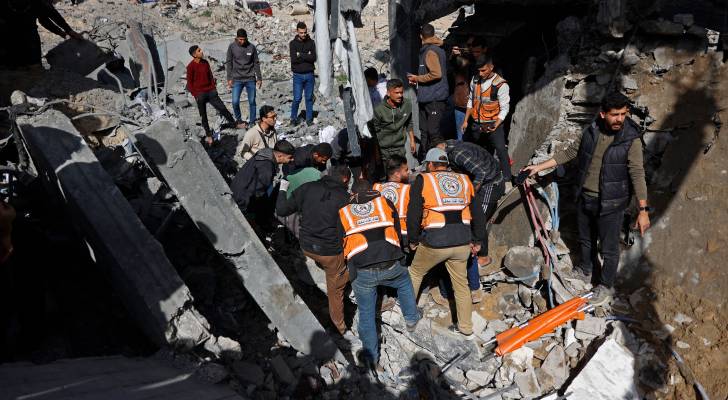
The scene remains open to all possibilities, with increasing warnings of the region sliding into an unconventional conflict that could change the face of the Middle East forever. As the fires continue to burn, civilians remain the weakest link in an international and regional conflict whose end does not appear to be near in the foreseeable future.
A war that begins on the basis of a mistaken perception of the nature of the adversary is doomed from the outset to produce adverse results.

Share your opinion
A Reading on the Stalling of 'Shock and Awe': Why Did American-Israeli Bets Fail to Break Iran?