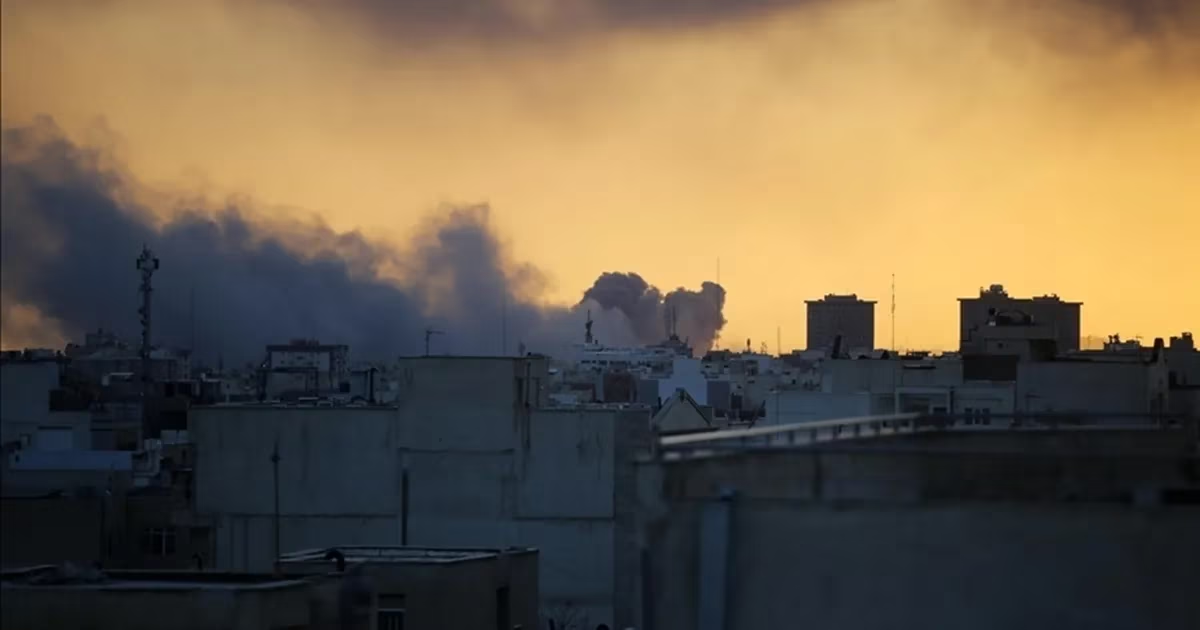







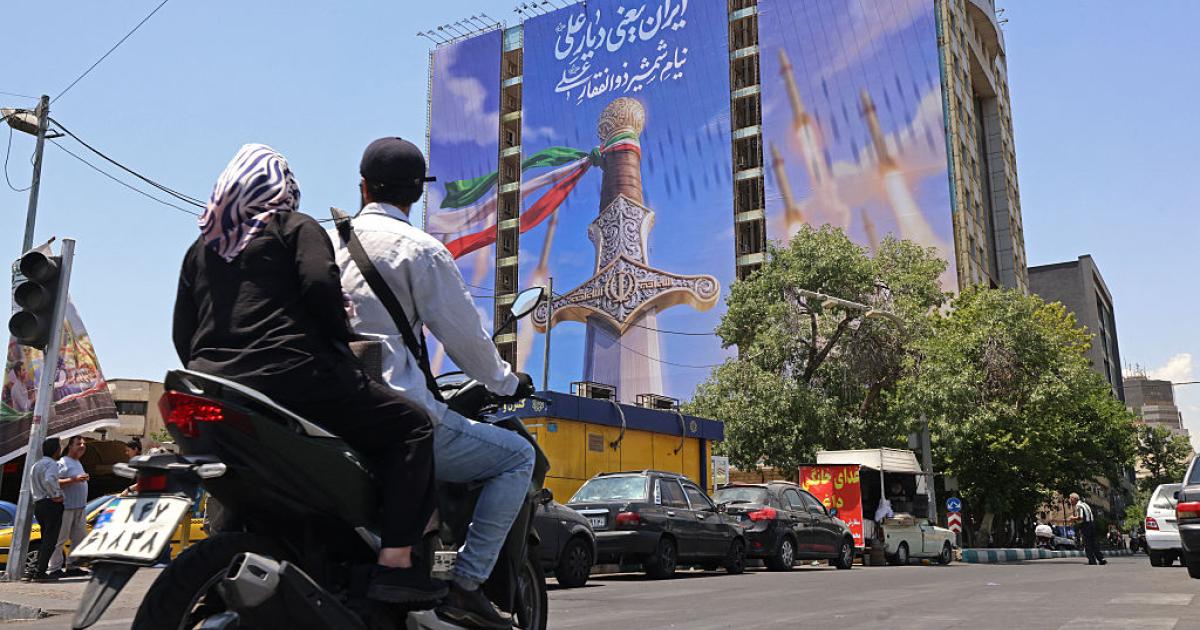
Johnny Gannon, a former CIA agent, affirmed that efforts to change the regime in Tehran face deep structural complexities, warning against being drawn into the idea that military force alone is sufficient to create sustainable political transformation. Gannon explained in an analytical article that there is a significant gap between achieving battlefield victories and reshaping the political culture of a country the size of Iran.
The former intelligence official, who spent more than two decades in covert operations, pointed out that Washington and its allies must avoid falling into the trap of political illusions. He considered that the ability to destroy targets from the air does not necessarily mean the ability to rebuild human and political structures from closed meeting rooms in the American capital.
In his reading of the Iranian internal situation, Gannon noted that the institutions of power, represented by the Revolutionary Guard and the army, remain largely cohesive, as their economic and existential interests are linked to the survival of the current regime. He believes that the tools of repression and control are still effective enough to thwart any immediate attempts at radical change from within.
The article touched upon the Gulf stance, explaining that the United States' partners, foremost among them the UAE, fear the repercussions of a 'wounded' Iranian regime that might resort to suicidal options. A long war could disrupt navigation in the Strait of Hormuz and threaten the security of investments in vital economic centers such as Dubai and Abu Dhabi.
Gannon warned that any ill-considered escalation could push Tehran towards using 'asymmetric response,' through proxies or cross-border covert operations. This scenario would place the region before an exorbitant cost that goes beyond mere direct military operations, threatening regional stability for many years.
Regarding the opposition, the author believes that the Iranian diaspora suffers from sharp divisions that prevent it from presenting a unified and acceptable alternative internally. He also pointed out that the 'Mujahedin-e Khalq' organization lacks the popular base and credibility necessary to lead a transitional phase within Iranian territory.
As for Reza Pahlavi, the son of the former Shah, Gannon explained that despite his widespread fame in Western circles, he lacks loyalty within Iranian security and military institutions. Without this loyalty, any talk of an actual transfer of power remains mere wishful thinking that finds no resonance on the ground.
The article emphasized the necessity for the United States to adhere to ethical standards to reduce risks to Iranian civilians, calling for a transparent investigation into the bombing incident of the 'Minab' school. He stressed that acknowledging error and apologizing if American responsibility is proven is essential to preserve what remains of goodwill among the Iranian people.
Gannon reviewed historical lessons, recalling the coups led by Washington in Iran in 1953 and in Guatemala in 1954, asserting that they proved the limits of covert action. While these operations can remove a specific leader, they rarely succeed in building political legitimacy or a stable system that enjoys popular acceptance.
The intelligence analyst warned that exceeding the stated goals of the current US administration could drag the region into a comprehensive regional war. He considered that the attempt to 'engineer' the Middle East through hard power has proven its repeated failure due to a misunderstanding of the complex nature of the balance of power in the region.
In conclusion of his analysis, Gannon called for adopting a strategy of 'strategic patience,' which relies on gradually weakening the regime's capabilities while reducing the pace of direct bombing. He believes that this path requires close coordination with regional allies who will be on the front lines to face any future consequences.
The article concluded that history teaches us that demolishing regimes is much easier than building their alternatives, and that change in Iran may eventually happen, but it must come from within. He stressed that the wisest course is to maintain smart pressures without sliding into military adventures with uncertain outcomes.
The challenge for Washington is how to capitalize on gains without falling into the illusion that pressure alone can lead to regime change.
Share your opinion
Former US Intelligence Agent Warns Against the Illusion of Regime Change in Iran Through Military Force