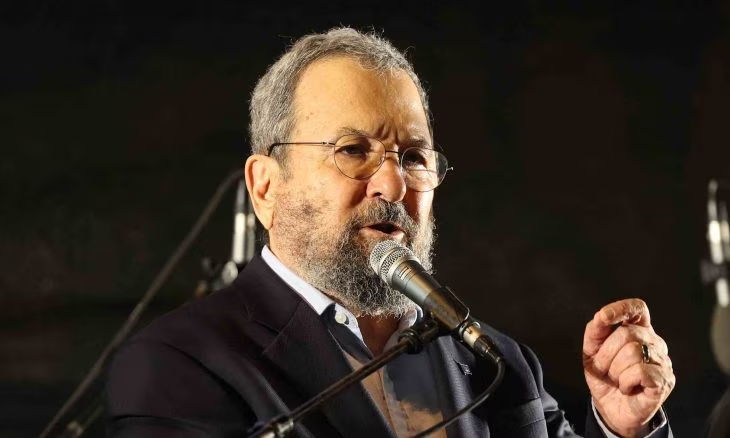







Former Israeli Prime Minister and Minister of Defense, Ehud Barak, launched a scathing attack on the current war management, asserting that joint military operations with the United States against Iran and Hezbollah have failed to achieve their core objectives. Barak explained that this failure is primarily due to the absence of a clear strategic plan and an absolute reliance on military force alone, without considering complex political realities.
In statements to Hebrew media, Barak indicated that expectations of the Iranian regime's collapse through aerial bombardment or the complete destruction of its nuclear project are mere 'wishful thinking' not based on solid reality. He considered that attempts to incite peoples to rebellion from abroad often lead to counterproductive results, as they grant those regimes additional legitimacy to confront what they describe as external aggression.
Barak criticized what he called the 'illusions' that prevailed in decision-making circles, especially regarding reliance on internal parties or minorities such as the Kurds to bring about change in Iran. He believed that these narrow calculations prevented any real breakthrough, despite the painful blows dealt to the Iranian regime recently.
Regarding the field situation, Barak supported military assessments indicating that Israel and the United States are in a stalemate in confronting Tehran, confirming the Iranian regime's resilience despite more than a month passing since the outbreak of direct confrontation. He expressed skepticism about the existence of a viable plan to seize enriched uranium or permanently secure navigation in the Strait of Hormuz.
The former official warned against the danger of being drawn into threats to destroy infrastructure within Iran, considering that such a step would have catastrophic repercussions for the entire region. He explained that the biggest loser would not only be Israel, but also the Gulf states, which would become direct targets for precise Iranian missiles targeting water and energy facilities.
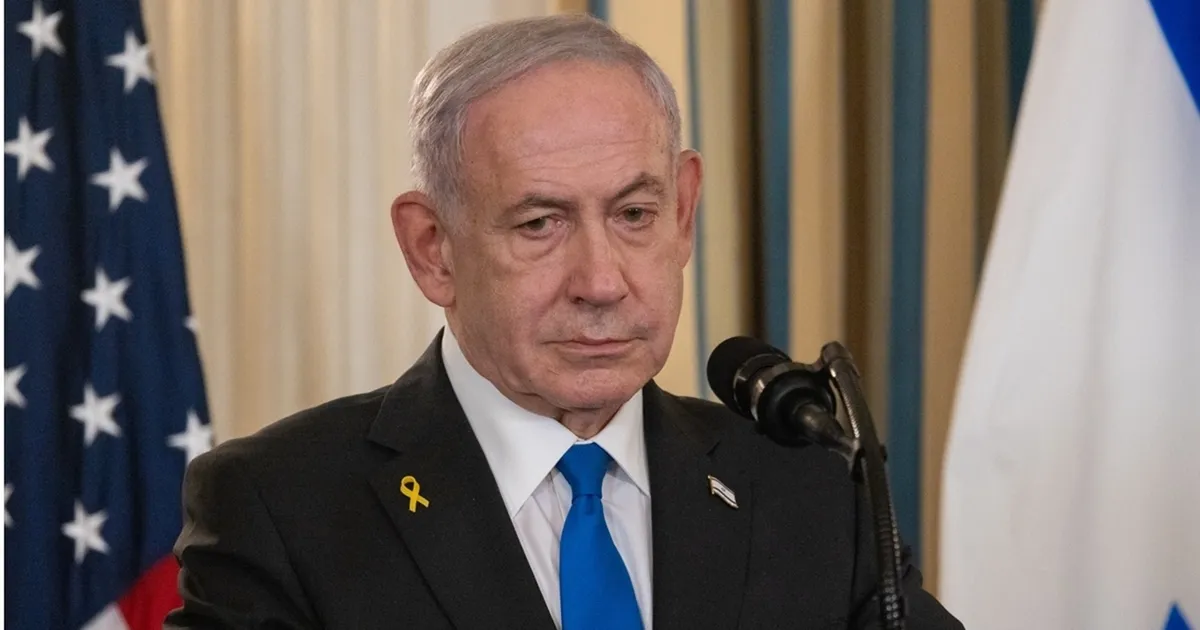
Regarding the northern front, Barak described the idea of 'security belts' in Lebanon, Syria, and Gaza as military 'nonsense' that does not achieve sustainable security. He stressed that forward defense must be coupled with a political path, which is lacking in the current approach led by Benjamin Netanyahu, whom he accused of thwarting all available opportunities for regional dialogue.
Barak emphasized that militarily dismantling Hezbollah is an unrealistic goal unless Lebanon is fully occupied, which does not seem feasible or logical under current circumstances. He called for the necessity of taking diplomatic proposals seriously instead of changing military objectives weekly without achieving tangible results on the ground.
Barak accused current Prime Minister Benjamin Netanyahu of trying to turn Israel into a new 'Sparta' that lives only by the sword, warning that this approach would lead to the state's isolation and its failure to manage its regional affairs. He called on Israelis to work to overthrow the current regime before the end of the war to save what can be saved.
On the other hand, extremist right-wing voices emerged demanding the escalation of military operations to the maximum extent, with National Security Minister Itamar Ben Gvir affirming his rejection of the army's positions calling for calm or withdrawal. Ben Gvir demanded the continuation of the war until the achievement of what he described as 'total victory' against Hamas and Hezbollah, no matter how long the conflict lasts.
Ben Gvir considered that the only solution lies in using 'intensive fire,' assassinating leaders, and imposing strict security belts, noting that the Israeli people have enough patience to achieve these goals. He also expressed his opposition to any ceasefire agreement at present, whether in Gaza or on the northern front.
In a related context, heads of settlements in the north called for intensifying strikes against Lebanese infrastructure as a means to subdue Hezbollah and force it to retreat. These individuals considered that any retreat in military objectives represents a 'slap' to the settlers who were displaced from their homes due to continuous shelling from southern Lebanon.
These debates come at a time when internal criticism is increasing in Israel against what observers describe as the 'arrogant language' of the political leadership. Analysts believe that promises of swift victories have evaporated in the face of continuous intensive rocket barrages launched from Lebanon and Iran towards Israeli territory.
Reports from informed sources indicate that the gap is widening between the military level, which understands the limits of power, and the political level, which insists on slogans of 'absolute victory.' This disparity puts Israel before difficult choices amid increasing international pressure to reach a formula that ends regional escalation.
In conclusion, the Israeli scene remains divided between a current that sees diplomacy and military realism as the only way out, and another current led by the far-right that sees the continuation of the war as existence and destiny. Between these two, military operations continue to claim more lives and destroy infrastructure without a clear horizon for a solution.
Fascist authoritarian regimes do not fall by bombs from outside, and relying on force alone without a political horizon is an illusion that leads to failure.



Share your opinion
Barak attacks war management: Strategic failure in Iran and Lebanon, and Netanyahu turns Israel into a new 'Sparta'