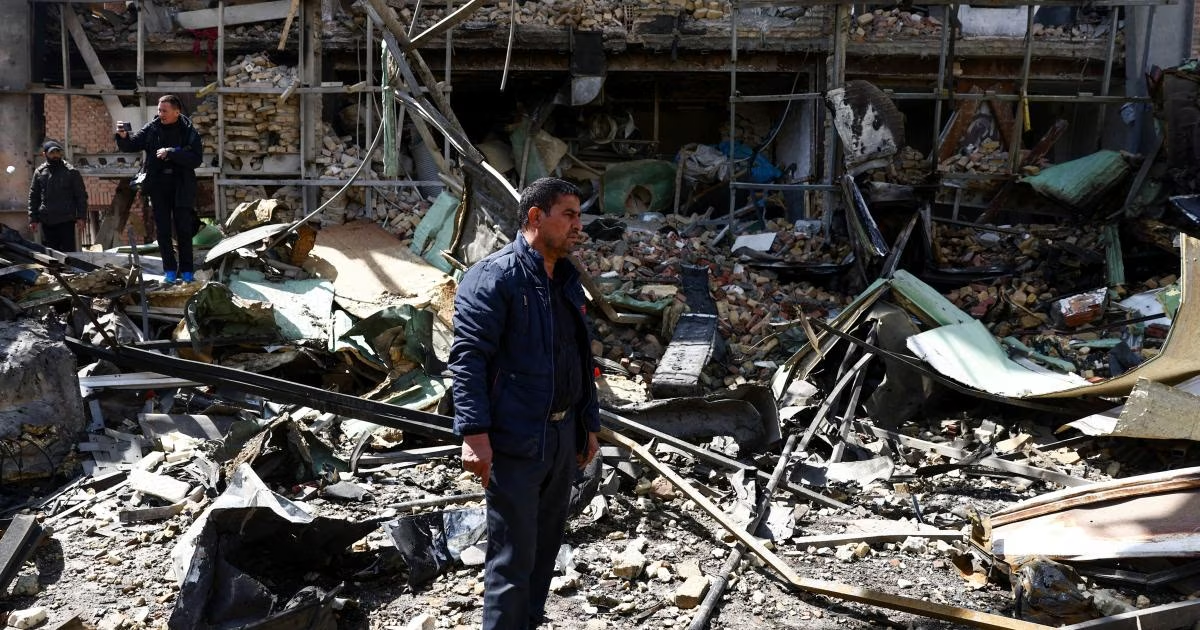







Iran's Minister of Science, Hossein Simaei Sarraf, announced that the country's academic institutions have faced a systematic targeting campaign since late February. During an inspection tour of Shahid Beheshti University in Tehran, the minister confirmed that at least 30 universities suffered direct strikes, resulting in severe material losses to educational infrastructure.
Media sources reported that Shahid Beheshti University, one of the most prominent academic institutions in the capital, was subjected to an attack that caused widespread destruction to its facilities. These statements come amid escalating military tensions that have affected scientific research centers and higher education institutions in various Iranian provinces in recent weeks.
For his part, the Secretary-General of the Iranian National Commission for UNESCO, Hassan Fartousi, revealed shocking figures regarding the extent of the targeting. Fartousi explained that the attacks affected approximately 160 points within university campuses across the country, noting that the destruction was not limited to administrative buildings but included entire faculties leveled to the ground.
The UNESCO official stressed that the bombing targeted specialized scientific laboratories involved in pharmaceutical manufacturing, reflecting a desire to sabotage scientific and educational capabilities. He issued an urgent appeal to the international community, scientists, and intellectuals to pay attention to what he described as a war targeting the mind and cultural infrastructure that serves humanity.
In a related context, official reports indicated that the aggression did not stop at educational institutions but extended to include global human heritage. More than 132 archaeological and historical sites were targeted, some of which are listed on UNESCO's World Heritage lists, threatening centuries of history in the region.
Among the most prominent affected landmarks is the historic Golestan Palace in Tehran, built more than two centuries ago and representing an important era of Iranian history. Strikes also hit sites in the city of Isfahan dating back to the Timurid era 600 years ago, where more than 23 cultural and archaeological buildings were damaged as a result of bombing near these sensitive areas.
The aerial targeting map included sites near the famous 'Falak al-Aflak' castle in Lorestan province, as well as tourist and heritage facilities in Kermanshah and Ahvaz. Authorities also recorded damage to the historic 'Siraf' port in Bushehr province, which observers considered a targeting of the historical and cultural identity of the region in general.
Fartousi strongly criticized the disregard for international laws that mandate military operations to maintain sufficient distances from protected archaeological sites. He affirmed that some airstrikes occurred at a distance of no more than 100 meters from invaluable historical landmarks, which constitutes a blatant violation of international agreements concerned with the protection of cultural heritage during conflicts.
The Iranian official concluded his statements by warning that the targeting of universities and historical sites in Iran represents a dangerous precedent that could extend to other regions of the world. He called on international academic and cultural institutions to take a firm stance against the destruction of facilities that represent the memory of peoples and the future of their scientific generations.
Universities and colleges do not have immunity, and human cultural heritage is now directly targeted in this war.
Share your opinion
Iran: 30 Universities and World Heritage Sites Targeted in US-Israeli Attacks