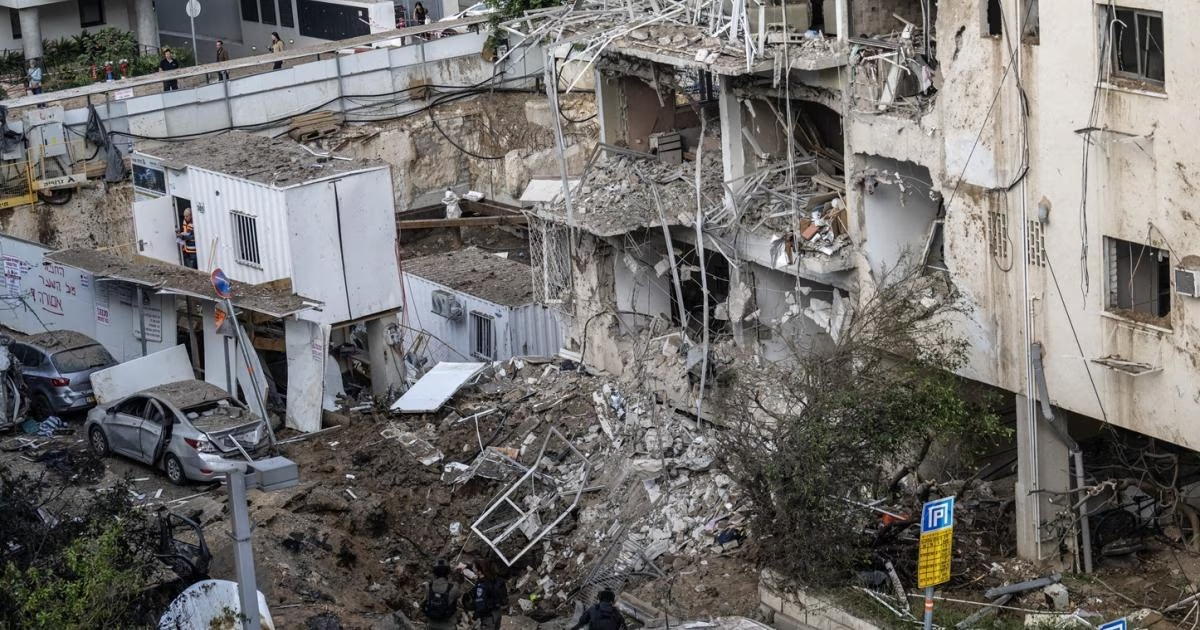







The greater Tel Aviv area witnessed a serious military escalation early this Saturday morning, as official sources reported that about 17 different sites suffered severe material damage. This damage resulted from the fall of cluster warheads from an Iranian missile targeting the area, causing a fire inside a residential apartment and damaging a number of buildings, infrastructure, and main streets.
In a related context, Magen David Adom ambulance crews confirmed that a 45-year-old man was injured in the city of Bnei Brak in the center of the country. Medical sources explained that the injury resulted from flying glass fragments due to the explosions, and he was transferred to the hospital for necessary treatment, with his condition described as minor.
The effects of the attack were not limited to the central region, as press reports stated that a fire broke out in a factory located in the Negev region in southern Israel after it was hit by a direct missile strike. Fire and rescue teams have been working since the early hours of dawn to contain the fire and prevent its spread to neighboring facilities in the industrial zone.
Field sources reported that rescue and police teams, in addition to explosives experts, are deployed in the affected sites to deal with missile remnants. The sources indicated that the use of cluster warheads in this attack doubled the area of destruction, reflecting a development in the nature of weapons used in the current confrontation.
In the Beersheba area, a missile directly hit a factory in the industrial zone located north of the Negev, causing a state of security alert. Despite the force of the explosion, technical reports confirmed that there were no concerns about the leakage of chemical or hazardous materials from the targeted facility, which reassured residents in the surrounding areas.
Media sources acknowledged the failure of air defense systems to intercept the missile, which managed to reach its target with high accuracy. Video clips documented the moment the missile split in the sky and its explosive fragments spread over residential neighborhoods and vital facilities, causing a state of panic among settlers.
The list of damaged sites included direct hits on residential buildings in the Ras al-Ain area, in addition to widespread damage recorded in Ramat Gan and Givatayim. Competent authorities also monitored the fall of fragments and missiles in the Petah Tikva area, where vehicles and public property were damaged by falling fragments.
Haifa and Nahariya in the north had been subjected to similar attacks on Friday evening, where material damage occurred as a result of simultaneous missile launches from the Iranian and Lebanese fronts. The Israeli army confirmed monitoring missile barrages launched towards Haifa, considering it the second attack in less than half an hour in an unprecedented escalation.
Media reports indicated the fall of missile fragments in various areas of Haifa, partially damaging a residential building. Meanwhile, a woman sustained minor injuries while trying to reach a shelter to take cover from the intense missile bombardment targeting the city.
These developments come amid the open military confrontation launched by Israel and the United States against Iran since late February. This war has so far resulted in hundreds of deaths, while Tehran continues to respond by launching waves of missiles and suicide drones towards Israeli targets.
Tehran accuses Israeli and American forces of targeting its interests, stressing that its strikes come in response to continuous aggressions. In contrast, Arab countries condemn the targeting of what Iran describes as 'American interests' on its territory, especially after civilian casualties and damage to non-military facilities.
A state of high alert continues in all Israeli cities with the continuous sounding of sirens and the expectation of more missile barrages. Local authorities are working to assess the extent of economic and material losses resulting from this attack, which is considered the widest in terms of the number of damaged sites in the greater Tel Aviv area.
Field sources confirmed that Israel failed to intercept the missile that directly hit its target, leading to a widespread distribution of cluster warheads in residential neighborhoods.




Share your opinion
Iranian missile bombardment hits Tel Aviv and Beersheba, causing damage to 17 sites