







Washington – Said Arikat – 2/4/2026
US President Donald Trump announced on Thursday on the "Truth Social" platform that "the largest bridge in Iran has collapsed and will never be used again," attaching to his post a video showing widespread destruction and rising smoke plumes, and adding in a brief statement: "More to come." This direct statement reflects a continuous rhetorical and military escalation, aimed at establishing a maximum deterrence equation, but at the same time raises questions about the limits of American objectives and the nature of the next phase.
In the same context, Iranian television reported that American-Israeli airstrikes targeted a major bridge connecting Tehran with the city of Karaj, west of the capital, explaining that the attacks were carried out in two phases separated by about an hour, and resulted in the death of two people. It added that the second strike occurred while rescue teams were working at the site of the first attack, in a scene that reflects a field escalation not without humanitarian and economic repercussions that may provoke international criticism, including from some of Washington's allies.
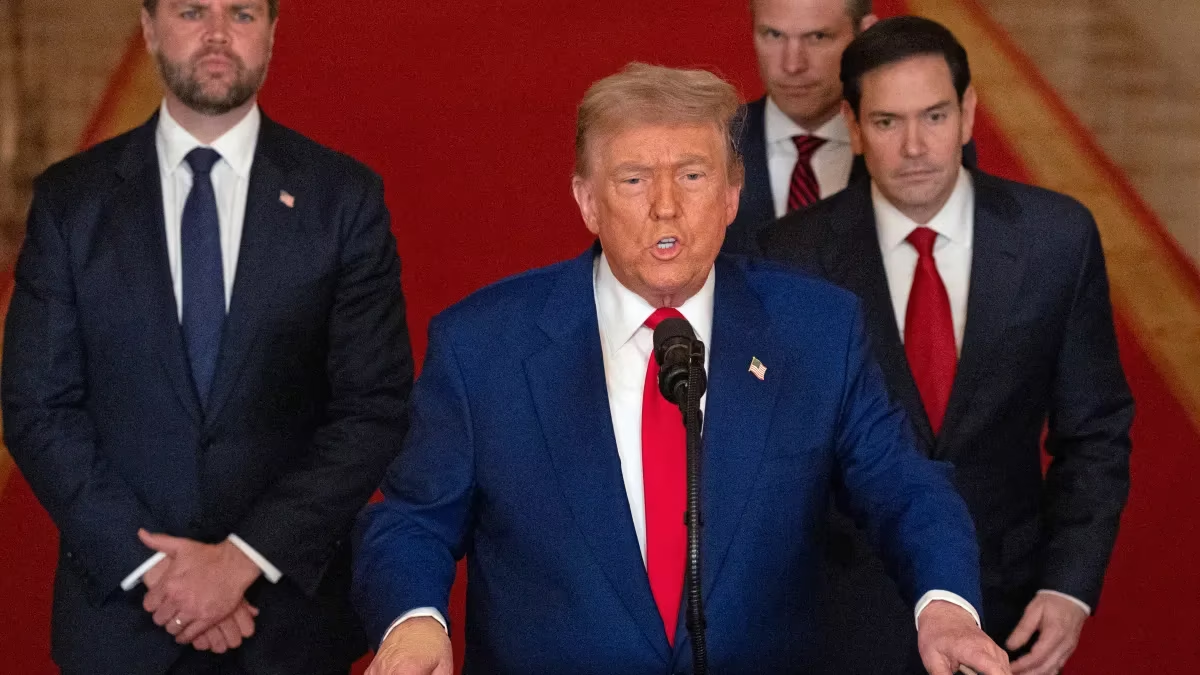
In a televised speech from the White House on Wednesday evening, Trump threatened to continue delivering "very severe" strikes against Iran over the next two to three weeks, asserting that military operations are moving towards fully achieving their objectives. Despite his announcement that the primary objectives have been achieved or exceeded, this apparent contradiction between declaring success and threatening more strikes raises questions about the definition and limits of "victory," and whether Washington is expanding the scope of its operations instead of ending them.
Trump did not address the course of negotiations with Tehran in his speech, nor did he refer to the deadline he had set for April 6 to reopen the Strait of Hormuz, a vital passage for global energy flow. In the absence of a diplomatic path, the US administration appears to be relying primarily on military force, based on the conviction that Tehran only responds under pressure. However, this approach, in turn, increases the likelihood of miscalculation and uncalculated escalation.
Trump also did not provide a clear vision for addressing supply disruptions that have driven global energy prices higher, merely calling on affected countries to secure their own needs. This approach highlights the limited economic vision accompanying military action, at a time when energy markets remain highly sensitive to any disruption, especially given the importance of the Strait of Hormuz as a key pivot point in the global supply system.
In parallel with the threats, Trump called on Iran to conclude an agreement "before it's too late," warning that if a settlement fails, the United States could target "every power station" in Iran with simultaneous strikes. He also stressed that any movement towards Iranian nuclear sites would be met with "devastating missile strikes," asserting that these facilities are under close satellite surveillance. These contradictory messages between calling for negotiations and threatening comprehensive destruction reflect a strategy of maximum pressure, but they may push the other party to further intransigence instead of retreat.
These developments place the region at a highly sensitive stage, where military escalation intersects with the fragility of global energy markets, raising the likelihood of the confrontation expanding. While this policy may achieve short-term tactical gains, it carries broader strategic risks, most notably prolonging the crisis and complicating opportunities for a sustainable settlement.
Share your opinion
Trump boasts about destroying Tehran bridge, calls on Iran to agree before it's too late