






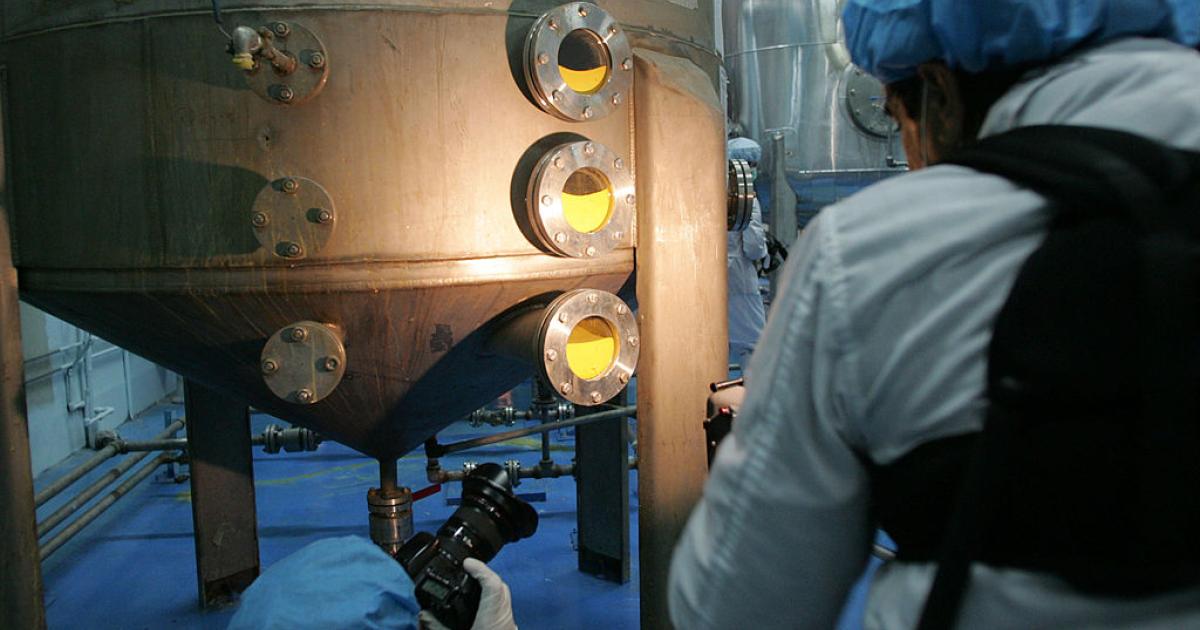
The Atomic Energy Organization of Iran announced today, Saturday, that the Natanz uranium enrichment facility was subjected to a new attack carried out by American and Israeli forces. The organization clarified that precautionary measures taken previously prevented any leakage of radioactive materials, stressing that this targeting represents a clear violation of the Nuclear Non-Proliferation Treaty.
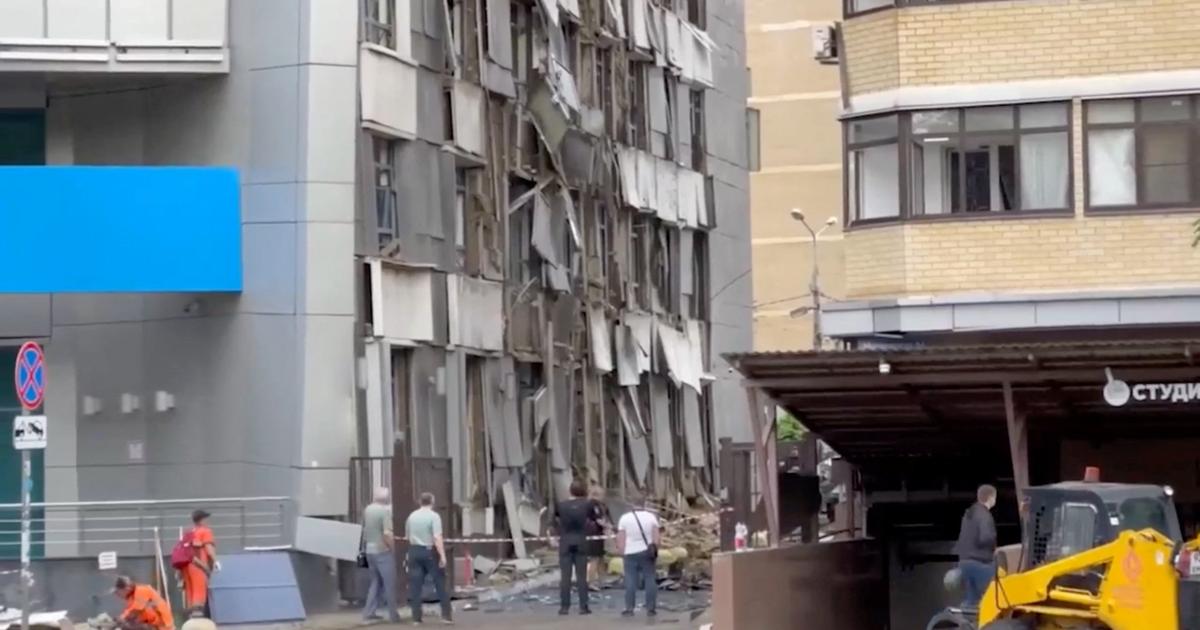
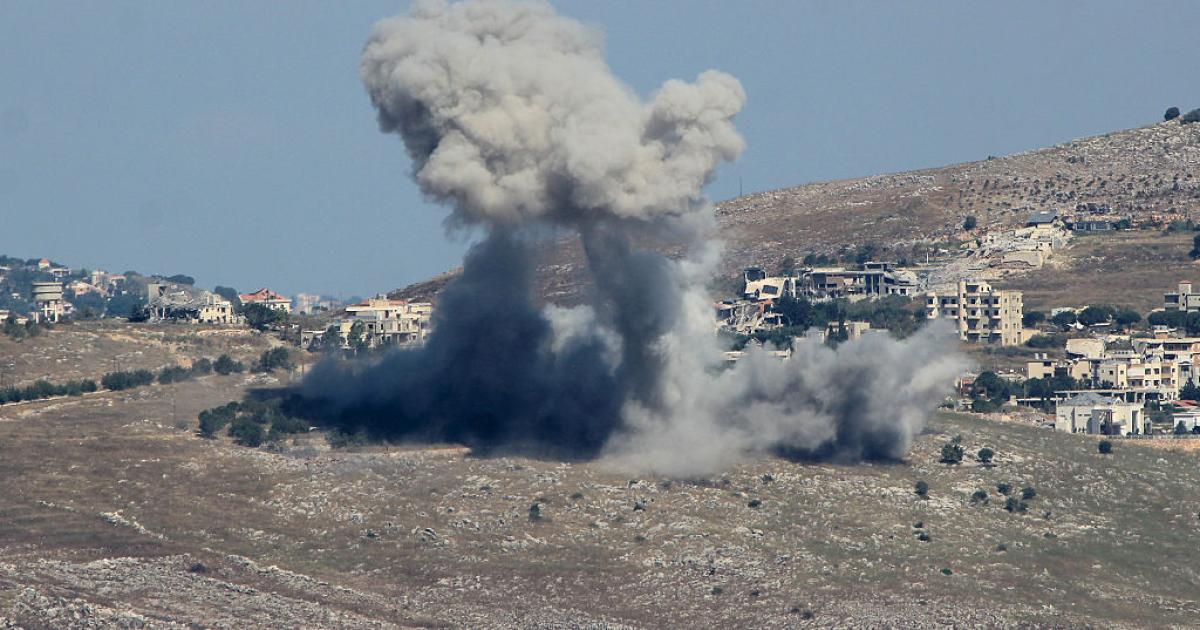
As the military confrontation entered its twenty-second day, field sources reported hearing violent explosions that shook wide areas in Iran, including Dezful in Khuzestan province, Bandar Abbas in Hormozgan, and the city of Yazd. These developments come amid an unprecedented escalation targeting infrastructure and vital facilities deep within the country.
Media sources reported additional explosions in the city of Karaj in the east of the country and Isfahan, amid unofficial reports indicating that the bombing extended to include Qazvin and Ramsar. These explosions coincided with the sound of fierce clashes in the eastern regions, especially in Sanandaj, the capital of Kurdistan province, and Hamadan province.
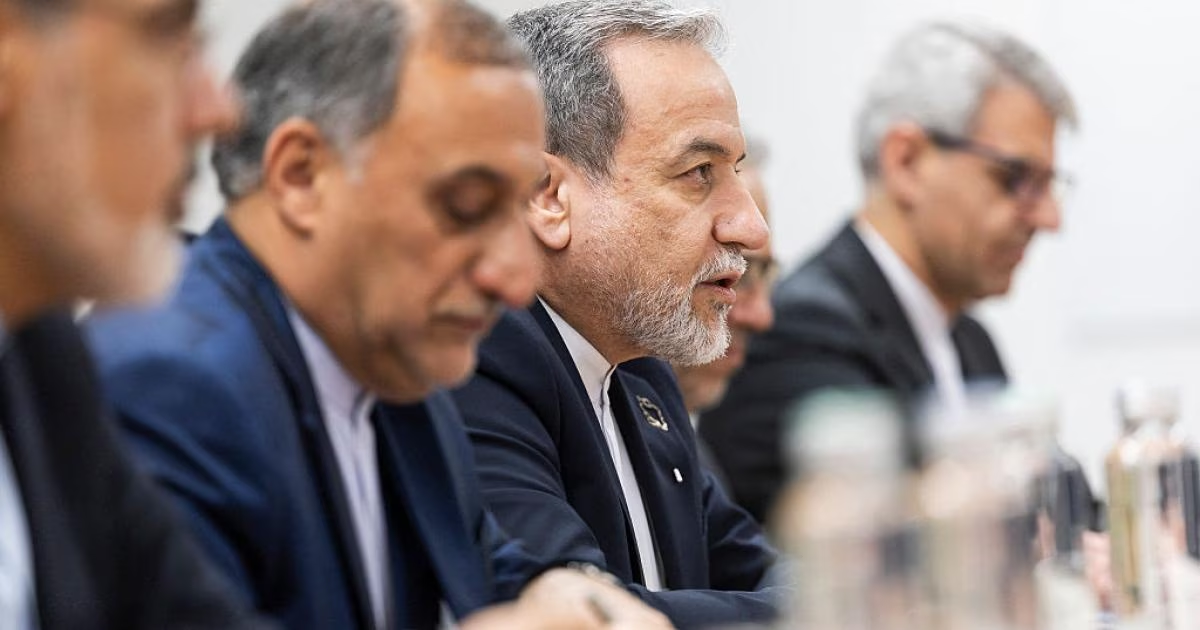
On the political front, Iranian Foreign Minister Abbas Araghchi affirmed that his country is open to any serious initiative to stop the war, but he set specific conditions for it. Araghchi explained in press statements that Tehran does not accept a temporary ceasefire, but insists on a complete, comprehensive, and permanent end to military operations.
The Iranian minister stressed that his country will continue to defend its sovereignty for as long as it takes, as long as the necessity to deter aggression remains. He indicated that the United States has not yet shown any real willingness to resolve the crisis or offer serious proposals for a political settlement.
Araghchi demanded the necessity of providing decisive international guarantees against the recurrence of short war scenarios or repeated aggressions that the country witnessed last year. He also affirmed Iran's right to full compensation for the material and human damages it suffered as a result of the recent attacks.
Regarding international navigation, Araghchi explained that Iran has not completely closed the Strait of Hormuz, but has imposed strict restrictions on ships belonging to countries involved in the attack. He indicated that any ship wishing to pass must coordinate in advance with the Iranian authorities to ensure a safe passage for it amid the current tensions.
The foreign minister revealed the start of talks with the Japanese capital, Tokyo, regarding the possibility of securing the passage of Japanese ships through the strait on the condition of direct coordination. This step reflects Tehran's desire to manage the strategic waterway in accordance with national security requirements and emerging military circumstances.
Araghchi's statements intersect with previous official positions expressed by officials in the Iranian parliament and government, in which they emphasized the strategic importance of the strait. Observers believe that Tehran seeks to consolidate its control over waterways as a political and economic pressure tool in the post-war phase.
On the economic front, technical reports revealed that Iran benefited from the sharp rise in global energy prices to secure additional financial resources. Data from 'Kepler' company indicated that Tehran has a huge stockpile of up to 187 million barrels of oil loaded on tankers ready for export.
Estimates indicate that the Iranian treasury achieved gains of about $8.7 billion as a result of price jumps, without the need to raise current production levels. This financial surplus enhances the state's economic resilience in the face of military pressures and imposed international sanctions.
In a related context, Tehran categorically denied American claims about the existence of huge Iranian energy reserves that could be pumped to lower global prices. Iranian sources described these statements as inaccurate and aimed at manipulating global gas and oil markets, far from the reality on the ground.
Tehran plans to impose new standards and conditions on maritime transport crossing its territorial waters, especially those belonging to countries that impose sanctions on it. The Iranian parliament is currently discussing draft laws that grant the armed forces broader powers in managing maritime traffic to serve national interests.
In conclusion, the field and political scene in Iran remains open to all possibilities with the continuation of attacks on nuclear facilities. The Iranian leadership insists that any political solution must pass through international recognition of its sovereign rights and compensation for the losses it incurred during the past three weeks.
We do not seek a temporary ceasefire, but demand a complete, comprehensive, and permanent end to the war with guarantees against the recurrence of aggression and compensation for all damages.

Share your opinion
New attack targets Natanz nuclear facility, Tehran sets conditions for ending the war