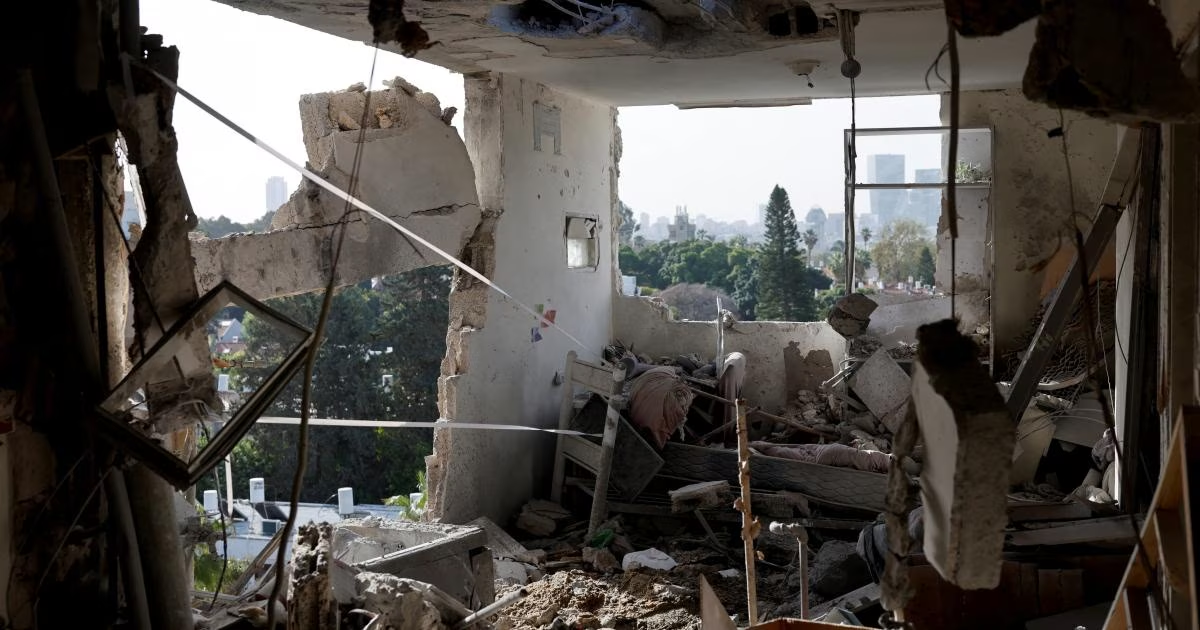







The Tel Aviv area and its surroundings were subjected today, Saturday, to a series of intense Iranian missile barrages, resulting in human casualties and extensive material damage in several locations. Field sources reported that sirens blared across a wide area, including the center and the occupied Golan, prompting thousands of settlers to immediately flee to shelters and fortified rooms.
Explosions were witnessed in the sky as air defense systems attempted to intercept incoming missiles, but large shrapnel fell in populated areas. Ambulance crews confirmed at least nine injuries in the city of Rehovot, near Tel Aviv, with most cases involving the inhalation of dense smoke from fires.
Reports indicated that the attack was characterized by the use of cluster missiles, a technology that increases the area of destruction and complicates air defense tasks. These explosive warheads fell in vital locations in the cities of Rehovot and Petah Tikva, which are about 20 kilometers from the heart of Tel Aviv, reflecting the effective range of these barrages.
These missiles consist of dozens of small submunitions, each weighing between two and three kilograms, but possessing high destructive power upon impact. This explosive shrapnel caused widespread fires inside residential apartments and multi-story buildings, with plumes of smoke seen rising from several neighborhoods.
Fire and rescue teams worked for long hours attempting to control the fires that erupted in private properties and public facilities. Simultaneously, ambulances continued to transport the injured to nearby hospitals, with expectations of an increase in the number of affected individuals as field inspections of the targeted sites continued.
Technical data indicates that this type of weapon poses an exceptional challenge to the 'Iron Dome' and 'David's Sling' systems, due to the multiplicity of small targets emanating from a single missile. This multiplicity explains why explosive parts reached the ground despite the efficient activation of interception systems in the air, leading to direct damage.
Regarding the home front, residents adhered to prevention instructions and headed to public and private shelters, as a state of panic prevailed due to the repeated sound of explosions. Many families remained inside fortified areas for long periods, fearing a renewal of missile barrages described as the most intense in a long time.
In a related context, a shortage of shelters emerged in Arab towns within the Green Line, raising a wave of concern and protest among residents there. These areas lack adequate defensive infrastructure compared to major cities, making their inhabitants more vulnerable to risks in the event of shrapnel or direct missile impacts.
Local authorities continue to assess the extent of damage to infrastructure and electricity networks in the affected areas, while the military and security alert status remains. These developments come amid a rapidly escalating field escalation that places the region before open scenarios, with continued mutual threats and the expansion of targeting scope.
Cluster missiles fragment into dozens of small explosive warheads, making their complete interception a significant challenge for air defense systems.



Share your opinion
Injuries and widespread damage in Tel Aviv due to cluster missile shrapnel