







Palestinians living near the Yellow Line in the Gaza Strip are observing active Israeli military movements aimed at establishing massive sand berms to fortify newly established positions deep within the Strip. These activities coincide with the ongoing systematic demolition and destruction of remaining residential blocks in areas under the control of the occupation forces, amidst direct targeting of citizens residing on the rubble.
Field sources reported that the occupation army has deliberately destroyed and razed all existing buildings to remove visual obstacles for its military barracks, which are now clearly visible to residents in neighboring areas. The army is also equipping these sites with advanced lighting systems that operate around the clock, while reinforcing the military presence with vehicles and bulldozers that continuously work to level the ground.
In Jabalia camp, north of the Gaza Strip, citizens indicated that the occupation is keen on installing towering iron cranes topped with precise electronic surveillance devices, making it easier for soldiers to target any movement outside the Yellow Line. Residents complain of indiscriminate shooting and artillery shells repeatedly hitting their homes, turning their lives into a constant and ongoing danger.
The Yellow Line in the Jabalia area is the deepest point of penetration into the Strip, devouring vast areas and placing about 60% of the camp's area under direct Israeli military control. Despite understandings that stipulate the withdrawal of forces from within cities, the occupation continues to evade its commitments, linking its retreat to complex security conditions related to disarming the resistance.
A responsible security source in Gaza confirmed that the occupation army operates according to a multi-directional strategy, starting with transforming citizens' lands into permanent and temporary military barracks that prevent their owners from accessing them. This measure aims to entrench control by force and transform vital areas into staging points for military vehicles that cut off residential areas.
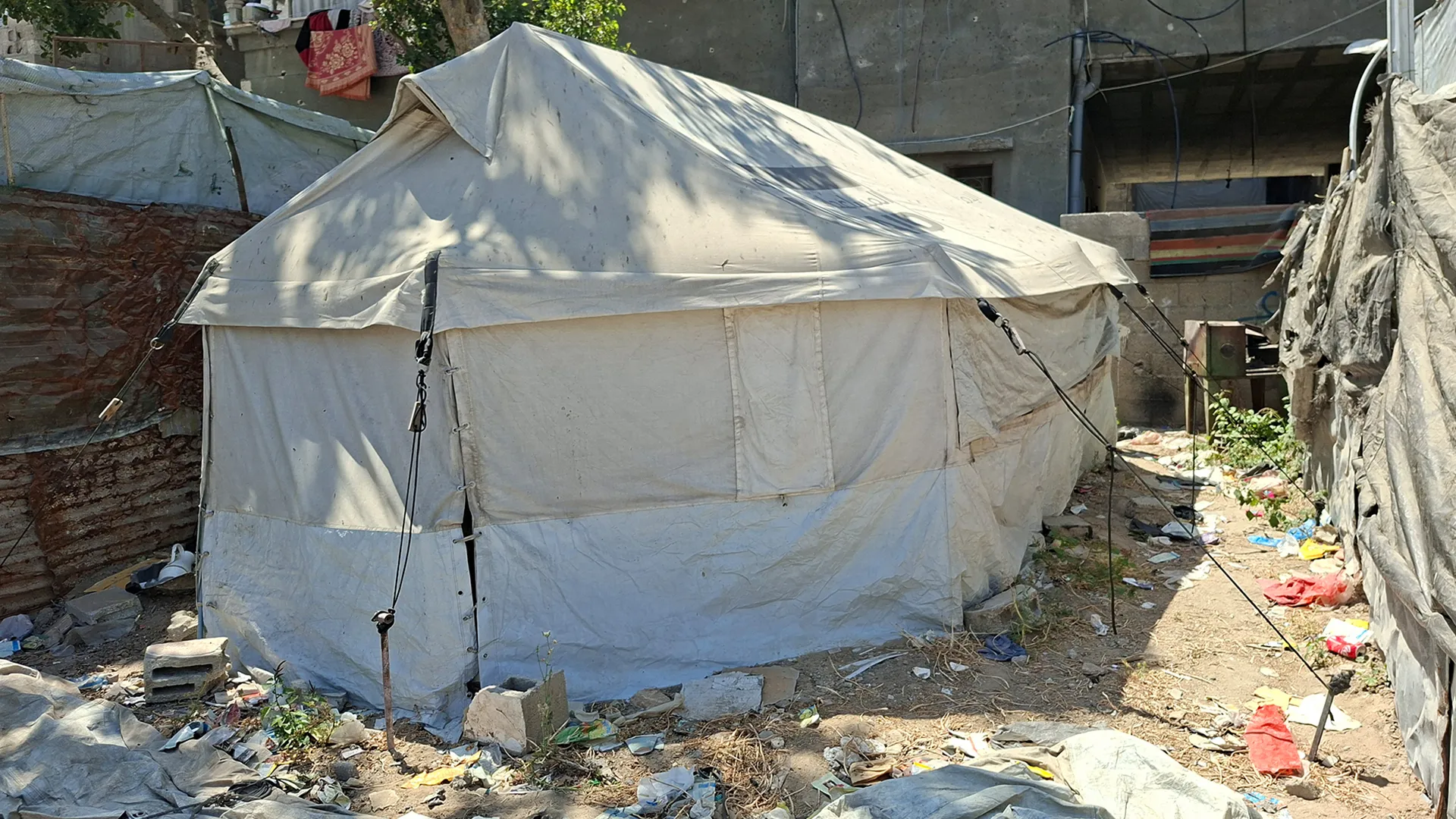
The occupation's operations include destroying basic infrastructure such as roads, water and electricity networks, and public facilities within the Yellow Line, to ensure that these areas remain uninhabitable for human life in the future. This policy comes within the framework of creating a permanent field change in the features of the area, serving the long-term security objectives of the occupation army.
The security source revealed a dangerous trend represented by creating a security environment that serves the military presence by facilitating the work of local gangs that exploit the state of chaos resulting from the aggression. These groups play roles that serve the occupation's agenda by damaging public property and stealing humanitarian aid, exacerbating the state of social instability within Gazan society.
For his part, security affairs researcher Rami Abu Zubaida believes that the Israeli movements fall within a strategic vision to re-engineer the Strip geographically and securely. He explains that the goal is to transform the eastern areas into buffer zones that prevent the return of residents, while at the same time ensuring the army's freedom of fire to carry out specific strikes without the need for extensive ground incursions.
Israel relies in these areas on what is called 'smart control', where technological systems based on artificial intelligence and facial recognition are tested at checkpoints. This technological engineering aims to fully control the movement of individuals, and link their basic needs for food and medicine to the equation of absolute security calm.
The occupation also seeks, by strengthening reconnaissance units and intelligence efforts behind the Yellow Line, to constantly update its target bank and prevent the resistance from recovering or reorganizing. Experts emphasize that what is happening is an actual division of Gaza into isolated cantons, making any talk of a future withdrawal merely a technical repositioning on the borders.
In a related context, Rami Khreis, director of the Palestinian Center for Political Studies, summarizes Israeli activities at four levels, starting with comprehensive bulldozing of the land to turn it into an 'open killing zone'. This is followed by the establishment of a semi-permanent military structure that includes high earth berms and internal military roads connecting the newly established sites to each other to ensure rapid movement.
Khreis concludes that the ultimate goal is to impose permanent fire control that prevents the return of residents even in the event of partial withdrawals, turning the Yellow Line into an early warning belt. He believes that this strategic dimension aims to effectively redraw the borders of the Gaza Strip by force of arms, away from any political agreements or international resolutions.
The occupation is redrawing the map of Gaza to divide it into isolated security cantons, making any future withdrawal merely a repositioning and not a real departure.




Share your opinion
Fortifications and Earth Berms.. How is the Occupation Redesigning the Gaza Strip Behind the 'Yellow Line'?