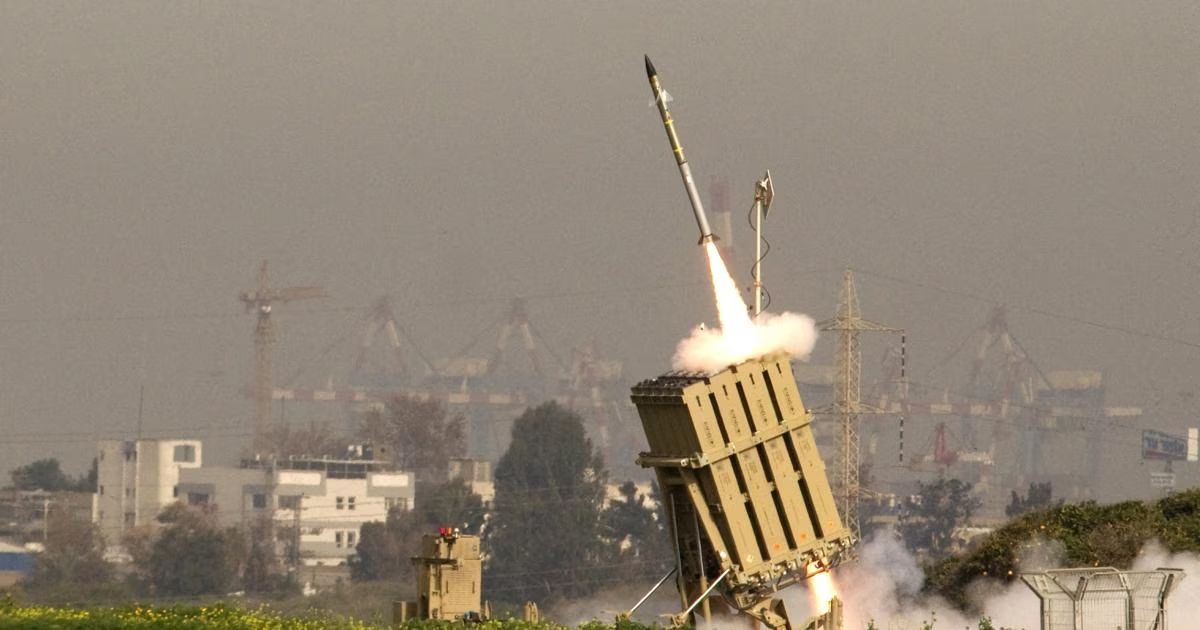







American officials revealed that Israel has informed the United States of a severe and alarming shortage in its stockpile of interceptor missiles designed to counter ballistic missiles. This admission comes at a sensitive time, with direct military confrontation ongoing and an escalation in missile attacks launched by Tehran towards Israeli targets.
These developments raise serious concerns among security circles regarding the ability of Israeli air defense systems to withstand and continue intercepting long-range attacks. The defensive systems have been under unprecedented pressure since late February, coinciding with intense exchanges of strikes that resulted in significant human casualties among leadership ranks.
Media sources reported that Israel entered the current round of conflict already suffering from a previous depletion of its defensive stockpiles. Confrontations last summer consumed massive quantities of interceptor missiles, leaving the current inventory at critical levels that are disproportionate to the existing threat.
Further complicating the field situation is Iran's resort to developing new offensive tactics, including adding cluster munitions to some of its ballistic missiles. This step aims to disrupt radar systems and increase the difficulty of interception, which necessarily leads to a faster depletion of Israel's already limited defensive stockpile.
For its part, sources in Washington confirmed that the American administration had been aware of this crisis for several months, describing the situation as expected given the intensity of fire. Despite this understanding, pressure continues to mount on the White House to make a decision regarding supplying Tel Aviv with more missiles from the American strategic reserve.
While American officials acknowledge the Israeli shortage, they emphasize that U.S. forces in the region still maintain sufficient defensive capabilities. An American official clarified that Washington possesses what is necessary to protect its bases and interests, while Israel continues to seek urgent solutions to fill the gaps in its defense system.
Israel currently relies on tactical alternatives to counter Iranian missiles, most notably the use of fighter jets in aerial interception operations. However, military experts continue to assert that specialized interceptor missiles are the most effective and reliable means against heavy and long-range ballistic threats.
The Iron Dome system, the pride of Israel's defense industry, was primarily designed to deal with short-range projectiles. This specialization makes it less efficient in confronting advanced ballistic missiles, placing the entire burden of protection on systems like 'Arrow' and 'David's Sling'.
On the political front, U.S. President Donald Trump recently indicated that the United States possesses vast stockpiles of munitions. However, these statements are met with assessments from military analysts who suggest that escalating global tensions might make Washington cautious about depleting its reserves for the benefit of its allies.
Estimates from strategic study centers indicate the enormous consumption of munitions, with Washington having launched about a quarter of its 'THAAD' missile inventory in a previous confrontation. That confrontation, which lasted only 12 days, demonstrated how quickly even the most advanced defensive weapons can be depleted in modern warfare.
The financial cost of interceptions reached astronomical figures, with the value of Patriot missiles used in just five days estimated at approximately $2.4 billion. These figures reflect the economic and logistical challenge facing countries engaged in long-term, high-intensity missile conflicts.
In an attempt to preempt the worsening crisis, the Pentagon has begun concrete steps to increase production lines for advanced missile defense systems. This move aims to ensure the availability of sufficient quantities of 'THAAD' and medium-range missiles to secure the needs of U.S. forces and support allies when absolutely necessary.
As of now, the Israeli army and the White House maintain official silence regarding reports of dwindling stockpiles. The question remains about Israel's ability to manage its defensive battle should Tehran decide to escalate its missile attacks in the coming days.
Israel entered the current war already suffering from a decline in its interceptor missile stockpile after heavy use during previous confrontations.




Share your opinion
Air Defense Stockpile Crisis: Israel Informs Washington of Severe Shortage in Ballistic Interceptor Missiles