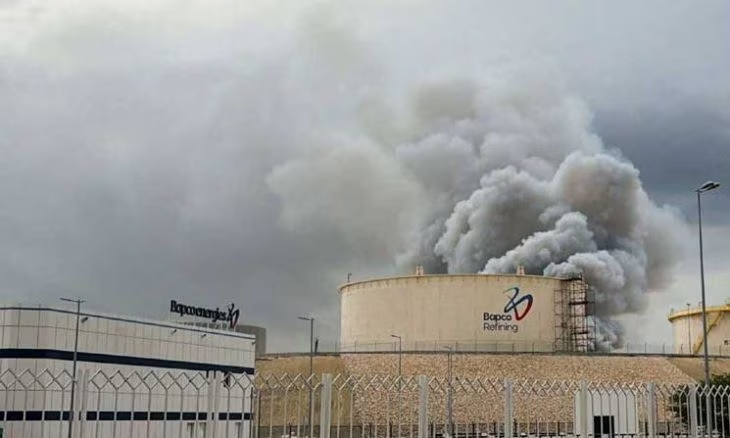







Global energy supplies have entered a critical phase as major producers in Bahrain, Kuwait, Qatar, Iraq, and Saudi Arabia face a series of emergency measures. These steps include a sharp reduction in production and the declaration of 'force majeure' due to reciprocal attacks and damage to vital export routes in the region.
These developments come under the weight of military operations that began at dawn on February 28, with international forces launching a widespread aggression against Iran, resulting in the deaths of over 1,300 people, including senior leaders. Tehran responded by closing the strategic Strait of Hormuz, causing a near-total paralysis of shipping traffic that previously transported about 20 million barrels of oil daily.
Oil prices surged wildly, breaking the $100 per barrel barrier and touching $120 for the first time in years. Military sources warned that continued targeting of Iranian infrastructure would push Tehran to strike energy facilities across the region, threatening a global economic collapse.
In Bahrain, 'Bapco Energies' declared a state of force majeure on its operations affected by ongoing attacks targeting its refining units. Sources explained that this legal measure exempts the company from its contractual obligations to international customers due to circumstances beyond its control.
Kuwait, meanwhile, decided to implement a precautionary reduction in oil production and refining operations to counter increasing security threats in the Gulf. The Kuwait Petroleum Corporation affirmed its readiness to return to normal production levels once security conditions stabilize and the safety of vessels transiting waterways is ensured.
In Qatar, 'Qatar Energy' announced a halt to liquefied natural gas exports after its facilities were targeted by suicide drone attacks. This halt is a severe blow to global gas markets, as Doha officially notified its customers of the activation of force majeure clauses due to the impossibility of safe shipping.
Iraq witnessed a sharp decline in its oil production, reaching 60%, with production stabilizing at only 1.3 million barrels per day. The Ministry of Oil in Baghdad attributed this collapse to the closure of the Strait of Hormuz and the cessation of exports from both northern and southern fields.
For its part, Saudi Aramco began diverting its oil shipments towards the Yanbu port on the Red Sea via the 'East-West' pipeline. This strategic move aims to reduce reliance on the Strait of Hormuz and shorten distances to Western markets and the Suez Canal, away from the direct conflict zone.
Saudi Arabia's 'Ras Tanura' refinery suffered material damage after drones were intercepted, with their shrapnel falling inside the vital facility. Saudi authorities are intensifying efforts to secure oil installations in the Eastern Province, which has faced continuous missile threats since the outbreak of the military confrontation.
Internationally, gas prices in Europe jumped by 30%, reaching record levels at the Dutch TTF hub. This increase reflects the panic in global markets over a long-term disruption of energy supplies from the Middle East.
Economic reports indicate that the cost of US military operations has reached approximately one billion dollars daily, while the Israeli economy is incurring losses of billions of shekels weekly. Concerns are growing that the price of a barrel of oil could reach $150 if the war continues for additional weeks.
Qatar's Energy Minister warned that returning to a normal supply cycle could take months, even if the war stops immediately. He stressed that the current disruptions could lead to the collapse of major economies that are entirely dependent on energy flows from the Arabian Gulf region.
Statistics indicate that Iran has targeted the region with hundreds of missiles and drones since the start of the 'Lion's Roar' operation against them. These attacks have caused severe damage to civilian infrastructure and fuel facilities, prompting international companies to halt their operations in the region as a precautionary measure.
The situation remains open to all possibilities with continued military escalation and the absence of any immediate diplomatic solution. Global capitals are anxiously awaiting developments in the Strait of Hormuz, which represents the main lifeline of the global economy, now threatened with complete blockage.
All exporters in the Gulf region will have to activate force majeure, and if this war continues for a few weeks, global GDP growth will be affected.



Share your opinion
Earthquake in Energy Markets: 5 Arab Nations Declare Emergency as War Against Iran Escalates