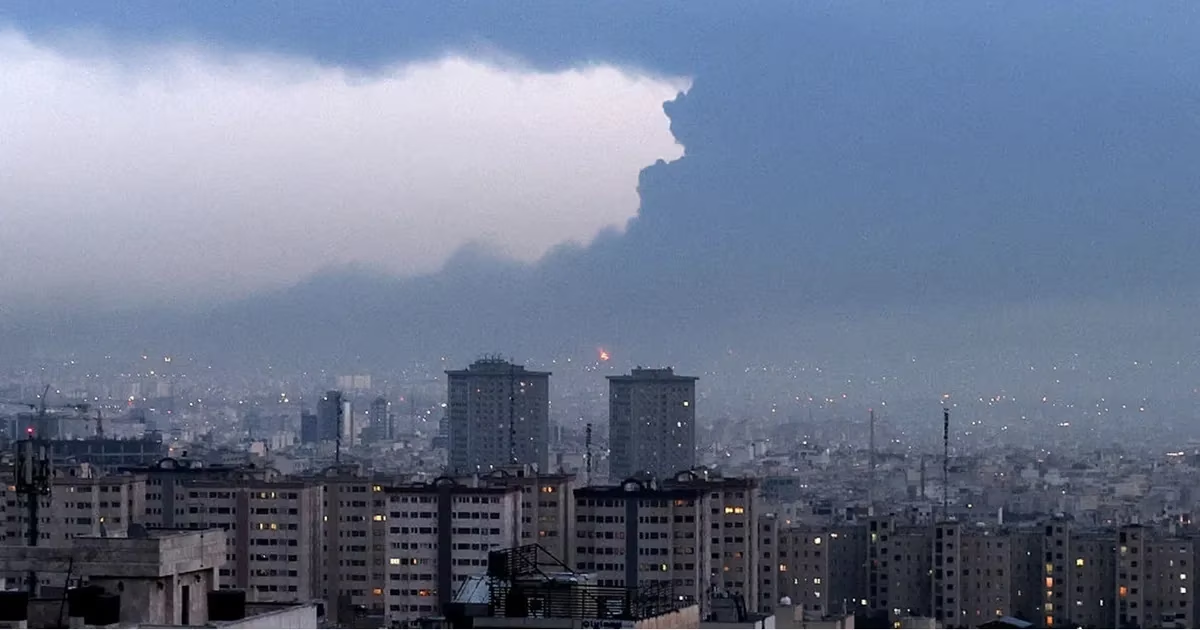







Israeli security assessments indicate that the Middle East region is undergoing a period of labor that will lead to a political and geopolitical reality completely different from what it was before October 6th. According to the vision presented by Segev Steinberg, an official at the Jerusalem Center for Foreign Affairs, future alliances will not be based on sectarian slogans, but will primarily rely on common interests, technological superiority, and military strength.
Lebanon stands out as one of the first countries affected by these transformations, as Hezbollah faces unprecedented military and financial pressures that have eroded its influence in its traditional strongholds in the southern suburbs. Sources believe that Israel does not aim to change the Lebanese regime by force, but rather seeks to create a political environment that weakens the party and removes it from the sphere of effective influence, exploiting the decline in financial support from Tehran and the damage to its military infrastructure.
As for Iraq, the equation is moving towards breaking the Iranian grip that has controlled Baghdad for many years, especially with the change in the American administration and the return of Donald Trump to the White House. The Israeli reading clarifies that cutting the land corridor connecting Iran to the Mediterranean Sea represents a cornerstone in changing the regional balance, which puts Iraq before two choices: either sinking into internal conflicts or engaging in new economic axes.
Regarding Yemen, the Houthis are experiencing a state of increasing anxiety as they observe the decline in the power of their allies in the region, realizing that Iranian aid is no longer guaranteed as before. Field pressures on the group by government forces are increasing, at a time when Saudi Arabia is anticipating any reckless move that might give it a pretext to definitively end the security threat on its southern borders.
This strategic shift is linked to a broader American vision aimed at connecting India with the UAE and Saudi Arabia, all the way to Israel, which means a complete break with other international projects such as China's "Silk Road." This new axis requires regional stability that ensures the flow of trade and energy, which necessitates reducing the influence of armed groups loyal to Iran in countries that represent vital corridors for these projects.
In conclusion, these readings confirm that the region is living a moment of truth, where old powers will not automatically disintegrate, but they face existential challenges that may redraw the boundaries of influence. The shape of the future Middle East remains dependent on the outcomes of current confrontations and the ability of central states to impose a new reality that transcends the conflicts of past decades towards a stage of economic and technological competition.
When the storm of war finally subsides, the regional balance of power and the historical confrontation between political and sectarian axes will witness radical transformations that will shape future generations.



Share your opinion
An Israeli Reading of the Region's Future: Lebanon, Iraq, and Yemen Facing Radical Transformations