







Contemporary Arab history is passing through a phase characterized by an extreme speed resembling the launch of rockets, while the Arab individual stands by as a spectator, unable to influence the course of events. Since the retreat of American forces from Vietnam, the Middle East has become a permanent arena for successive wars and international agendas that have drained human and material resources.
The current situation necessitates a return to Khaldunian lessons to understand the trajectories of the modern Arab state, specifically the Tunisian model, which embodies the theory of the ages of states. This perspective suggests that a state passes through three successive generations, beginning with construction and strength, and ending with decay and prosperity that kills the spirit of initiative and ambition.
The first generation, led by Habib Bourguiba, laid the foundations of the national state based on the legitimacy of the struggle for independence, sovereignty, and the aspiring spirit of the nation. Despite success in establishing an intellectual elite and a welfare state, this generation planted the 'germ of dictatorship' within the state's body, which paved the way for its subsequent demise.
With the second generation, represented by the era of Zine El Abidine Ben Ali, the state transitioned from a phase of national ambition to a phase of material satiety and consumer prosperity. In this phase, citizens replaced their political aspirations with consumer loans and false social appearances, leading to the erosion of strong neural and social ties.
This era witnessed a radical shift in values, where quick pleasures and individualistic tendencies overshadowed public interest and national cohesion. The gap between social classes widened, between those enjoying Parisian luxury and those suffering in forgotten rural areas, paving the way for a social explosion known as the Arab Spring.
The revolution came as a cry for help and a nervous movement attempting to restore the lost balance between the center and the peripheries, but it quickly lost its compass. Instead of producing a new national project, the revolution handed its leadership to old elites who reproduced the crisis in different political molds.
In the current phase, we find the state transformed into a mere bureaucratic administration that organizes the daily survival of the population without any symbolic horizon or future project. The grand national narrative that characterized the state's beginnings has faded, replaced by a system that sanctifies security calm at the expense of bothersome freedoms.
The transformation from a 'state of ambition' to an 'administrative state' reflects the collapse of the balance between the elite and the public, where institutions are unable to produce a unifying identity. This political and moral disintegration represents the core of the third generation's crisis, which lives in a state of inability to self-renew or establish a new historical path.
The crisis is clearly evident in the absence of a historical vision, where maintaining administrative stability becomes the supreme and sole goal of authority. In this context, the role of elites in inventing symbols or defending major causes declines, preferring self-isolation and observing global events as spectators.
The systematic focus on bureaucratic organization has weakened the capacity for political imagination, making security precede freedom in the hierarchy of priorities. This path inevitably led to the fading of the motivating 'asabiyyah' (group solidarity) that pushed society towards achieving tangible civilizational accomplishments.
When the national narrative is absent, the state transforms into a formal structure lacking a real popular base that protects it in major crises. Today, we see a state existing with its institutions, but without a soul or a project that connects individuals to a national identity transcending narrow material interests.
The signs of early political demise are evident in the exhaustion of intermediary systems and the cessation of elite imagination in providing solutions to accumulated crises. The situation has ended in a 'presidential' state lacking a historical narrative, making the state vulnerable to fluctuating political winds without internal immunity.
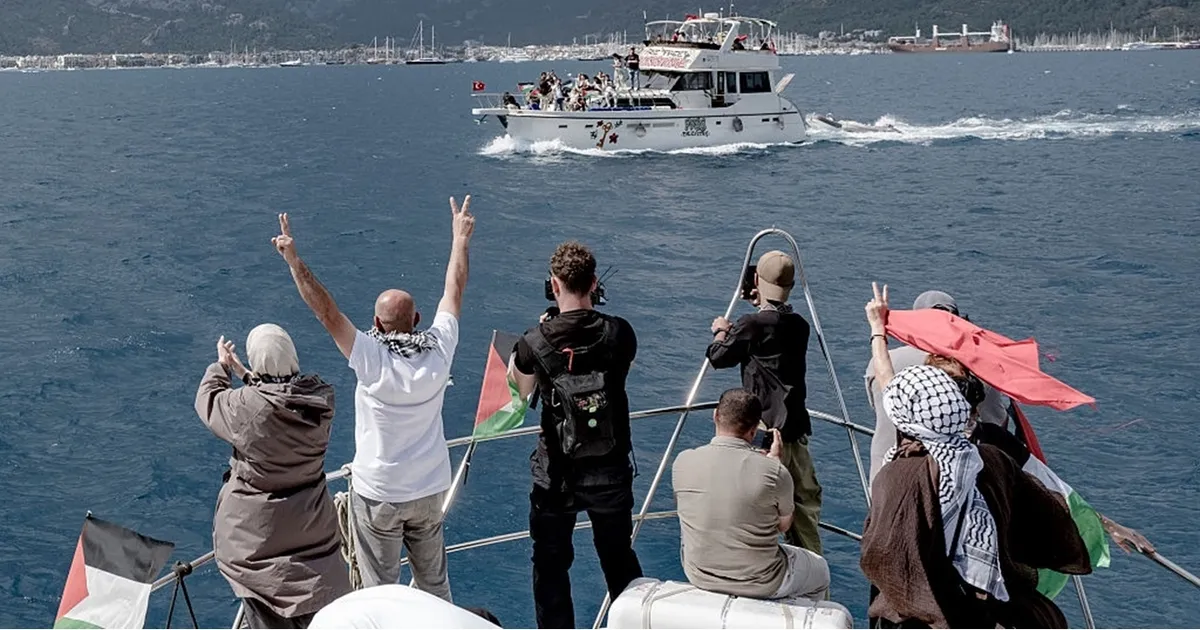
In this reality, elites evade their moral responsibilities towards fateful issues, such as the Palestinian cause or confronting international hegemony. These elites content themselves with inventing phrases of political evasion, considering issues like Gaza to be on another planet that does not concern them amidst their preoccupation with managing daily life.
In conclusion, it appears that the 'germ of dictatorship' has worked with high efficiency in destroying the foundations of the modern Arab state from within. Security management, no matter how precise, cannot be a substitute for a true state that builds ambition for its people and preserves their dignity and history.
The absence of a state project or historical vision is what kills the state more than luxury; a third generation manifests as a sign of an early and rapid political end.



Share your opinion
The Predicament of the Arab State: When Historical Ambition Turns into Mere Security Management