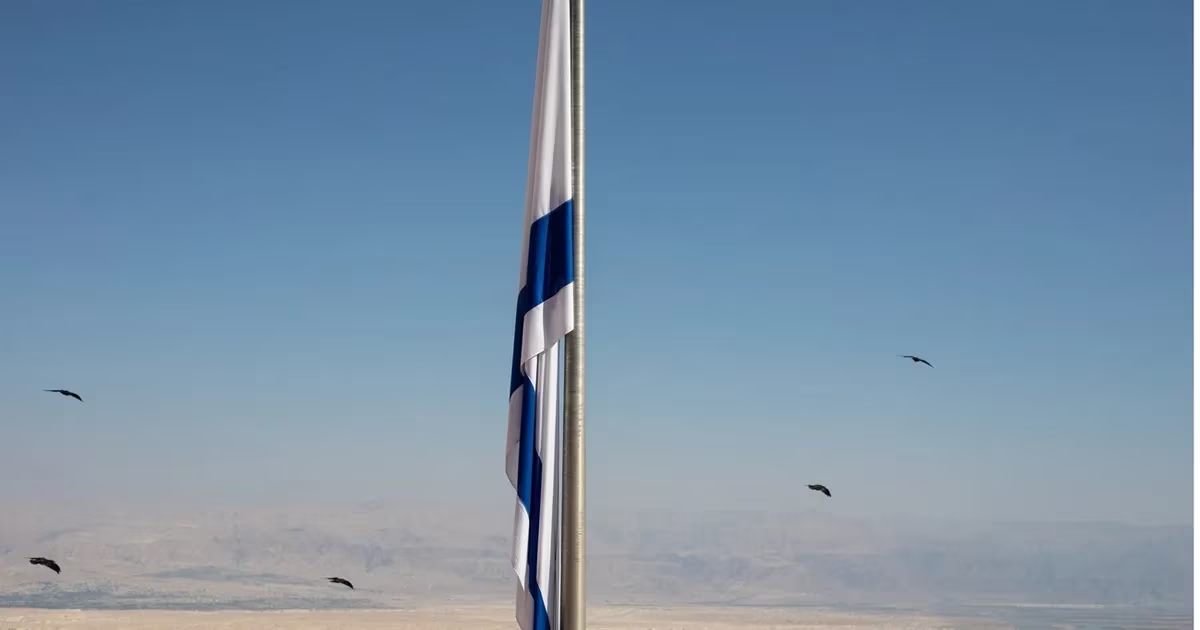







Media sources reported that Israeli diplomatic circles have increasingly begun to promote the idea that current foreign policies, dominated by the far-right, are the main reason behind increasing international isolation. Nadav Tamir, former Consul General in Boston, pointed out that this trend negatively reflects on Israel's performance within UN institutions, putting it in direct confrontation with the international will that demands clear political paths.
Tamir, who currently serves as the CEO of J Street Israel, mentioned that he recently gained multilateral experience after being invited to brief the UN Security Council. This participation came at the invitation of British Foreign Secretary Yvette Cooper, where Tamir perceived a significant gap between diplomatic reality and what the Israeli government promotes about an absolute and unjustified hostility from the world towards it.
The former diplomat explained that representatives of member states in the Security Council, including Arab and Islamic parties, expressed positions that support Israel's existence but stipulate moving towards an agreement that guarantees the establishment of a Palestinian state. He affirmed that these countries clearly spoke about the necessity of disarming the Hamas movement in exchange for providing a safe and stable future for all parties, which contradicts the right-wing narrative that claims the entire world stands against Israeli existence.
In the context of his criticism of official performance, Tamir referred to Foreign Minister Gideon Sa'ar's speech before the Security Council, describing it as a repetitive speech detached from international reality. Sa'ar expressed his categorical rejection of the two-state solution and denied the historical connection of Palestinians to the land, which Tamir considered a speech that might satisfy the Likud party's base, but faces rejection and ridicule in international forums that recognize Palestinian rights.
Tamir stressed that the Arab Initiative of 2002, in addition to historical UN resolutions such as 242 and 338, forms the basis for international and regional recognition of Israel, but the continuation of the occupation thwarts these opportunities. He considered the far-right's claims of the necessity to 'live by the sword' as a destructive vision that does not serve national security, but rather threatens the essence of the Zionist vision and the future of the state in the region.
In conclusion of his assessment, Tamir called for the necessity of freeing foreign policy from the grip of the far-right, emphasizing that diplomacy is capable of achieving security gains that surpass what military force achieves. He believed that excessive reliance on internal propaganda only deepens the gap with strategic allies, especially in Washington and European capitals that are fed up with settlement policies.
The far-right's rhetoric may convince circles within Likud, but it only provokes hostility or ridicule in the corridors of the international community.




Share your opinion
Former Israeli Diplomat: Far-Right Policies Increase Tel Aviv's International Isolation