






Tensions are escalating in the Middle East as the United States continues to amass massive military capabilities, including dozens of naval and air assets. These movements raise serious questions about the strategy Washington might pursue if a decision is made to launch a military attack on Iran, especially concerning logistical starting points.
International press reports indicate that Muwaffaq Salti Air Base in Jordan is emerging as one of the most important strongholds for the US air fleet in the region. Recent satellite images have revealed an unprecedented military buildup, including more than 60 diverse combat aircraft with various missions and capabilities.
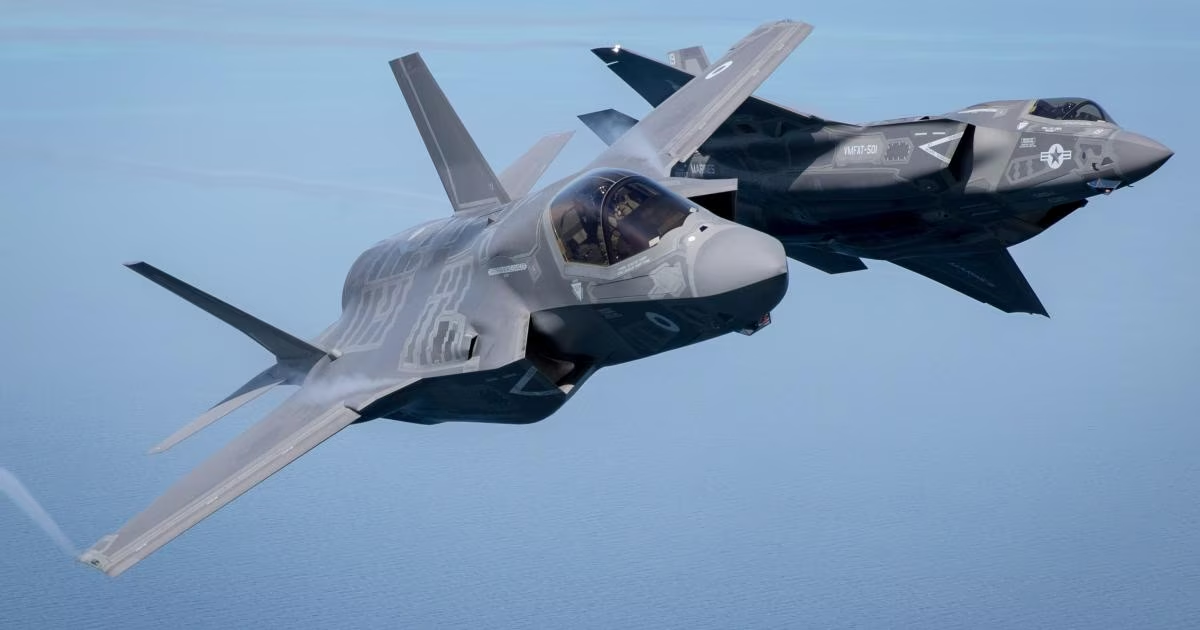
Among the aircraft observed at the Jordanian base, at least 12 F-35 Lightning II fighters, the latest in the American arsenal, stand out. These stealth fighters are lined up on the runways, reinforcing the hypothesis of their reliance for precise strikes that bypass traditional radars.
The second scenario proposed by military experts involves using air bases within the European continent, specifically in countries like Cyprus, Greece, and Bulgaria. This option aims to distribute air power and reduce the risks arising from concentrating forces in a single geographical point close to Iran's missile range.
However, the option of launching from Europe faces logistical challenges related to the long distances that F-16 and F-35 fighters would have to cover. These aircraft do not have sufficient fuel capacity for a round trip, necessitating heavy reliance on aerial refueling aircraft to secure the flight path.
Flight tracking data confirms that KC-135 Stratotanker tanker aircraft could play a pivotal role in this context. These aircraft can launch from distant bases in the United Kingdom or the United States to meet fighters at specific points over the Mediterranean to conduct refueling operations.
The third scenario focuses on the naval strike force represented by aircraft carriers and destroyers deployed in regional waters. This option gives the US military command high flexibility in maneuvering and approaching Iranian coasts to carry out swift strikes and then retreat to safe locations.
In addition to destructive power, Washington relies on advanced electronic warfare systems on board its warships. These systems aim to cripple Iranian command and control capabilities and jam radars, facilitating airspace penetration and neutralizing air defense systems before the actual attack begins.
US deployment in European bases might make it difficult for Iran to directly target those bases if a confrontation erupts.





Share your opinion
Potential US Attack Scenarios on Iran: Bases, Routes, and Air Capabilities