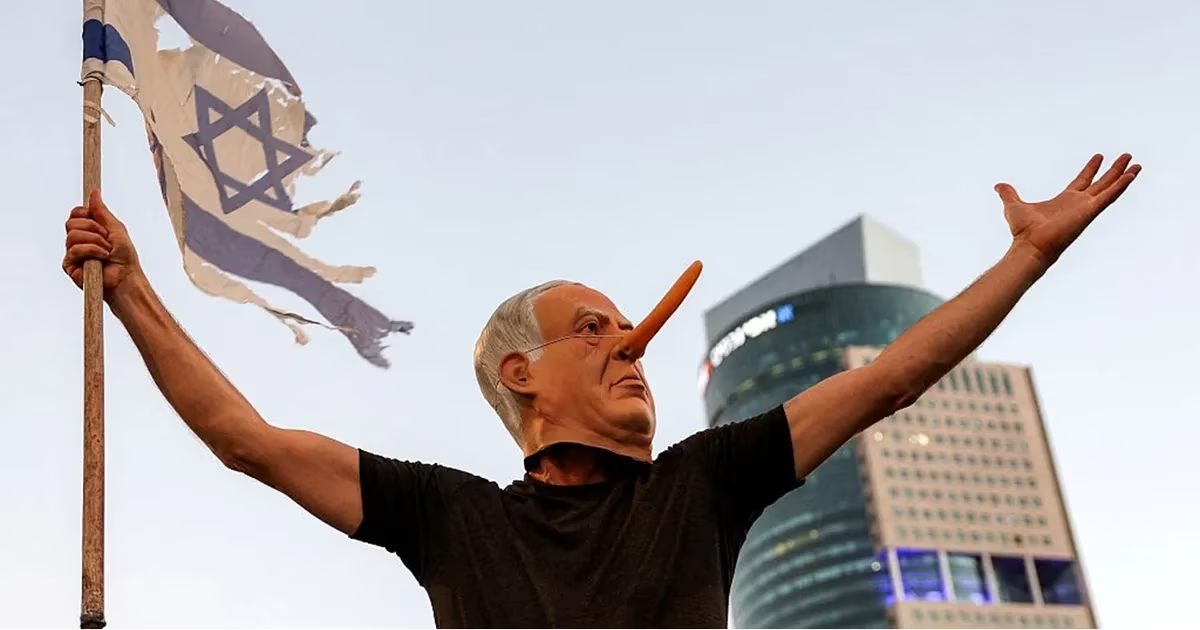







The Prime Minister of the occupation state, Benjamin Netanyahu, revealed new strategic directions aimed at forming a broad international and regional alliance, through which he seeks to confront what he called the 'extremist Shiite axis' and the 'extremist Sunni axis' that has recently emerged. These statements coincide with preparations for the visit of Indian Prime Minister Narendra Modi to Tel Aviv, reflecting an Israeli desire to build a bloc that shares the same security and political vision towards the region's challenges.
Netanyahu's vision goes beyond mere local media consumption, as he identified the parties of the supposed axis to include, in addition to Israel and India, Arab and African countries and countries from the Mediterranean basin such as Greece and Cyprus. The essential goal appears to be to create a security and political cordon surrounding regional powers that Israel considers a direct or future threat to its interests and expansion in the Middle East.
While the implications of the 'Shiite axis' are clear in referring to Iran and its allies in Lebanon, Yemen, and Iraq, the term 'extremist Sunni axis' remains vague and alarming in political circles. Israeli leaks sometimes refer to Turkey and Syria, and at other times extend to include major countries such as Egypt, Saudi Arabia, and Pakistan, reflecting a comprehensive suspicious view towards the Arab and Islamic surroundings.
These moves confirm a radical shift in Israeli security doctrine after the events of October 7, as it moved from a policy of containing threats to a strategy of 'early suppression'. This theory relies on launching preemptive wars and expanding buffer zones within the borders of neighboring countries, which explains the continuous escalation in the Syrian arena despite the absence of an imminent military threat from it.
The true essence of this strategy represents a return to the early roots of the Zionist project laid down by Ben-Gurion and Jabotinsky, which is based on the idea of 'correcting the errors of establishment'. This includes attempts to eliminate the Palestinian presence in the occupied territories of 1948, the West Bank, and Gaza through forced displacement plans and direct re-occupation under flimsy security pretexts.
Through the new 'Periphery Alliance', Netanyahu seeks to revive an old doctrine that relied on building relations with non-Arab countries to besiege the confrontation states. Today, this doctrine is being updated to include India to the east, and Greece and Cyprus to the west, with attempts to penetrate the Horn of Africa and the South Caucasus, to ensure the isolation of central powers in the region and weaken their geopolitical influence.
These alliances are accompanied by a hidden strategy aimed at inciting internal conflicts within major countries in the region on ethnic and sectarian grounds. Through the fragmentation of these countries, Israel aspires to transform into a natural entity within a group of sectarian 'mini-states', instead of being an alien body rejected by the unified Arab and Islamic fabric.
Netanyahu's statements send a clear message that there are no true allies for Israel in the region, even those who signed peace or normalization agreements. The only criterion for Israeli acceptance is complete submission to the Zionist vision and Tel Aviv's security objectives, which places all signatory countries in the circle of future targeting.
Reports indicate that the planned war against Iran is merely one link in a long chain aimed at subjugating the entire region to absolute Israeli influence. Sources have monitored hostile statements by Israeli officials targeting the Egyptian army and the Saudi leadership, confirming that Israeli ambitions do not stop at one front but extend to include all regional powers.
This Israeli vision is not separate from current American trends, especially with the emergence of the features of the 'Deal of the Century' in its new version that supports the annexation of the West Bank. Statements by US Ambassador Mike Huckabee support this trend, as he openly adopts the vision of 'Greater Israel' based on biblical myths that transcend internationally recognized borders.
The American approach supporting Netanyahu is based on the principle of 'peace through strength', which means imposing stability through excessive military subjugation and economic intimidation. This logic ultimately aims to transform the region into a shared sphere of influence dominated by Israeli technology and military machinery with full logistical and political support from Washington.
What Netanyahu is proposing is not just a passing political discourse, but an expression of a strategic doctrine that has come to govern the joints of decision-making in the occupation state. The danger of this vision lies in its treatment of the geopolitical landscape of the region as an arena for forced reshaping to serve long-term Zionist interests at the expense of national sovereignty.
Despite the condemnations and denunciations issued by Arab capitals regarding these statements, reality necessitates moving beyond the language of diplomatic condemnation. The declared Israeli project represents an existential threat that requires building self-defense capabilities and strengthening genuine inter-alliances among the countries of the region to confront this expansion.
Supporting Palestinian resistance in the front line remains the primary guarantee for disrupting these expansionist plans that target everyone without exception. Defending the Palestinian right is no longer merely a duty of solidarity, but has become a strategic necessity to defend the security and stability of all Arab capitals in the face of the ambitions of 'Greater Israel'.
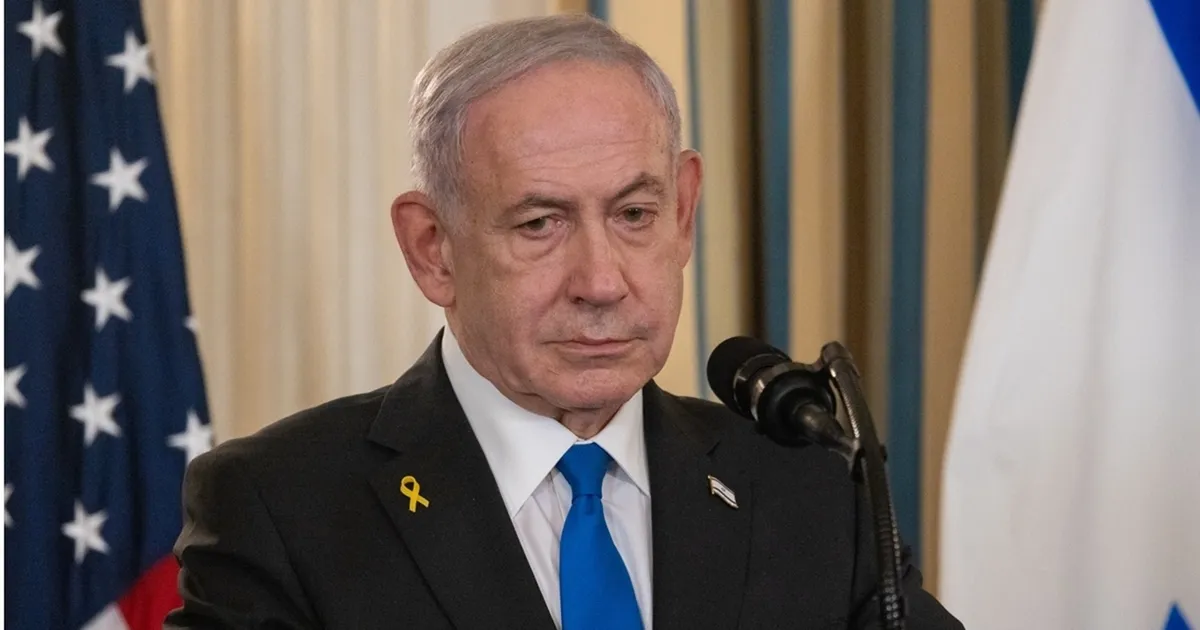
Netanyahu seeks to create an axis of countries that share the same vision of reality, challenges, and goals in confronting what he described as extremist axes.




Share your opinion
Netanyahu's New Axes: A Reading of the Strategy of Besieging and Dismantling the Region