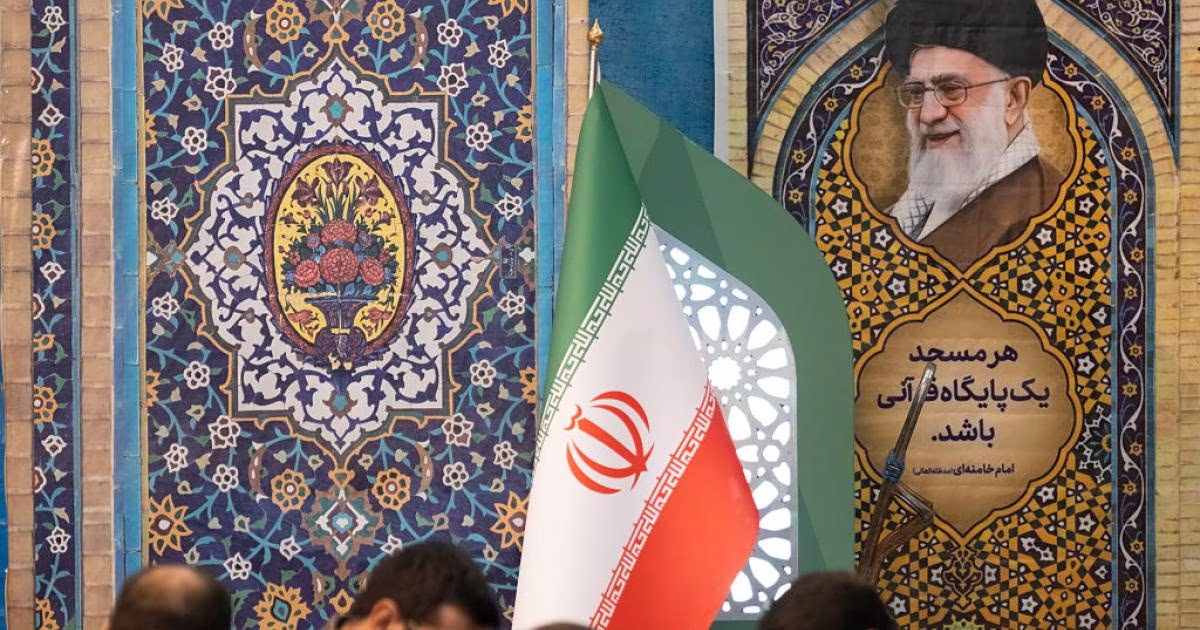







Iranian Foreign Minister, Abbas Araghchi, announced a real opportunity to reach a diplomatic settlement with the United States regarding the nuclear file, despite the escalating tone of military threats. Araghchi clarified that reaching a solution that serves all parties is still possible if the necessary political will is available to overcome current obstacles.
The Iranian minister revealed that his country is engaged in drafting an agreement and specific technical elements, following two rounds of intensive discussions hosted in Muscat and Geneva this month. These moves come at a sensitive time when the region is witnessing unprecedented American military buildups aimed at pressuring Tehran.
Despite the openness to dialogue, Araghchi stressed that Iran will not relinquish its sovereign right to enrich uranium, considering it an inherent right of the state that cannot be negotiated. He affirmed that the decision in this regard rests solely with Tehran, which represents the central point of contention that international parties are trying to address.
In the context of responding to field threats, the foreign minister warned that any American aggression would be met with a decisive response targeting Washington's vital interests in the Middle East. He described any military action against his country as an act of aggression that grants Tehran the full right to defend itself by all available means.
For its part, the US administration expressed its conditional readiness to return to the negotiating table in Geneva next Friday, according to media sources quoting officials in Washington. The American side stipulates receiving a detailed and comprehensive Iranian offer regarding the nuclear program within the next forty-eight hours to proceed with this round.
On the internal Iranian front, international press reports revealed that high-level directives were issued by Supreme Leader Ali Khamenei aimed at fortifying the regime's structure against any sudden targeting. These directives included the Secretary of the Supreme National Security Council, Ali Larijani, with a focus on developing scenarios to ensure the continuity of governance in the event of the absence of the supreme leadership.
Khamenei's precautionary measures included defining four levels of succession for all sensitive sovereign, military, and governmental positions. The Supreme Leader asked senior officials to name four potential replacements for each leadership position, to ensure that there is no administrative or field vacuum if any of them are subjected to an assassination attempt or are unable to perform their duties.
Khamenei also authorized a small, trusted circle of his close associates to make fateful decisions in extreme emergencies, especially if contact with the Supreme Leader is lost. These steps reflect growing concern among the Iranian leadership about the possibility of adversaries resorting to direct targeting operations against political and military figures.
On the ground, the United States has raised its military presence in the region to record levels not seen since 2003, coinciding with the invasion of Iraq. These reinforcements aim to pressure Tehran to abandon its missile and nuclear programs, as well as to reduce the influence of its regional allies, whom Washington describes as proxies.
In contrast, political circles in Tehran believe that American and Israeli moves aim to create pretexts for direct intervention and regime change. Iran insists on the demand for the lifting of comprehensive economic sanctions as a prerequisite for imposing technical restrictions on its nuclear program, while affirming its readiness to respond to any attack, regardless of its size.
If the United States attacks us, this is an act of aggression, and what we do in response will be self-defense and targeting Washington's interests in the region.
Share your opinion
Iran Balances Nuclear Diplomacy with 'Emergency Succession' Arrangements to Counter US Threats