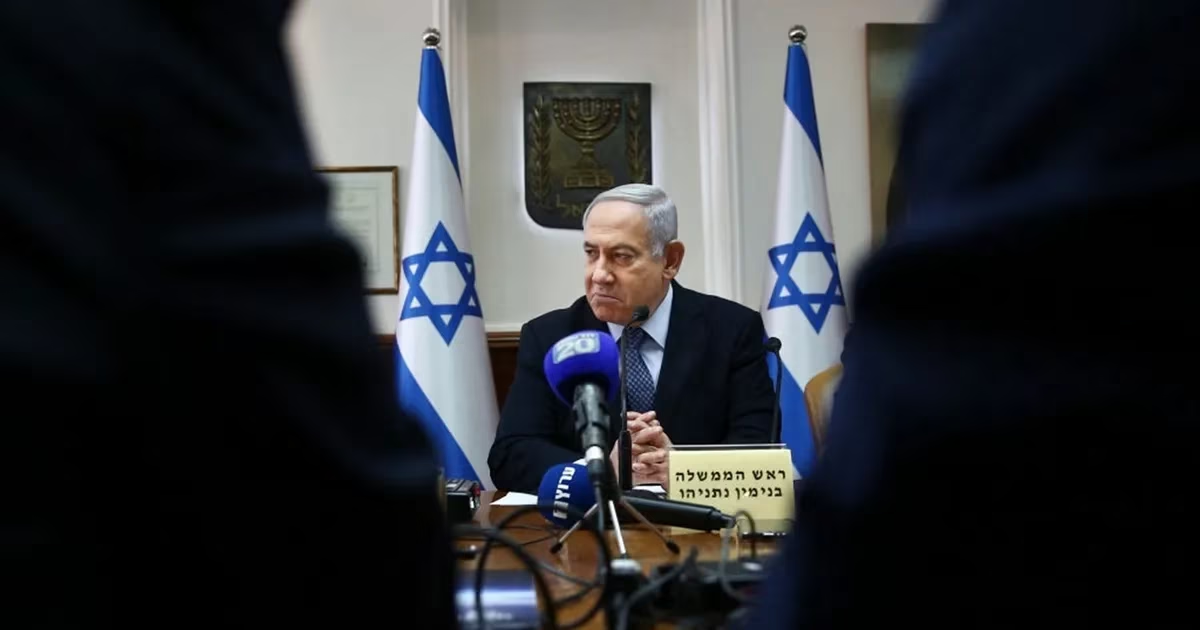







The signs of an early election race are beginning to emerge within the occupation state, as field and political data indicate that dates are now under actual discussion among the poles of the ruling coalition. The biggest concern dominating the thinking of Benjamin Netanyahu and his right-wing allies is the necessity of avoiding holding elections on the original scheduled date in October 2026, to prevent their coinciding with the third anniversary of the October 7 attack.
Informed sources reported that senior Likud party officials have already begun to change their schedules to accommodate the hypothesis of imminent elections, with June 30 or July 7 being circulated as preferred dates. Observers believe that this shift reflects Netanyahu's desire to preempt any public or media movement that might accompany the commemoration ceremonies of the major security and military failure that occurred during his tenure.
Political circles in Israel avoid August for holding elections due to it being the annual tourist travel season, which makes it difficult to ensure wide participation from voters abroad. September also represents an additional obstacle due to the overlap of Jewish holidays, as leaders of the Haredi religious parties prefer not to be preoccupied with election campaigns during periods of religious arrangements and their special rituals.
A major political gamble on external support is emerging, specifically from US President Donald Trump, who is expected to visit Israel at the end of next April. Netanyahu aims with this visit to capitalize on the anticipated American praise to enhance his leadership image before the Israeli voter, and to use the echoes of this visit as a strong propaganda lever in his election campaign during June.
The Israeli Prime Minister is currently seeking to achieve a state of temporary stability within his coalition by passing sensitive legislation, foremost among them the military exemption law and the general budget. These steps are necessary to ensure the continued support of the Haredi parties, as Netanyahu fears the outbreak of protests or riots within these circles that could negatively affect his electoral chances.
The Likud party corridors are witnessing an unprecedented state of alert, with internal sources describing the situation as 'hysteria' that has afflicted ministers and officials seeking to maintain their positions. The intensity of the competition has reached the point where senior officials have stormed private social and family events of party activists without invitation, in a desperate attempt to secure loyalties before the expected primary elections begin soon.
The verbal altercations observed in the Knesset cafeteria between disgruntled activists and party ministers reflect the enormous pressure facing Likud leaders at this stage. Each minister is trying to prove his efficiency and field activity to compensate for any previous shortcomings, fearing punishment from party members who have the authority to determine the order of names on the upcoming electoral list.
Internal Likud assessments showed that only four names feel relatively secure in the top ten list: Yisrael Katz, Yariv Levin, Eli Cohen, and Amir Ohana. The rest of the ministers and deputies find themselves at the mercy of Netanyahu's decisions, whose close associates have already begun sending clear messages calling for the need to bring forward the election date to ensure control of the scene.
Political analysts believe that Netanyahu fully realizes that his political survival is linked to his ability to maneuver away from the failures in Gaza, which explains his haste to turn the page on the original election date. Escaping the 'October curse' represents a survival strategy aimed at shifting public discourse from security failures to alleged political achievements and close international relations.
Pressure is increasing within the right-wing coalition to quickly finalize the budget file, as it is the only tool preventing the government's collapse before the date set by Netanyahu. If he succeeds in passing the budget and the conscription law, the way will be paved for announcing the dissolution of the Knesset and heading to the polls next summer, away from the noise of investigations into the events of October 7.
Behind-the-scenes negotiations include equal deals between Likud poles to ensure no surprises in the primary elections, as there is concern about the rise of new faces that could overthrow the old guard. This state of uncertainty pushes ministers to intensify their media and field appearances, in an attempt to convince the party bases that they are the most worthy of representing the right in the next phase.
On the other hand, the Israeli opposition is cautiously watching these moves, considering that bringing forward the election date is a transparent attempt to mislead public opinion and circumvent investigation committees. However, the state of fragmentation within the opposition may give Netanyahu the opportunity he is looking for to rearrange his cards and return strongly through an alliance with Trump and the far-right.
The tight timeline under which Netanyahu operates leaves little room for error, as any setback in passing the required laws could lead to the collapse of the coalition at a time the Prime Minister does not desire. Therefore, the coming weeks will be crucial in determining whether Netanyahu will succeed in imposing his own timing on the Israeli political map or whether successive crises will precede him.
In conclusion, it seems that the political scene in Israel is heading towards a new peak of internal conflict, where the personal interests of leaders intertwine with party interests under complex security conditions. The memory of October 7 remains the hidden driver of all these moves, as everyone seeks to escape its political and legal repercussions that continue to haunt decision-makers in Tel Aviv.
Netanyahu does not want an election campaign accompanied by commemoration ceremonies and media articles addressing the abysmal failure for which he is responsible.



Share your opinion
Netanyahu plans early elections to escape the 'curse' of the October 7 anniversary