







General Jasper Jeffers, commander of the International Stabilization Force in the Gaza Strip, revealed new aspects of the international military movement in the Strip, confirming the official commitment of five countries to send military reinforcements to participate in security and stability missions. The announced list of countries includes Indonesia, Morocco, Kazakhstan, Kosovo, and Albania, in a step aimed at filling the security vacuum and initiating a new transitional phase.
Jeffers explained during an expanded meeting of the Peace Council in the American capital, Washington, that Indonesia, as the largest Muslim-majority country by population, will play a pivotal role by assuming the position of deputy commander of the international force. Indonesian President Prabowo Subianto expressed his country's readiness to deploy about 8,000 military personnel to participate in this force, which the international community aspires to reach 20,000 members.
The operational plan stipulates that the deployment of these international forces will begin from the Rafah area in the southernmost part of the Gaza Strip, where local police elements will begin training before geographically expanding to other sectors. The task of technical and training supervision for the new Palestinian police personnel will be entrusted to both Egypt and Jordan, to ensure the establishment of a security apparatus capable of managing civilian affairs.
In a related context, Peace Council coordinator Nikolay Mladenov announced the official opening of applications for the formation of a new Palestinian national police force, emphasizing the need for this force to be free from the influence of Hamas. Mladenov indicated that the first hours of opening applications witnessed a wide turnout, with more than two thousand people applying to join this nascent security apparatus.
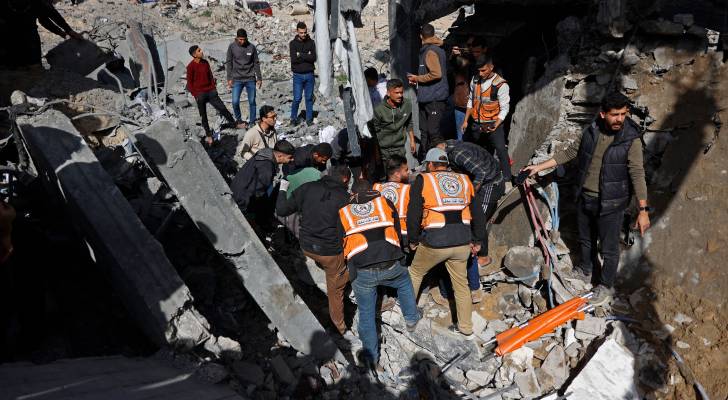
For their part, Egypt and Jordan reiterated their emphasis on the need to accelerate the deployment of the international force and begin comprehensive reconstruction operations in the Strip, which has suffered widespread destruction. The foreign ministers of the two countries, Badr Abdel Aty and Ayman Safadi, stressed the importance of adhering to the requirements of the second phase of the American plan that began in mid-January to end the conflict.
On the ground, Hebrew media sources reported that the Israeli army has already begun logistical arrangements to receive Indonesian soldiers inside the Strip. Although a precise date for the arrival of all units has not been set, estimates indicate that the Indonesian vanguard will be the first foreign forces to set foot in Gaza as part of this international mandate.
Jakarta views its participation in this force as a temporary measure aimed at protecting civilians and facilitating the delivery of humanitarian aid, considering that the ultimate goal must remain the achievement of a two-state solution. These moves come in implementation of UN Security Council Resolution 2803, which established the legal framework for the international force's work and its powers in maintaining security on the borders.
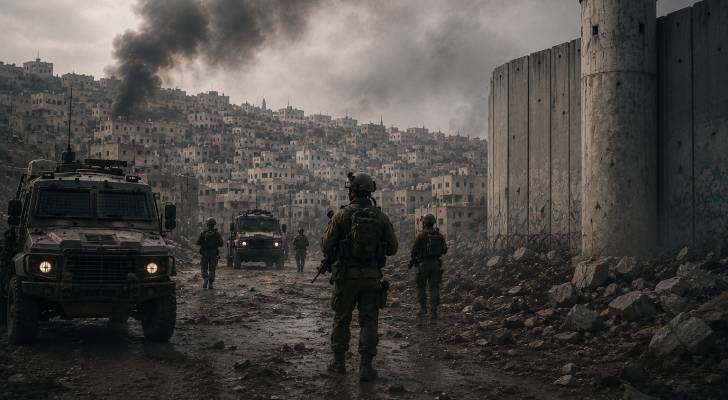
The tasks of the international force include protecting humanitarian corridors and securing the borders of the Gaza Strip with both Israel and Egypt, in addition to overseeing disarmament operations and ensuring the arrival of necessary construction materials for reconstruction. The force has been granted broad powers to use necessary measures to enforce order in accordance with international and humanitarian law standards.
Reports indicate that the White House seeks to expand participation to include more than 40 countries, while the participation of countries such as Argentina and Paraguay from Latin America, and Hungary and Greece from the European continent, has been confirmed so far. This diversity reflects the American desire to give a comprehensive international character to the management of the transitional phase in Gaza, away from traditional parties.
In contrast, field and political challenges arise related to the Palestinian resistance factions' rejection of these forces, as they consider them another face of the occupation, especially with Washington and Tel Aviv's insistence on the disarmament mission. Observers believe that the success of this force largely depends on the extent of its acceptance by the Palestinian street and its ability to provide tangible services in the relief and reconstruction files.
It is worth noting that the administrative structures for the transitional phase, which include the Gaza Executive Council and the National Committee for Administration, were officially adopted on January 16. These bodies work in coordination with the International Stabilization Force to ensure a gradual transfer of power, amidst intensive international oversight aimed at preventing a return to military escalation in the region.
Finally, the Peace Council, headquartered in Washington, remains the primary driver of these efforts, seeking to translate the twenty provisions of Trump's plan into tangible reality. With the continued influx of applications for the new police, attention turns to Rafah to await the first steps of the actual deployment of international forces and the resulting changes in the field.
Indonesia has been offered and accepted the position of deputy commander of the security forces, and is ready to contribute eight thousand soldiers to enhance stability.
Share your opinion
Details of the plan to deploy the international stabilization force in Gaza: 5 countries confirm participation and police training begins