







Dr. Dalal Erekat: Real fear of administratively and politically separating the Gaza Strip from the West Bank under the guise of technocratic committees or transitional arrangements
Dr. Suhail Diab: The proposed plan under the title "Reconstruction of Gaza" intersects with the "Deal of the Century" and reflects the essence of the American approach to the Palestinian issue
Dr. Aql Salah: One of the most dangerous dimensions of the plan is the engineering of the Strip in the American way by carving out areas from it and maintaining Israeli control
Dr. Tamara Haddad: Kushner's plan is a political illusion and a financial trap and will lead to the geographical and demographic restructuring of the Gaza Strip and the entrenchment of the occupation's control
Dr. Jamal Harfoush: Kushner's proposal is a political illusion wrapped in economic discourse, and any reconstruction without a political solution remains temporary on land susceptible to destruction
Dr. Saeed Shaheen: The plan clearly reflects Trump's aspirations to control the Strip and seize its natural resources through the so-called "Peace Council"
Ramallah – Exclusive to "Al-Quds"-
The proposals presented by Jared Kushner, advisor to US President Donald Trump and his son-in-law, regarding the future of the Gaza Strip, raise warnings that they do not constitute a real path to reconstruction or peace, but rather represent an old re-production of the philosophy of "economic peace" within what is known as the "Deal of the Century" which previously failed.
Writers, political analysts, specialists, and university professors, in separate interviews with "Al-Quds", believe that despite the attractive language with which Kushner's plan is presented, and the investment and urban promises it carries, it ignores the essence of the war of extermination on the Gaza Strip, and lacks any political approach that guarantees national rights and Palestinian sovereignty.
Writers, specialists, and university professors believe that the greatest danger in this plan lies in its attempt to re-engineer the Palestinian reality, especially by passing an administrative and political separation of the Gaza Strip from the West Bank, under the titles of technocratic committees or transitional arrangements that may turn into a permanent reality, while bypassing recognized Palestinian political representation, and legitimizing artificial alternatives managed economically and securely, at a moment of unprecedented national and humanitarian exhaustion, which opens the door to dangerous solutions by accepting partial solutions in exchange for stopping aggression or improving living conditions.
They point out that Kushner's plan clearly intersects with previous experiences, most notably the Manama conference and the Deal of the Century, in terms of prioritizing the economic dimension over the political, and using reconstruction as a tool of influence and guardianship, not as a humanitarian initiative. It also reveals a deep gap between the declared ideal vision and the reality on the ground in Gaza, represented by widespread destruction, continued Israeli security control, and the absence of any legal or political guarantees.
They affirm that, as such, the plan seems doomed to failure in advance, as it does not stem from ending the occupation or implementing international legitimacy, but rather perpetuates illusions of development and opens political and demographic traps that may deepen the crisis instead of solving it.
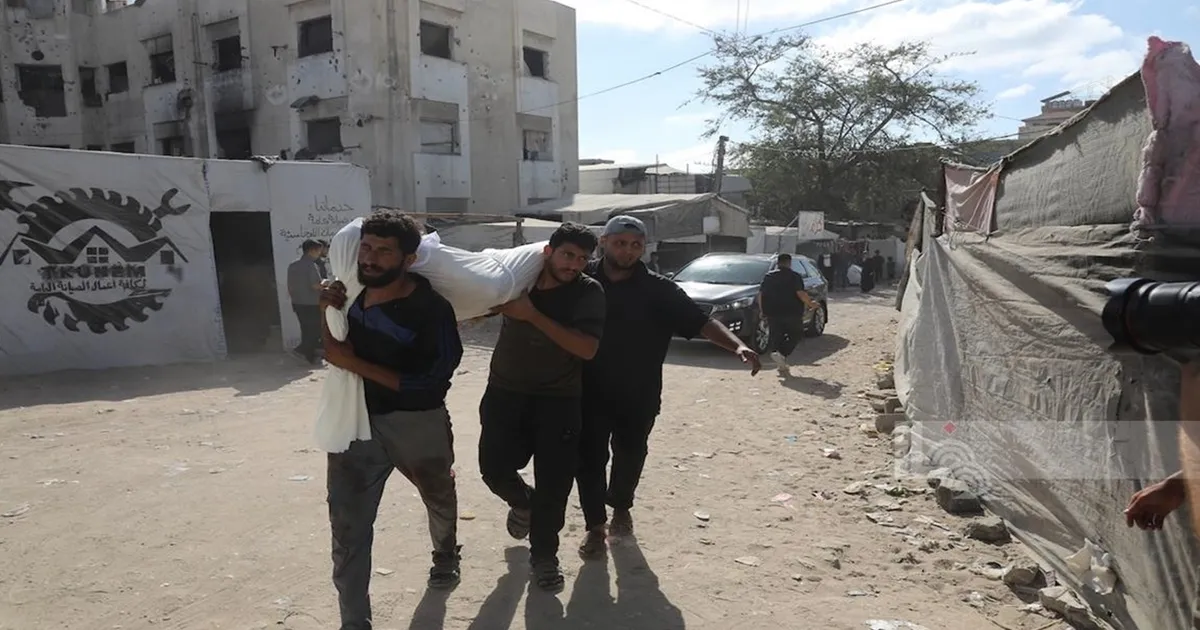
This reading comes as a report by NBC NEWS stated that Kushner's plan is unrealistic and seems to be from another world, given that a large part of the Gaza Strip is still destroyed due to more than two years of Israeli raids, and its residents often live in tents, and the occupation forces still occupy about half of the Strip.
Kushner had revealed plans to create a "new Gaza" filled with gleaming skyscrapers and crowded tourist beaches - a vision, according to the network, that is optimistic and starkly contrasts with the reality of a devastated region after two years of war.
An attempt to re-engineer the Palestinian reality
Dr. Dalal Erekat, Professor of Diplomacy and Conflict Resolution at the Arab American University, warns of the dangers of the proposal presented by Jared Kushner, the US President's envoy, regarding the Palestinian issue, considering that what has been presented since his dialogue at Harvard University goes beyond the concept of "economic peace" to a conscious attempt to re-engineer the Palestinian reality away from national political legitimacy and recognized Palestinian representation.
Erekat confirms that Kushner was "blunt and clear" in his direct targeting of the Palestinian Authority, as he does not view it as a political partner, but rather as a "functional obstacle" that must be overcome, which can be described as Kushner's political doctrine.
Legitimizing artificial alternatives
Erekat explains that Kushner's public criticisms of President Mahmoud Abbas and what he called the "old guard" are not part of normal political criticism, but rather constitute an entry point for demonizing the Palestinian leadership and legitimizing artificial alternatives, such as local "peace councils" or technocratic formulas directly linked to the proposed investment plan.
Erekat points out that Kushner used the discourse of "elite corruption" to link the expansion of settlements to what he described as the luxury of the Palestinian leadership, in an attempt to undermine the political ethics of the Palestinian negotiator, and to justify bypassing and circumventing the official leadership through direct communication with the private sector or technocratic figures, thereby emptying Palestinian political representation of its content.
A plan at a moment of unprecedented exhaustion
Erekat stresses that the greatest danger lies in what she called "de facto separation with Palestinian consent," considering that the proposal of what is known as "New Gaza" comes at a moment of unprecedented exhaustion experienced by Palestinians, which may push segments of them to accept any solution in exchange for stopping aggression.
Erekat explains that the real fear is the administrative and political separation of the Gaza Strip from the West Bank under the guise of technocratic committees or transitional arrangements, stressing that historical experience has proven that temporary solutions often turn into a permanent reality imposed on the ground.
The logic of the real estate developer
Erekat points out that Kushner deals with Gaza as an independent "real estate plot," using the logic of a real estate developer, with talk of investment projects and geographical connection with the West Bank in a purely economic formula, and with the participation of the private sector, without any sovereign or comprehensive national framework.
Regarding governance and property rights, Erekat confirms that the proposal ignores people and law, and does not address the rights of hundreds of thousands of owners of destroyed lands and homes, nor does it clarify how to organize the civil registry or protect the rights of citizens in the face of foreign investors. Erekat points out that the danger lies not only in Kushner's plan itself, but in the Palestinian drift, under the pressure of war and siege, towards solutions that divide geography and end unified political representation in exchange for promises of prosperity without legal or political guarantees.
The essence of the American approach to the Palestinian issue
Political science professor Dr. Suhail Diab confirms that Jared Kushner's plan, recently presented in Davos under the title "Reconstruction of Gaza," clearly intersects with the experience of the Manama conference in 2019 and what was then known as the "Deal of the Century," pointing to three essential common elements between the two proposals that reflect the essence of the American approach to the Palestinian issue.
Diab explains that the first of these elements is the almost complete reliance on the economic dimension, without presenting any clear political approach to the future of governance in the Gaza Strip, whether it concerns self-rule, Palestinian sovereignty, or an independent state, stressing that ignoring the political dimension was not a coincidence, which explains the continuous Palestinian rejection of these proposals from the Deal of the Century until today.
The second common element, according to Diab, is the re-production of a traditional American pattern based on considering economic development as a central solution to complex political crises, with complete disregard for the essential political elements of the conflict, including its historical roots and Palestinian national rights, which makes these plans detached from the real reality of the conflict.
Diab points out that the third element is the deep gap between the "ideal" vision promoted by these plans and the reality on the ground in the Gaza Strip, considering that this gap constitutes the primary incubator for the illusions and traps inherent in such projects.
Reconstruction of Gaza to deepen its political influence
Despite these commonalities, Diab believes that Kushner's plan in Davos reflects a clearer and more dangerous level compared to the Manama plan, as the United States is no longer content with proposing reconstruction as an economic path, but rather seeks to use the reconstruction of Gaza as a lever to deepen its political influence, leading to a kind of guardianship and control over the Strip.
Diab points out that what was absent in the Deal of the Century regarding a political vision for the administration of Gaza is now being formulated through talk of governance and direct American influence.
Diab affirms that the Davos project is not presented as a humanitarian initiative for reconstruction as much as it is used as a tool for regional and international political influence.
Possibility of the plan's success under conditions
Regarding the chances of the plan's success, Diab explains that it is theoretically possible only if four basic conditions are met: a permanent ceasefire, removal of rubble and mines, provision of massive financial capital, and establishment of a clear institutional structure for governance.
However, these conditions, according to Diab, are not currently available, and there are not even serious beginnings to achieve them, especially in the absence of a stable security reality controlled by Israel, and the absence of the necessary Palestinian legitimacy to involve the residents of the Gaza Strip in any such project, for which the United States bears political responsibility.
Diab emphasizes that the discussion is not only about economic illusions, but about political traps related to regional and international power balances, and dependent on the regional trajectory and escalation probabilities, and on the direction of the international system, whether towards renewed American hegemony or towards a multipolar world, which will directly reflect on how the Palestinian issue in general and the Gaza Strip in particular are dealt with.
A theoretical proposal that contradicts the reality on the ground
Writer, political researcher, and professor of comparative political systems, Dr. Aql Salah, considers Jared Kushner's plan for the Gaza Strip not a practical, implementable plan, but rather a theoretical proposal that fundamentally contradicts the existing reality on the ground, politically and security-wise, describing it as "false bourgeois promises" that serve American and Israeli goals and have no connection to a radical solution to the Palestinian issue.
Salah explains that the plan is directly linked to the agenda of US President Donald Trump, who views Gaza as an area for collecting billions and controlling gas wealth off its coast. Salah points out that the plan is marketed internationally as an incentive plan to attract support and investments, but at the level of the Gaza Strip, it is not feasible, because its proponents are driven by specific investment and financial goals, completely separate from the reality of the occupation and the requirements of a just political solution.
Replacing international references
Salah explains that the essence of the plan is to replace international references and resolutions of international legitimacy, which stipulate an end to the occupation and the establishment of a Palestinian state, with an economic approach aimed at covering up the continuation of the Israeli occupation and whitewashing its image before the international community.
Salah confirms that the plan has several overlapping goals, including an economic goal represented by American investment, a political goal represented by legitimizing the occupation, in addition to another goal of improving Israel's international image, leading to a goal related to saving the head of the occupation government, Benjamin Netanyahu, from prosecution and international pressure.
Engineering Gaza the American way
Salah points out that one of the most dangerous dimensions of the plan is the engineering of the Gaza Strip in the American way, by carving out large areas from it and maintaining Israeli control over them, which means transforming Gaza into a truncated entity, and depriving it of its agricultural areas that were an essential element in achieving self-sufficiency.
He affirms that Kushner's plan, old and renewed, is based on imposing an "economic solution" as an alternative to a political solution, and enabling the occupation of the West Bank and Gaza Strip, which constitutes the essence of the conspiracy against the sacrifices of the Palestinian people, especially in the Gaza Strip.
Salah refers to the experience of the "Manama Plan" in 2019, which Kushner promoted under the name "Peace to Prosperity" with a value of 50 billion dollars, and which practically aimed to end the two-state solution, noting that this plan did not achieve economic peace, prosperity, or a political solution. Salah confirms that Kushner returned in 2026 with the same logic, by proposing to transform Gaza into "Palestine's Dubai," in an attempt to transform the conflict from a national liberation issue into an issue of services and economic well-being.
Salah warns that the new plan seeks to replace the so-called "Peace Council," headed by Trump, with international law, the United Nations and its agencies, especially UNRWA, in a step aimed at liquidating the refugee issue and the right of return, and linking all of this to the Deal of the Century and the "Abraham Accords," by using economic and humanitarian pressure in Gaza to impose an economic solution that ends any prospect of a just political solution.
The philosophy of "economic peace"
Writer and political researcher Dr. Tamara Haddad warns of the danger of Jared Kushner's proposal regarding the future of the Gaza Strip, considering that it does not constitute a peace or reconstruction project as much as it is a re-production of the philosophy of "economic peace" previously put forward at the Manama conference, which proved its complete political and national failure.
According to Haddad, Kushner is re-marketing the Manama experience in a new language, combining urban development, investment, and financing, but without addressing the essence of the Palestinian-Israeli conflict, which is the occupation.
Haddad explains that the proposed vision deals with Gaza as an investment and real estate file, not as a matter of liberation and political rights, pointing out that transforming the Strip into a "real estate deal" serves the interests of companies and individuals with commercial backgrounds, led by Kushner and his partners, and does not respond to the rights or national aspirations of Palestinians.
Completely neutralizing the political dimension
Haddad explains that the most dangerous aspect of this plan is the complete neutralization of the political dimension, and the end of any talk about Palestinian sovereignty, geographical borders, or ending the occupation, in exchange for presenting economics as an alternative to rights.
Haddad confirms that this approach was the essence of the Manama conference, which did not produce peace, nor did it improve the living reality of Palestinians, but rather contributed to marginalizing their political rights and denying their national existence.
Regarding the reality on the ground, Haddad explains that Kushner's plan ignores the fact that the Gaza Strip is almost completely destroyed, and that the occupation controls more than half of its area, under a continuous siege, and the absence of any real political horizon.
Haddad points out that talk of transitional phases is not based on American guarantees or Israeli commitments, which practically means consecrating a temporary phase that turns into a permanent one, with continued Israeli military control.
Extremely dangerous demographic dimensions
Haddad notes that the plan includes extremely dangerous demographic dimensions, as it specifies the population numbers in the main cities of the Strip, such as Gaza City, Rafah, and Khan Yunis, which practically means reducing the Palestinian population and opening the door to large-scale displacement.
Haddad considers that this trend constitutes the essence of the plan, which aims to reduce Palestinian demography under the guise of reconstruction and investment.
Popular rejection of imposed structures
Haddad confirms that the Palestinian street in Gaza shows no satisfaction with the proposals related to the "Peace Council," the "Executive Council," or the "Administrative Committee," as they are viewed as structures imposed by American-Israeli pressure and with the support of regional parties, without real Palestinian consensus or representation.
Haddad explains that the state of popular doubt and rejection is increasing, amid a growing conviction that the ultimate goal is displacement, not reconstruction.
Haddad confirms that what Kushner is proposing is nothing but a mixture of political illusion and financial trap, based on collecting money from donors, especially Gulf countries, to transfer the burden of Gaza's destruction from the occupation to the international community, while Palestinians remain the victims, warning that the continuation of this path will lead to the geographical and demographic restructuring of Gaza, and the entrenchment of the occupation's control, instead of ending it.
Ignoring the essence of the conflict
Professor of Scientific Research Methods and Political Studies at the Academic Research Center University in Brazil, Dr. Jamal Harfoush, confirms that the position expressed by an American media outlet regarding the failure of Jared Kushner's experience in the Gaza Strip cannot be understood in isolation from Kushner's previous experience at the Manama conference in 2019, which formed the economic cornerstone of what was then known as the "Deal of the Century."
Harfoush explains that the most important implication in the current proposal lies in the re-production of the same approach that Kushner previously adopted, based on separating economics from politics, development from rights, and reconstruction from sovereignty.
Harfoush points out that the Manama conference offered billions of dollars as an alternative to ending the occupation, and dealt with the Palestinian issue as a living crisis that could be solved through investment, not a national liberation issue and inalienable rights, which led to political and moral failure and widespread Palestinian rejection, due to its disregard for the essence of the conflict, which is the occupation, land, sovereignty, and the right to self-determination.
Harfoush confirms that the current proposal for what is called "New Gaza" reflects the same logic, but with a different urban facade, explaining that in Manama, money without a state was promoted, and in Gaza, there is talk of towers without sovereignty, and in both cases, there is a deliberate absence of the real Palestinian actor. Harfoush considers that the danger lies in the fact that the new proposal is more abstract from reality than the Manama conference itself, especially since Gaza today is not only under occupation and siege, but destroyed, stripped of infrastructure, burdened with rubble and unexploded ordnance, and its people live in harsh humanitarian conditions in tents.
A political illusion wrapped in economic discourse
Harfoush confirms that what is being presented today can be described as a political illusion wrapped in attractive economic discourse, and it may turn into a double trap.
The first trap, according to Harfoush, is the illusion of feasibility, where there is talk of billions of dollars in GDP, ports, airports, and towers, while ignoring documented facts, most notably the presence of more than 60 million tons of rubble, and the need for years to remove debris and clear ordnance, in addition to the absence of Palestinian control over borders, sea, and air, and the continued occupation of large parts of the Strip.
The second trap, according to Harfoush, lies in financing without political guarantees, as Harfoush warns against attracting international funds without a clear commitment to ending the occupation and without guaranteeing Palestinian sovereignty over the land and projects, which transforms money from a rescue tool into a crisis management tool.
Harfoush points out that any reconstruction that is not preceded or accompanied by a real political solution remains temporary reconstruction on land susceptible to re-destruction.
Attractive media language without political content
Professor of Political Media at Hebron University, Dr. Saeed Shaheen, considers that the plan presented by Jared Kushner during the Davos forum last week appears "beautiful and ambitious" from a marketing and media perspective, but in its essence, it lacks any real political content that guarantees the future of the residents of the Gaza Strip and their national rights, warning that it is nothing more than ink on paper.
Shaheen explains that the plan was drafted in attractive media language that suggests to those who do not know the nature of the Palestinian-Israeli conflict that the residents of Gaza, who are facing a continuous war of extermination at varying rates, will be rewarded with a prosperous future full of opportunities and hope.
Ignoring the future of Palestinians
However, the plan, according to Shaheen, completely ignores the political future of Palestinians, and does not include any reference to their right to liberation, ending dependence on the occupation, or even international guardianship, but rather carries in its hidden details what deprives them of their rights and eliminates any national horizon.
Shaheen points out that the plan clearly reflects US President Donald Trump's aspirations to control the Gaza Strip and seize its natural resources, through the so-called "Peace Council," which has so far met only a small part of the Gaza Strip's humanitarian needs, while maintaining the main goal of the war, which is to eliminate any threat to Israel, and complete security control over the details of Palestinian life through a joint American-Israeli command room.
Shaheen explains that Israel seeks, through this plan, to impose permanent security control and keep large areas of the Strip empty, to ensure what it describes as the security of its southern borders, under international cover and UN resolutions, while the plan is promoted as a reconstruction project.
Investment profits under the guise of reconstruction
Shaheen explains that the financial aspect of the plan is based on collecting funds in the name of reconstruction, while in practice it aims to generate investment profits, especially in the real estate sector, owned primarily by Trump and his son-in-law, not by the residents of Gaza.
Shaheen warns that the plan aims to end any possibility of a viable Palestinian state or achieving geographical connection with the West Bank, where a parallel plan is being implemented to entrench Israeli control.
Shaheen stresses that any plan that does not start from ending the occupation in accordance with international legitimacy and its resolutions remains sterile, emphasizing that what is being promoted today is nothing but political illusions that pave the way for the completion of Israeli control over the entire Palestinian land and the imposition of a permanent fait accompli.



Share your opinion
Kushner's Plan.. Recycling the "Deal of the Century"