







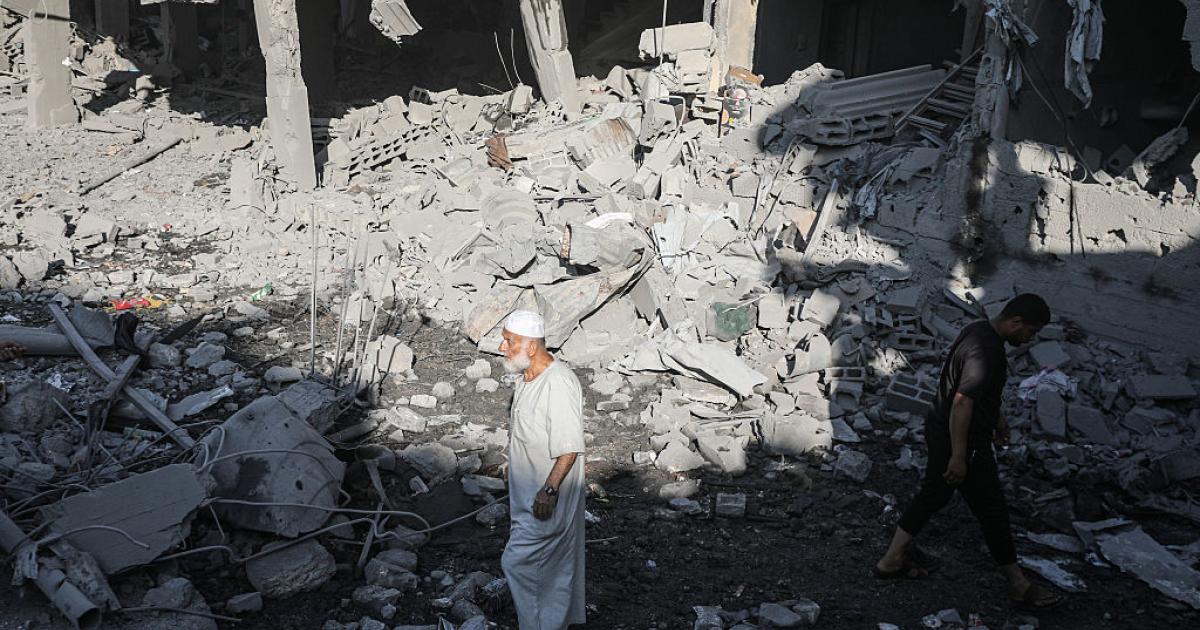
The "New York Times" reported on Wednesday that the so-called "Peace Council" is preparing to grant US President Donald Trump broad and unprecedented powers related to the future administration of the Gaza Strip, a move that reflects the shift of the Palestinian issue from traditional international settlements to a new formula effectively managed by the White House. Under a plan drafted by the emerging international group, chaired by Trump, the US President will have the final say on governance, security, and reconstruction, as well as in defining the features of the "welfare" of the population in the war-torn strip.
The Peace Council held its first constitutive meeting last week at the Davos Economic Forum in Switzerland, where member states, including Azerbaijan and Qatar, signed the council's founding charter, which bears the slogan of seeking "lasting peace in conflict-affected or threatened areas." However, according to observers, this vague slogan conceals a fundamental shift in the nature of conflict management, based on centralizing power instead of distributing it, and on bypassing UN frameworks instead of working through them.
Although many details of the council remain under wraps, a draft resolution seen by the Times reveals a clear intention to grant Trump the authority to nominate senior officials who will manage Gaza, define their tasks, and even suspend or approve their decisions in "emergency circumstances." These include an official with the title of "High Representative for Gaza," alongside the commander of an international stabilization force, which is supposed to handle security aspects in the Strip.
The draft resolution is dated January 22, and has not yet been signed by Trump, meaning it has not officially entered into force. However, three informed officials, on condition of anonymity, confirmed that the text is under serious discussion within the US administration, with the possibility of amendments before its final adoption.
In terms of form and content, the document appears similar to UN Security Council resolutions, which observers see as a clear attempt by the Peace Council to confer quasi-UN legitimacy on arrangements effectively managed outside the UN framework. The idea of establishing the Peace Council was first proposed as part of Trump's twenty-point plan, announced last September, to end the two-year war between Israel and Hamas.
Last November, the Security Council granted the Council a limited mandate in the context of US efforts to establish a ceasefire in Gaza. However, the Trump administration later announced its intention to expand the Council's scope to include other conflicts, without clarifying the criteria or geographical limits of this expansion.
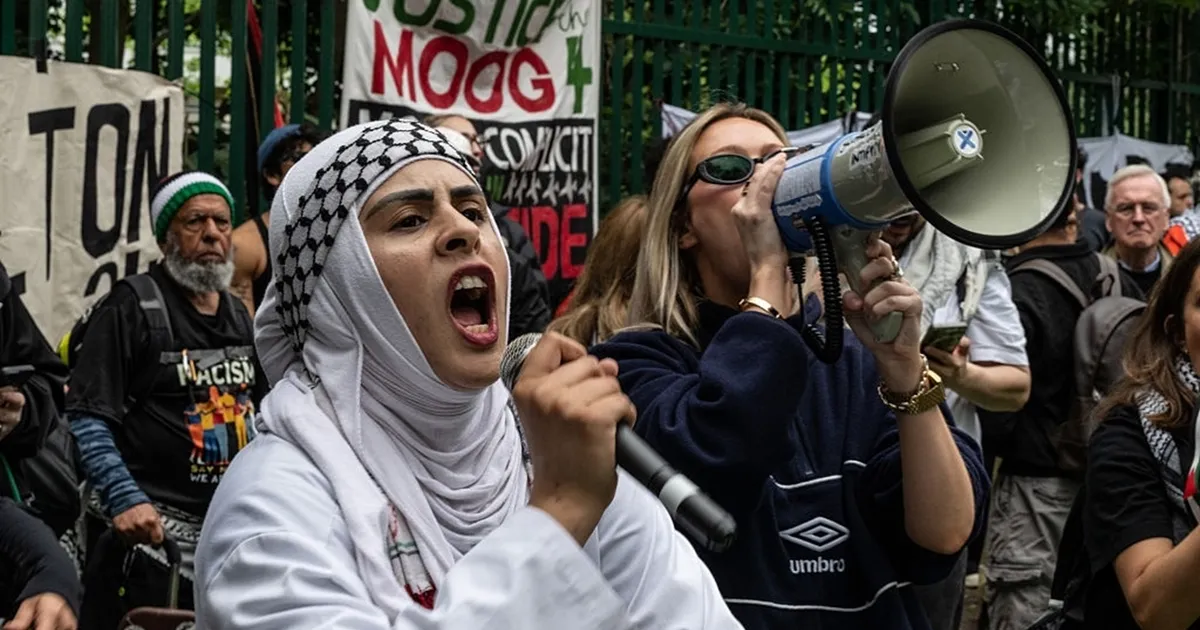
Despite the enthusiastic accession of a number of countries to the Council, influential Western countries, such as France and Britain, refrained from participating. Spanish Prime Minister Pedro Sánchez also announced his country's refusal to join, considering that the Council excludes the Palestinian Authority and operates outside international legitimacy.
The leaders of the signatory states will form the Peace Council, chaired by Trump, who even has the authority to appoint his successor, alongside an executive council whose members were announced on January 16, including Jared Kushner and Tony Blair. The draft resolution also revealed for the first time the inclusion of Susie Wiles, Trump's chief of staff, and Martin Edelman, a real estate lawyer close to the president.
The text confirms that the United States will be the "responsible party" for Gaza, while the role of other parties is limited to support, not partnership. The resolution includes overseeing the reconstruction of the Strip, at an estimated cost of tens of billions of dollars, and establishing "humanitarian zones" for aid distribution, while excluding any individuals or institutions suspected of having ties to Hamas, a condition that raises broad problems given the composition of the civil apparatus in Gaza.
The project also designates Nikolay Mladenov, the former UN envoy, as the first High Representative for Gaza, overseeing a Palestinian committee of technocrats responsible for daily administration and supervision of the local police.
The Peace Council project reflects a structural shift in Washington's approach to the Palestinian issue, where the traditional concept of "mediation" is being replaced by the role of an effective ruler. The plan does not merely manage the post-war phase, but re-engineers power in Gaza according to a purely American vision, marginalizing local actors and reducing "peace" to security stability. Here, peace becomes an administrative function, not a political path based on rights.
According to experts, the exclusion of the Palestinian Authority and working outside the UN framework cannot be separated from a broader path aimed at redefining international legitimacy itself. The Peace Council, in its current form, resembles a "modern mandate" model, where distressed regions are managed in the name of aid and reconstruction, while the concepts of sovereignty and representation are emptied of their content. The fundamental question remains: Is a new Gaza being built, or is an old crisis being managed with more centralized tools?
Share your opinion
Peace Council Grants Trump Near-Absolute Powers in Gaza