





Mohammed Hawash: Netanyahu still treats the crossing as a potential gateway for displacement, not as an entry point for new political arrangements, and thus holds onto it as a pressure card.
Talal Awkal: An undeclared settlement might be implemented, enabling Israel to control the movement at the crossing in exchange for an American commitment to work on implementing displacement plans.
Fayez Abbas: Netanyahu's government will not dare to reject the American request, but it will seek to obstruct the opening of the crossing by imposing unacceptable Palestinian conditions.
Mohammed Joudeh: The Rafah crossing has become the gateway to the conflict over Gaza's future in a stage between post-battle and pre-decision, a decision that has not yet been settled.
Hani Abu Al-Siba': The timing of the crossing's opening coincides with Israeli and American preparations to open other fronts because ending the Gaza issue has become a necessity.
Nihad Abu Ghosh: Israel is formally responding to moving to the second phase and will try to reduce it to a disarmament clause while seeking to control the crossing.
Ramallah - Exclusive to "Al-Quds"-
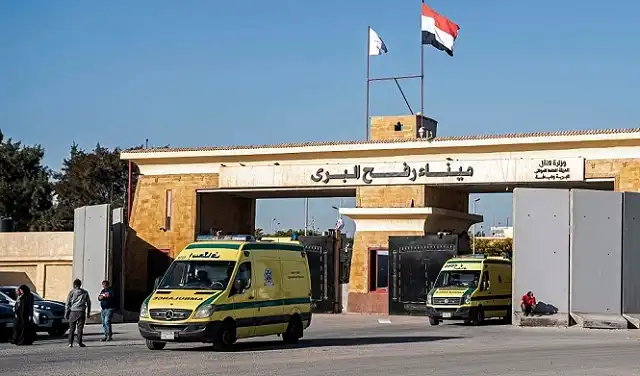
The Rafah crossing is once again at the forefront of political and diplomatic activity related to the Gaza Strip, amidst escalating talk of its opening, coinciding with intensive American movements and visits by American envoys to Israel, to pressure Israeli Prime Minister Benjamin Netanyahu to open it.
Writers, political analysts, and specialists confirm in separate conversations with "Al-Quds" that this momentum regarding the opening of the Rafah crossing comes amidst widespread questions about the nature of the anticipated opening, and whether it will constitute an actual entry point for moving to the second phase of the ceasefire agreement in the Gaza Strip, or merely a formal step that keeps the existing reality as it is.
Writers and specialists point out that the Rafah crossing issue has become a central point of contention between the American vision seeking to launch the second phase of arrangements, and the Israeli position that tries to redefine the concept of "opening" to ensure continued security control and control over the movement of individuals and goods at the crossing.
They emphasize that these developments coincide with a catastrophic humanitarian reality in the Gaza Strip, and increasing international pressure to halt the deterioration, making the Rafah crossing more than just a border gate, but rather a symbol of the conflict over the future of the Strip.
An American attempt to bridge the gap
Writer and political analyst Mohammed Hawash explains that the intensive political and diplomatic activity around the Rafah crossing, including the arrival of American envoys Witkoff and Kushner in Israel, reflects a serious American attempt to bridge the gap between US President Donald Trump's announced initiatives and the existing political and security reality, amidst Israeli insistence on supervising, directly or indirectly, any crossing opened south of the Gaza Strip.
Hawash believes that what is currently happening cannot be separated from Israel's endeavor to establish its own side of the Rafah crossing, which it supervises securely, stressing that the Israeli reality clearly states that Tel Aviv is committed to controlling entry and exit, and rejects the return of the crossing to its full Palestinian status as it was before the Israeli invasion of the Gaza Strip.
Hawash points out that all Israeli perceptions and proposals, despite their differences, intersect at this fundamental point.
Netanyahu's attempts to evade
Hawash explains that the head of the occupation government, Benjamin Netanyahu, is trying to evade American pressure by claiming that opening the crossing is not possible at the current stage, noting that the Israeli Ministerial Security Cabinet is holding a meeting to discuss this file, in an attempt by Netanyahu to say that the decision is not personal, but rather stems from an institutional position within the Israeli government.
Hawash clarifies that the opening of the Rafah crossing practically means entering the second phase, a phase that Netanyahu does not want to begin, because it carries broad political and security dimensions, including agreeing on withdrawal dates from the Gaza Strip, opening crossings, and starting reconstruction operations, in addition to commencing the work of the Palestinian National Committee to manage the Strip in understanding with international institutions stemming from UN Security Council and International Executive Council resolutions.
Multiple pretexts to obstruct the second phase
Hawash points out that Israel is putting forward multiple pretexts to obstruct this phase, including conditioning the return of the last Israeli body of prisoners killed in Gaza, in addition to raising the issue of disarming Hamas.
Hawash considers that this last condition is nothing more than a political pretext, stressing that Hamas today does not possess weapons that pose a strategic threat to Israel's security, and that what remains are individual weapons or remnants of rockets unsuitable for military use, in addition to training sites that have lost their combat value.
Hawash emphasizes that the Israeli conditions related to opening the crossing, whether one-way or through the establishment of two parallel crossings, primarily aim to prevent the return of Palestinians to the Gaza Strip, and to transform transitional issues into permanent realities, in the context of a known Israeli policy based on transforming the temporary into the eternal.
Hawash explains that the visit of American envoys Witkoff and Kushner to Israel to discuss the opening of the Rafah crossing carries a clear message to Netanyahu that he cannot obstruct or openly oppose President Trump's plans, noting that Washington is determined to move forward with the opening of the second phase, even if it faces subsequent setbacks.
Netanyahu and the crossing gateway to displacement
Hawash stresses that Netanyahu still treats the Rafah crossing as a potential gateway for displacement, not as an entry point for new political arrangements, and therefore the crossing remains a pressure card that Netanyahu holds, emphasizing that the idea of forced displacement and ethnic cleansing is still deeply rooted in the mind of the current Israeli government, and there is no one within it who rejects this approach, but rather it is wrapped in Talmudic religious ideas that consider Gaza part of the "complete land of Israel."
Hawash affirms that Netanyahu, despite being presented as the most liberal within his government, engages in political maneuvers aimed at pleasing the far-right and the societal base that has become more extreme, amidst the shift of Israeli society towards the right, even within opposition parties that do not fundamentally differ from the government in managing the conflict with the Palestinians.
Hawash believes that Netanyahu's options are limited, and he is likely to eventually agree to open the Rafah crossing, in exchange for tightening other files such as disarmament and setting a timeline for it, to satisfy the right, and at the same time comply with American plans.
Hawash warns that these plans are of an investment real estate nature, and do not take into account the rights of Palestinians, their culture, and their way of life in the Gaza Strip.
Continuing the siege with different tools
Writer and political analyst Talal Awkal believes that the circulating Israeli statements regarding dealing with the Rafah crossing, whether in its old form or through a new crossing that Israel intends to establish, clearly reveal two fixed paths in Israeli policy: first, the continuation of the displacement approach, and second, the insistence on not backing down from imposing full security control over the Gaza Strip.
Awkal explains that Israel seeks absolute control over the movement of individuals and goods to and from the Strip, which practically means continuing the siege with different tools, even if the opening of the crossing is announced. Awkal points out that the American administration seems willing to open the Rafah crossing as an entry point for moving to the second phase of political arrangements, but it clashes with the Israeli position that rejects any opening that does not guarantee security hegemony.
Awkal suggests that developments will lead to an undeclared settlement, whereby Israel obtains continued control over the movement at the crossing, in exchange for an American commitment to work on implementing displacement plans according to different approaches and methods, which establishes a new reality that keeps Gaza under the same restrictions with a change in form, not in essence.
Moving towards implementing Trump's plan
Fayez Abbas, a writer specializing in Israeli affairs, believes that the escalating American activity regarding the opening of the Rafah crossing portends a clear crisis and tension between the American administration and Benjamin Netanyahu's government, noting that current indicators point to real differences within Israel regarding the American decision, especially given the composition of the far-right government.
Abbas explains that the occupation government was surprised by the announcement of the intention to open the Rafah crossing, especially after the announcement was made by the head of the Palestinian National Committee tasked with managing the Gaza Strip, Dr. Ali Shaath, during his participation in the Davos Forum, considering that Shaath would not have announced this without direct American confirmation and support, which reinforced the conviction within Israel that the decision was made in Washington without prior coordination with Netanyahu's government.
Abbas points out that the Israeli War Cabinet is scheduled to meet to discuss the repercussions of opening the crossing, coinciding with the arrival of American envoys Witkoff and Kushner in Israel to meet with Netanyahu, explaining that the purpose of the visit is to begin implementing the second phase of US President Donald Trump's plan for the Gaza Strip.
Abbas clarifies that Netanyahu's government, despite its objections, will not dare to explicitly reject the American request, but it will seek to obstruct the opening of the crossing by imposing strict and unacceptable Palestinian conditions. Among these conditions, according to Abbas, is preventing the return of Gaza residents who left the Strip since the beginning of the war, with the exception of humanitarian cases only, in addition to Israel's demand to establish an Israeli checkpoint inside the crossing, under the pretext of preventing the smuggling of weapons and people into the Strip.
Abbas believes that the American administration is moving forward with implementing Trump's plan in Gaza, considering that this constitutes a major political achievement for any American president seeking to create an opportunity for a Palestinian-Israeli agreement, despite strong opposition from fascist right-wing ministers in the Israeli government, who are pushing for the re-establishment of Jewish settlements in the Gaza Strip.
Abbas believes that the American administration will not allow the Ben Gvir and Netanyahu government to thwart the path to reaching an agreement, expecting Netanyahu to pressure his ministers to prevent the issuance of statements opposing the American decision, at a time when Witkoff and Kushner are likely to succeed in convincing Netanyahu, or even politically threatening him, not to obstruct American efforts to implement the second phase of Trump's plan.
The future of the Strip and its administration's identity
Writer and political analyst Mohammed Joudeh believes that the escalating debate about opening the Rafah crossing, coinciding with the arrival of American envoys Steve Witkoff and Jared Kushner in Israel to discuss the file with the head of the occupation government, Benjamin Netanyahu, cannot be read as an isolated humanitarian or technical issue, but rather as an intense title for a broader political battle related to the future of the Gaza Strip and the identity of the party that will manage it and decide its fate in the next stage.
Joudeh explains that the current talk about opening the crossing does not start from Rafah and does not end there, noting that the cessation of widespread military operations does not mean the end of the war politically.
The stage of conflict over "the day after"
Gaza, according to Joudeh, has entered a new stage titled "the day after" conflict, amidst the absence of a real consensus on who holds the decision and legitimacy in the Strip.
Joudeh believes that the timing of presenting the names of American envoys, such as Witkoff and Kushner, is not accidental, but rather reflects increasing American concern about losing control over the course of events.
Israel, according to Joudeh, has exhausted a large part of its military power without achieving a decisive victory, while international pressure is escalating and the humanitarian catastrophe is worsening, turning into a political and moral burden even on Tel Aviv's allies, which pushes Washington to act not out of humanitarian motives, but out of fear that the closure of Rafah will become a permanent indictment.
Redefining the concept of "opening the crossing"
Joudeh points out that Israel does not want to open the crossing in its previous form, because that would mean an implicit acknowledgment of its failure to change the equation, so it seeks to redefine the concept of "opening the crossing" itself, by proposing alternatives that include a crossing without sovereignty, movement without freedom, and an incomplete Palestinian decision.
Joudeh notes that the talk about alternative crossings, additional checkpoints, or advanced inspection mechanisms does not have an engineering dimension as much as it reflects a political vision aimed at transferring control from the ground to the security system.
Joudeh clarifies that the proposed model is based on the apparent absence of the Israeli soldier from the gate, in exchange for tightening control through direct or indirect security surveillance systems, so that the crossing appears open to cameras, but is actually closed in its essence.
Joudeh points out that the United States is trying to market this proposal as a compromise that alleviates the siege, satisfies the international community, and reassures Israel without direct confrontation with Egypt, but in reality, it postpones the explosion and does not address the roots of the crisis.
Joudeh emphasizes that Gaza is currently experiencing a stage of "no solution," where there is neither comprehensive war nor peace, but rather a long management of the crisis based on a fragile calm, partial opening, and limited reconstruction, with the specter of escalation remaining present due to the political deadlock.
Joudeh believes that the Rafah crossing has become the gateway to the conflict over Gaza's future, in a stage between post-battle and pre-decision, a decision that has not yet been settled.
On the verge of the imminent opening phase
Writer, political analyst, and specialist in Israeli affairs Hani Abu Al-Siba' believes that the Rafah crossing, which constitutes the only lifeline for the Gaza Strip to the outside world, is on the verge of a very imminent opening, in a development that carries political, security, and humanitarian dimensions beyond being a technical procedure. Abu Al-Siba' points out that this development is based on the statements of the head of the Palestinian National Authority for managing the Gaza Strip (Technocrat Committee), Dr. Ali Shaath, during his participation in the Davos Forum, where he announced that the crossing would open next week, which Shaath would not have announced without American support.
Abu Al-Siba' explains that the Hebrew media has begun to speak directly about opening the Rafah crossing in both directions, which the Israeli government previously rejected, as it had planned to open it in one direction only for Palestinians to leave the Gaza Strip without allowing them to return.
Abu Al-Siba' confirms that the Egyptian government's insistence on opening the crossing in both directions, along with continuous European pressure, led to a change in the Israeli position, as there is now talk of a meeting of the Israeli cabinet to approve the decision, not to discuss it, after reaching prior understandings with the American administration during talks between Benjamin Netanyahu and Washington.
Abu Al-Siba' clarifies that the arrival of Kushner and Witkoff to the region and their meeting with Netanyahu came to finalize the mechanism for opening the crossing.
Israeli conditions met with pressure
Abu Al-Siba' points out that the Israeli government stipulates that those leaving the Gaza Strip undergo a security check, by gathering them at a specific point before reaching the crossing, which is supposed to be managed according to the 2005 agreement model, as it was with the participation of the Palestinian police and presidential guard, and with the presence of European observers, while Egyptian security forces handle the Egyptian side of the crossing, without Israeli intervention.
Abu Al-Siba' indicates that international pressure, along with the American administration's desire to close this file, is pushing towards opening the crossing, noting that US President Donald Trump had previously presented the cessation of the war in Gaza as one of his political achievements in international forums.
Abu Al-Siba' warns of the possibility of Netanyahu reneging on the agreement, based on his known record of violating understandings, explaining that the Israeli government still conditions the return of the last body of an Israeli officer killed in Gaza to open the crossing, but the American administration seems determined to open it even without this condition being met.
Strong indications for opening the crossing
Abu Al-Siba' points to strong indications confirming that the opening of the crossing has become irreversible, including statements by Israeli Foreign Minister Gideon Sa'ar about reaching an agreement with the "Smolland" government to receive militias working with Israel in the event of the Israeli army's withdrawal from its areas of control, with the provision of safe places for them and their families, which reflects an Israeli readiness for widespread field changes.
Abu Al-Siba' believes that the Rafah crossing represents the only lifeline for the residents of the Gaza Strip, given the closure of the Erez crossing since the beginning of the war, noting the presence of thousands of stranded students, tens of thousands of wounded and sick, including cancer patients, in addition to fragmented families and residents in urgent need of travel.
Abu Al-Siba' believes that the permanent opening of the crossing will pave the way for the start of the reconstruction phase and the commencement of the Gaza Strip's administration, although Netanyahu does not wish this and continues the policy of destruction, citing the complete destruction of the Shuja'iyya neighborhood and the continued targeting of infrastructure.
American and Israeli focus on other fronts
Abu Al-Siba' links the timing of the talk about opening the crossing to Israeli and American preparations to open other fronts in the region, whether with Iran or Hezbollah, considering that ending the Gaza issue has become a necessity for arranging broader regional priorities.
Abu Al-Siba' indicates that the American administration seeks to hand over the file to the Peace Council in preparation for the start of reconstruction, leading to the issue of disarming Hamas, warning that rejecting this could lead to a scenario similar to what is happening in Lebanon.
Abu Al-Siba' emphasizes that the opening of the Rafah crossing constitutes a dismal failure for the Israeli government in implementing the project of displacing Palestinians from the Gaza Strip, stressing that the Palestinians' steadfastness on their land, even living in tents, has thwarted all attempts at coercion and pressure, and reaffirmed that this people cannot be uprooted from their land no matter how severe the aggression.
Opening the crossing amidst Israeli violations
Writer, political analyst, and specialist in Israeli affairs Nihad Abu Ghosh confirms that the renewed talk about opening the Rafah crossing, coinciding with the arrival of American envoys Witkoff and Kushner in Israel, comes more than one hundred days after the ceasefire agreement in the Gaza Strip, during which the first phase of the agreement witnessed systematic Israeli obstruction of its provisions, through the use of multiple pretexts, real and artificial, aimed at emptying the agreement of its content.
Abu Ghosh explains that Israel, throughout this period, resorted to claiming Palestinian violations, and imposed additional conditions such as handing over all bodies, and tried to reduce the agreement to one item, which is the recovery of Israeli prisoners, without adhering to the rest of the commitments explicitly stated, foremost among them the opening of the Rafah crossing in both directions, withdrawal from the "Yellow Line," the entry of humanitarian aid, and the cessation of military violations.
Abu Ghosh emphasizes that all of this happened in full view and hearing of the international community, amidst explicit positions from mediating countries, especially Egypt, Qatar, and Turkey, which openly demanded Israel to implement its commitments.
Abu Ghosh points out that the official American position, despite this, remained supportive of Israel and adopted its narrative, referring to US President Donald Trump's statements during a joint press conference with Benjamin Netanyahu, when he said that Israel had fulfilled its commitments one hundred percent, linking this with direct threats to Hamas and the Palestinians, and re-waving the option of displacement.
Global repercussions of what is happening
Abu Ghosh believes that this behavior undermines Trump's credibility and his peace plan, especially given the US President's boasting of ending "eight wars," while Gaza remains the most important test of his administration's credibility.
Abu Ghosh clarifies that the continuation of catastrophic conditions in the Gaza Strip, from famine and epidemics to deteriorating living conditions, along with continuous Israeli violations, led to the reluctance of Arab, Islamic, and European countries to participate in the stabilization force or in the "Peace Council" formed by Trump, which negatively affected American strategic plans in the region, and weakened the chances of expanding the "Abraham Accords."
Abu Ghosh points out that the American administration's insistence on moving to the second phase and opening the crossing came as a result of these repercussions.
Emptying the opening of the crossing of its content
Abu Ghosh explains that Israel, in contrast, seeks to transform the step of opening the Rafah crossing into a formal procedure that changes nothing on the ground, so that the opening of the crossing becomes without actual value given the strict conditions on the movement of individuals, the continuation of the humanitarian tragedy, and the attempt to reduce the second phase to one item, which is the disarmament of the resistance without any Israeli withdrawal or cessation of violations, but rather with the initiation of selective reconstruction in areas under occupation control and devoid of Palestinian residents.
Abu Ghosh points out that Israel is formally responding to moving to the second phase, and will try to reduce it to a disarmament clause while seeking to control the crossing.
The option of Palestinian steadfastness for confrontation
Abu Ghosh believes that the upcoming scenarios are complex and open to multiple possibilities, stressing that the equation is no longer confined to Israel and the Palestinians only, and that Israel is no longer able to monopolize Gaza despite American support and Arab weakness, amidst the shaking of the international system based on rules and laws.
Abu Ghosh points out that Israel's image in the world is the worst in its history, which imposes on the Palestinian people and their resistance the option of steadfastness and continuing to confront the war of extermination and displacement.
Abu Ghosh emphasizes that the Palestinian issue has entered a new phase that requires comprehensive Palestinian unity, considering that the absence of unity is the biggest flaw in this long battle, and that a unified position would enhance the role of mediating countries and limit the impact of Israeli pressure on the Trump administration, while warning of the possibility of Israel reneging on the entire process in the event of regional escalation with Iran or Lebanon, or moving towards early Israeli elections.

PALESTINE
Tue 27 Jan 2026 9:54 am - Jerusalem Time
Rafah Crossing... Will Netanyahu back down from his stance in the face of American will?
Tags
MORE FROM PALESTINE
Share your opinion
Rafah Crossing... Will Netanyahu back down from his stance in the face of American will?