






"Amnesty International" stated on Thursday in a statement regarding the signing and launch of the so-called "Peace Council" concocted by US President Donald Trump with the advice of his son-in-law, Jared Kushner: "The ceremony held today to mark the establishment of the so-called 'Global Peace Council' reveals a blatant disregard for international law and human rights, and represents a new and clear embodiment of the escalating assault on UN mechanisms, international justice institutions, and universal standards."
The statement indicated that "led by its anticipated president, President Donald Trump, and with membership including US allies, among them a number of heads of state personally invited by him, this alleged mechanism fundamentally contradicts the international legal order upon which the global system is based."
The world's leading human rights organization affirmed: "This represents a strong slap in the face to decades of efforts to promote global governance through adherence to universal values and achieving greater equality among member states. It also obstructs legitimate efforts to address shortcomings and gaps in the current system. Now, specifically, is the time when international law must be supported, defended, and applied, not abandoned in favor of temporary arrangements shaped and distorted by political and economic interests, personal ambitions, or vanity."
Amnesty International's statement reflects a sharp and clear stance on the Trump administration's attempt to create alternative political frameworks outside the international legal system, within a broader context of systematic undermining of multilateral institutions, especially the United Nations and international courts of justice. The organization's use of terms such as "blatant disregard" and "escalating assault" indicates that the matter is not viewed as a fleeting political initiative, but rather as part of a confrontational path aimed at redefining international legitimacy according to power balances, not agreed-upon rules.
It is noted that the statement attributes a personal character to the initiative, linking it directly to Trump's political ambitions and a narrow circle of allies, which deprives it of any claim to neutrality or inclusivity, and makes it a tool for reproducing hegemony instead of achieving peace.
This statement is consistent with Amnesty International's historical position on the Palestinian issue, where the organization consistently affirms that any just settlement must be based on international humanitarian law, UN resolutions, and the principle of peoples' right to self-determination. The organization has described Israeli occupation policies, in documented reports, as amounting to an apartheid system, and has explicitly rejected all initiatives that bypass inalienable Palestinian rights, or redefine peace in isolation from justice and accountability.
From this perspective, the organization views the proposed "Peace Council" as an attempt to impose political solutions that empty international law of its content and provide cover for existing violations, especially in Palestine.
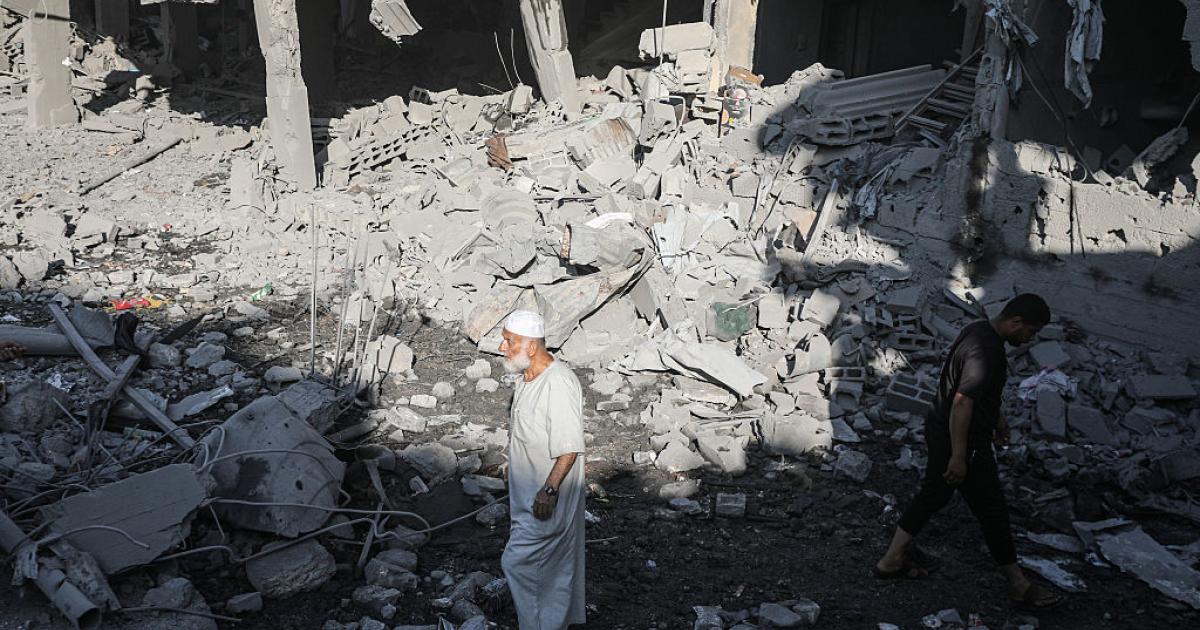
US President Donald Trump launched the Peace Council on Thursday, which was originally focused on ending the war in Gaza before Washington said it might play a larger role, raising concerns among international powers.
But Trump stressed that the council would work with the United Nations.
Trump said, "Once this council is fully formed, we will be able to do almost anything we want to do. And we will do it in coordination with the United Nations," adding that the international organization has great potential that has not been fully utilized.
Trump, who will chair the council, invited dozens of other world leaders to join, saying he believes the council will address other global challenges beyond the fragile ceasefire in Gaza, and that he does not intend for the council to be a substitute for the United Nations.
Some traditional US allies have shown reluctance to join the council, either with cautious responses or by rejecting the invitation. Trump says that permanent members of the council must contribute to its funding by paying one billion dollars each.
Representatives from countries presented as founding members were present in the hall during Trump's speech, with no representatives from other major world powers' governments, or from Israel or the Palestinian Authority.
The signing ceremony took place in Davos, Switzerland, where the annual World Economic Forum, which brings together world political and business leaders, is held.
With the exception of the United States, no other permanent member of the United Nations Security Council has yet accepted to join the council, these five countries being the most influential in international law and diplomacy since the end of World War II.
Russia said late Wednesday that it was considering the invitation to join, after Trump said it had accepted. France refused, and Britain said Thursday it would not join at this time. China has not yet said whether it will join.
The establishment of the council was approved by a resolution of the UN Security Council as part of Trump's peace plan for Gaza, and UN spokesman Rolando Gomez said Thursday that the UN's involvement with the council would be limited to this context only.
Amnesty International's statement reveals a deep awareness of the seriousness of the ongoing transformations in the international system, where the threat is no longer limited to violating rules, but to replacing them with parallel mechanisms managed outside global consensus. The most dangerous aspect of these initiatives is that they are presented in the name of "peace," while marginalizing justice, which makes them a tool for perpetuating conflicts rather than resolving them, especially in the Palestinian context.
What Amnesty International warns against, according to experts, goes beyond the Trump administration itself, extending to a political precedent that may tempt other powers to dismantle the international system according to their own interests. In a world where universal institutions are marginalized, international law becomes a selective option, not a binding reference. For Palestine, this means the danger of transforming established rights into bargaining chips, granted or withdrawn according to the balance of power, not according to justice.

Share your opinion
"Amnesty International": The establishment of the so-called "Global Peace Council" disregards international law and human rights