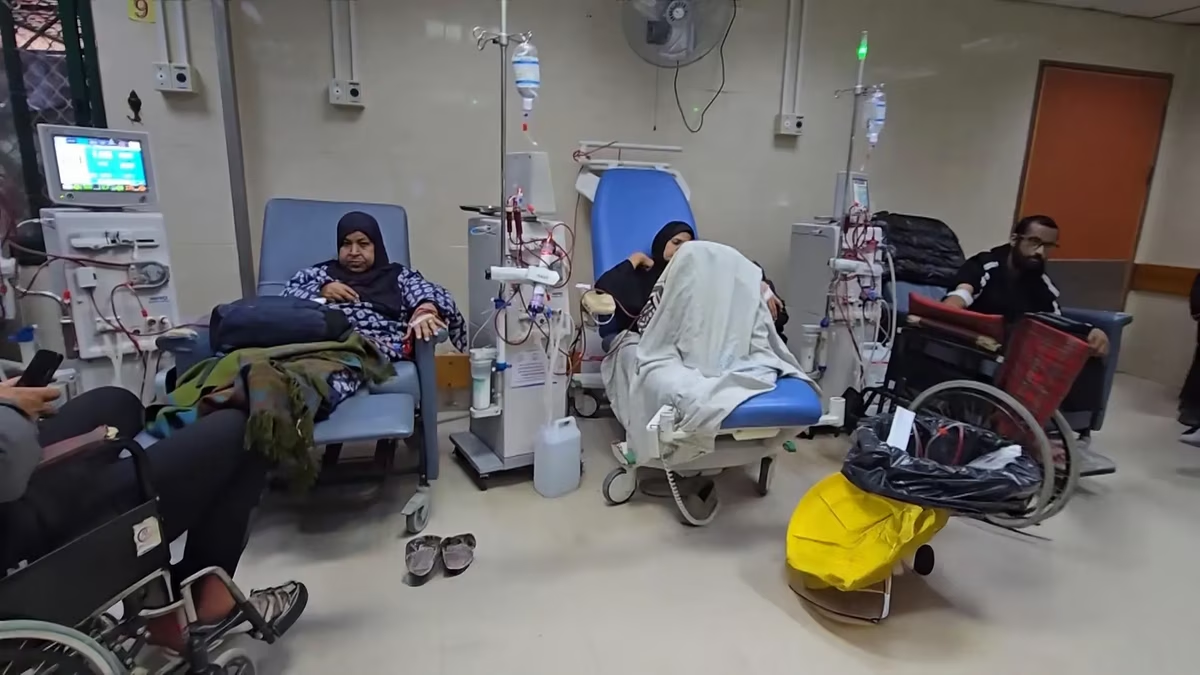







Humanitarian warnings are escalating regarding a grim fate facing kidney failure patients in the Gaza Strip, with the continued closure of crossings and prevention of their travel for treatment, at a time when medical waiting lists have turned into a daily race against pain, silently threatening the lives of hundreds of patients.
From inside the dialysis unit at Al-Aqsa Martyrs Hospital in Deir al-Balah, the features of a complex crisis are unfolding, as patients suffer from a severe shortage of medicines and medical supplies, due to Israeli restrictions that have extended even to vital equipment necessary for the continuation of dialysis sessions.
Sources indicate that these departments have begun to receive numbers exceeding their capacity, with patients accumulating daily, which has led to repeated deaths recently due to the absence of treatment and regular medical sessions.
Suffering is not measured by numbers alone, but is embodied in the testimonies of the patients themselves, as one patient describes her nights as sleepless due to pain, confirming that the pain does not leave her body in the absence of medicines and any means to alleviate her suffering.
Another patient clearly summarizes her demand, confirming that patients only ask for the opening of crossings and the entry of medicines, in light of the hospitals' inability to provide basic needs, which makes treatment within the Strip an incomplete, even risky, option.
The Palestinian Ministry of Health speaks of about 30,000 patients and wounded accumulating inside the Strip's hospitals, all awaiting the green light to travel outside Gaza, after the capabilities of local treatment became unable to respond to critical cases.
One patient's words reflect the extent of health deterioration, as he points to a sharp drop in his hemoglobin level due to the unavailability of necessary treatment, which doubles health risks and makes every day of delay a direct threat to life.
For his part, a doctor at Al-Aqsa Martyrs Hospital warns of a shortage of essential medicines, most notably the hormone "erythropoietin", explaining that its absence has led to one or two deaths per month among dialysis patients, due to the loss of control over blood levels in their bodies.
In light of this deteriorating reality, demands from international and Palestinian institutions, along with the Ministry of Health, are escalating to pressure Israel to open all crossings, especially the Rafah crossing, to allow patients to leave for treatment before waiting turns into a final death sentence.
The first phase of the ceasefire agreement in Gaza began on October 10th last year, after two years of Israeli genocide that left more than 70,000 martyrs and destroyed most of the civilian infrastructure in the Palestinian Strip.
However, Israel continues to violate the agreement with its repeated raids on the Strip and by changing the agreed-upon points for the withdrawal line known as the Yellow Line, and also continues to restrict the access of vital humanitarian aid to the residents of Gaza.
Patients only ask for the opening of crossings and the entry of medicines.




Share your opinion
Death on Waiting Lists.. A Silent Pain Afflicting Kidney Failure Patients in Gaza