





Dr. Khalil Tafakji: The construction of the wall in the Jordan Valley is an Israeli policy aimed at protecting and expanding the settlement project in the region, not for security reasons..
Abdullah Abu Rahma: The most dangerous aspect of the project is the isolation of areas estimated at about 190,000 dunams, which negatively impacts the economy, agriculture, and livestock farming..
Mohammed Abu Allan Daraghmeh: The new wall is consistent with Smotrich's vision of annexing about 82% of the West Bank and turning the remainder into isolated cantons..
Dr. Hassan Breijieh: What is happening in the Jordan Valley, the Jordan River Valley, and (E1) falls within a plan to empty them of Bedouin communities and seize control of the land..
Abdul Hadi Hantash: The construction of the wall is part of the "Allon Plan" to tighten control over the largest possible area of land rich in water and natural resources..
Suleiman Basharat: There is an exaggeration of security risks to legitimize strengthening control and imposing Israeli borders at the expense of the Palestinian presence..
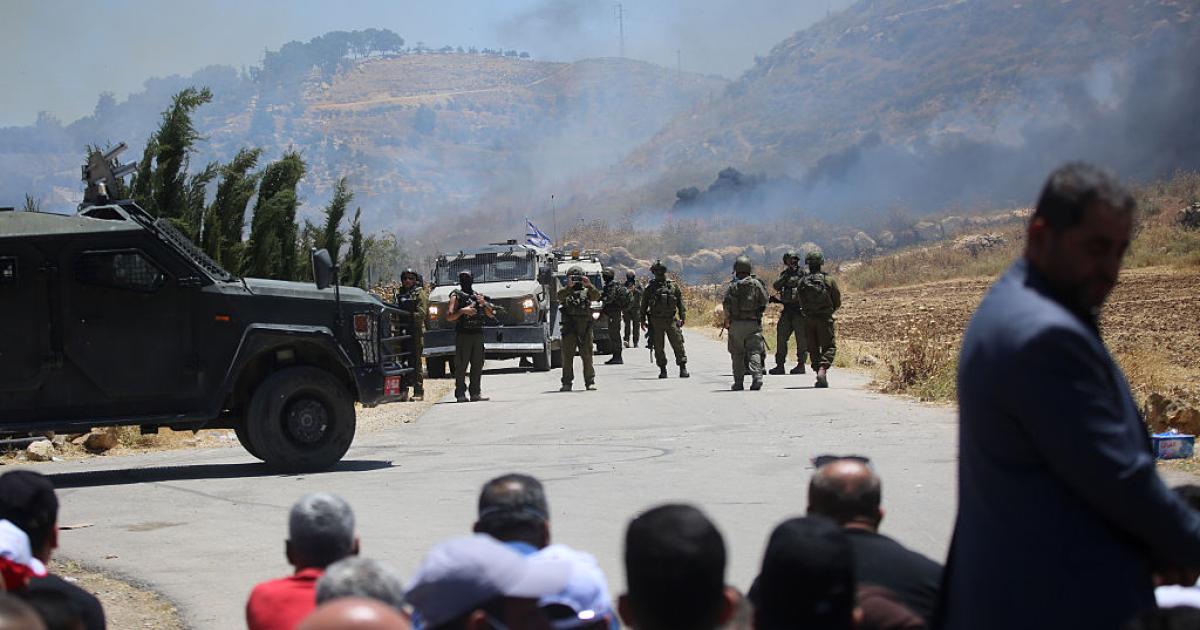
Amidst settler attacks in the Jordan Valley and Bedouin communities, Israel's intentions to implement the wall project in the Jordan Valley come under the pretext of preventing arms smuggling into the West Bank, considering it a pivotal step to change the geographical and demographic landscape in one of the most sensitive Palestinian areas, paving the way for actual steps to displace residents and seize control of the land, leading to annexation.
Specialists, writers, political analysts, and officials explain in separate interviews with "Al-Quds" that the wall extending from Ein Shibli to Tayasir is not to be read as a fleeting security measure, but rather as a practical tool to impose new borders on the ground, reflecting a political orientation that seeks to tighten control and redefine the nature of the Palestinian presence in the region.
They emphasize that the new wall project will have direct impacts on the economic, social, and agricultural life in the Jordan Valley, as it will isolate vast areas of fertile agricultural land, disrupt production chains, and restrict access to water sources, putting thousands of families at risk of losing their primary livelihood and threatening the Jordan Valley's role as Palestine's food basket.
Demographically, they explain that the construction of the wall falls within a broader policy aimed at emptying the area of its indigenous inhabitants, by tightening the noose on Bedouin and pastoral communities, expanding settlements, and creating harsh living conditions that push towards forced displacement, in the context of a silent, gradual annexation that reshapes the Jordan Valley to serve the long-term settlement project.
A path that serves the establishment of new settlements..
Dr. Khalil Tafakji, an expert in settlement affairs, explains that the wall Israel intends to build in the Jordan Valley, extending from Ein Shibli to Tayasir, comes within the context of a clear Israeli policy aimed at protecting and expanding the settlement project in the region, not for security reasons as claimed by the occupation authorities.
Tafakji points out that the proposed wall's route serves plans to establish new settlements, most notably a settlement on the lands of Tammun and another in the Khirbet Ibziq area, which the occupation calls "Bezek," noting that the security pretext is used to cover deeper strategic goals, namely controlling what is known as the "Jordan Valley escarpment," especially the fertile agricultural areas.
Tafakji clarifies that the areas of Al-Buqai'a and Tammun, in addition to Al-Fari'a, are among the most fertile agricultural lands in the Jordan Valley, and that the construction of the wall and settlements there will lead to the displacement of Palestinian residents, preventing them from accessing their agricultural lands, as well as prohibiting grazing activities, which will undermine the basic livelihoods in these areas.
Ensuring the presence of Palestinian minorities..
Regarding Bedouin communities, Tafakji affirms that what is happening to them is systematic ethnic cleansing that falls within an Israeli policy based on "gradual annexation" with the fewest possible Palestinian residents, in exchange for controlling the largest possible area of land.
Tafakji indicates that this policy was implemented in stages, starting from northern Beisan and northern Jordan Valley in the areas of Bardala and Ein al-Beida, passing through the communities of Al-Farsiya and Al-Hadidiya, then south in the Jericho meanders, and Arab al-Rashayda near the Auja spring, all the way to Masafer Yatta.
Tafakji confirms that the results of this policy have led to the emptying of vast areas of Palestinian residents, where more than a third of the West Bank has become almost devoid of indigenous inhabitants, after their displacement and the replacement of settlement outposts.
Tafakji points out that Israel seeks, if annexation is officially implemented, to ensure the presence of only a Palestinian minority in these areas, not a majority, noting that Palestinian statistics indicate the presence of about 400,000 Palestinians in Area C, while Israel speaks of only 150,000, in an attempt to reduce the number to a controllable level.
Tafakji emphasizes that Palestinian communities in the Jordan Valley are sparsely populated, with Jericho being its largest city, alongside towns and villages such as Al-Auja, Marj Na'ja, Al-Zubeidat, Marj Ghazal, Bardala, Kardala, Ein al-Beida, and Al-Jiftlik, asserting that the use of "security" is merely a tool to achieve political goals, primarily gradual annexation and the establishment of new settlements, the latest of which was the announcement of about 19 new Israeli settlements within the West Bank.
Imposing the reality of annexation and sovereignty..
Abdullah Abu Rahma, Director General of the Popular Action Department in the Wall and Settlement Resistance Commission, warns of the danger of the new Israeli plan to build a wall in the northern Jordan Valley, stressing that it constitutes a central link in a systematic policy aimed at emptying Palestinian land of its inhabitants and forcibly imposing the reality of Israeli annexation and sovereignty.
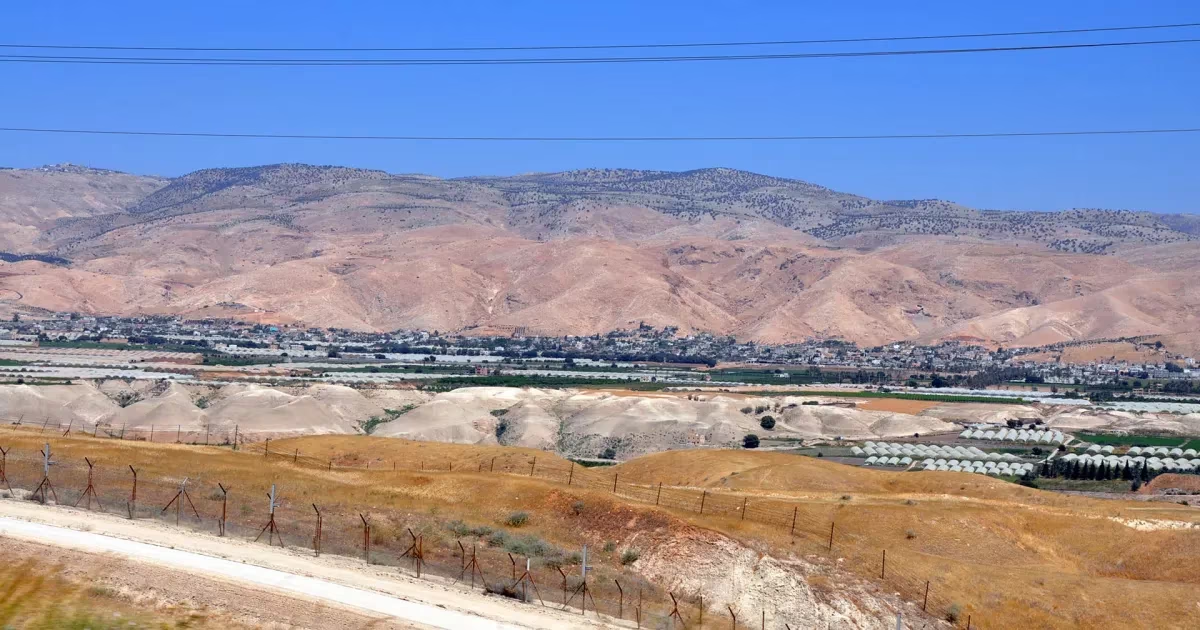
Abu Rahma explains that the planned wall extends for about 22 kilometers from the Tayasir area to Ein Shibli, and is approximately 50 meters wide, which requires the confiscation of about 1042 dunams of Palestinian land under the pretext of "military purposes" and the construction of a security road.
Abu Rahma clarifies that this pretext quickly collapsed after what was published in the Israeli press about the occupation's intention to build an actual wall, not a security road, which reveals the true purpose of the project.
Abu Rahma points out that the wall will isolate wide residential areas, including Tayasir, Al-Aqaba, Tubas, and Tammun, from their fertile agricultural lands, which will deprive thousands of citizens of access to their primary source of livelihood, and directly affect various aspects of economic and social life.
Control over resources..
Abu Rahma indicates that the wall's route passes through Khirbet Yarza, where it will directly affect about 90 Palestinian families residing in the khirbet, threatening their forced displacement. The wall's impact will also extend to vital agricultural areas in the Al-Buqai'a plain and the Atouf plain, which include extensive agricultural projects such as greenhouses, grape and banana farms, in addition to vegetable cultivation, which means striking an agricultural sector that is considered one of the most important pillars of Palestinian food security.
Abu Rahma confirms that the wall will also cause the destruction of main water lines that feed agricultural fields, as well as isolating entire families living in those areas.
Abu Rahma considers that the most dangerous aspect of the project is the isolation of vast areas estimated at about 190,000 dunams of Tubas and Tammun lands, making access to them extremely difficult, which will negatively impact the local economy, agriculture, and livestock farming.
Accumulated violations to enforce displacement..
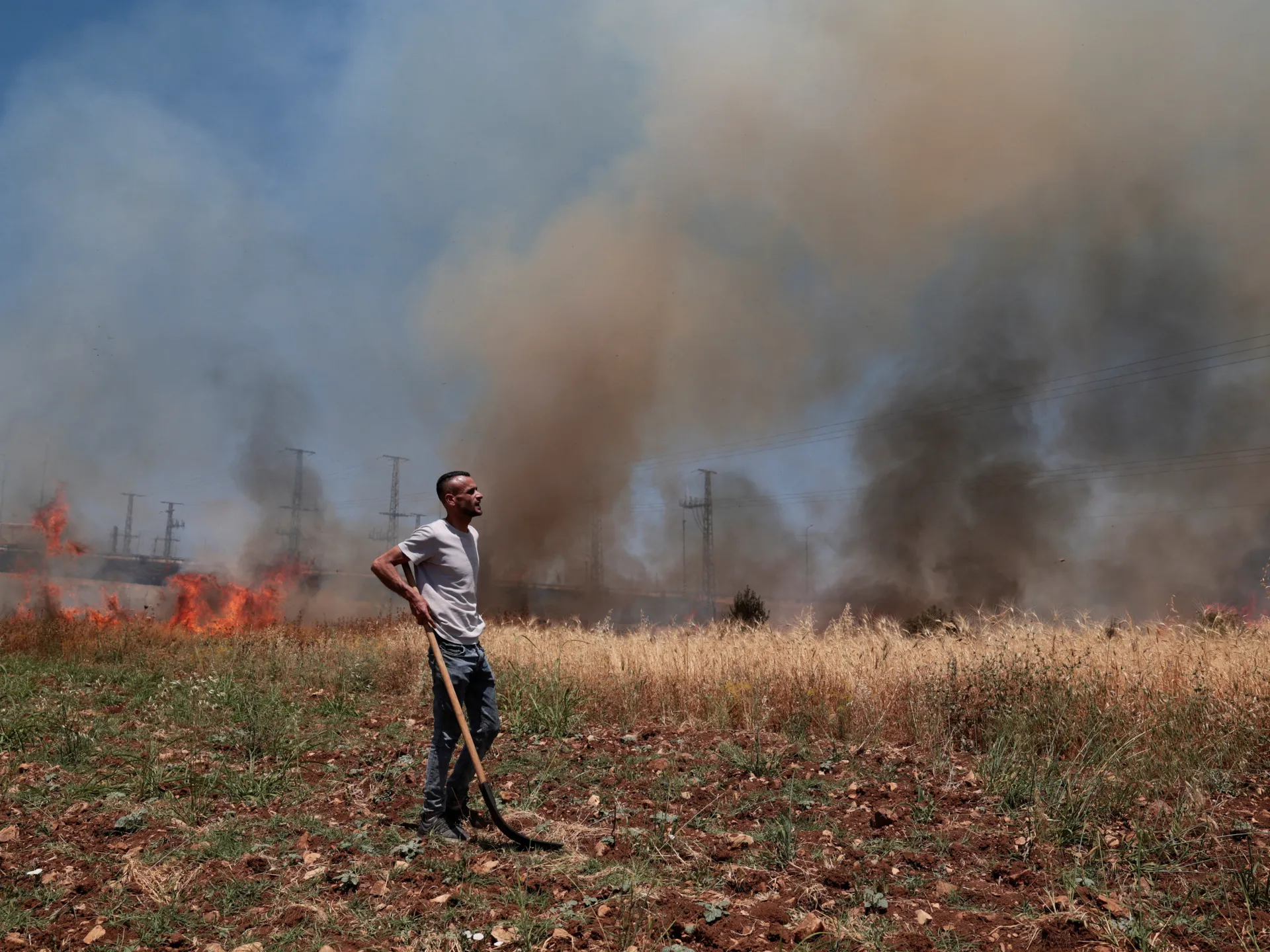
Abu Rahma speaks of a broader context of accumulated violations, noting that many Bedouin and pastoral communities in the Jordan Valley have been subjected for years to systematic displacement policies through continuous military training between homes and fields, accompanied by forcing residents to temporary leave, endangering their livestock, and burning their crops, with the aim of creating a hostile environment that pushes them to permanent departure.
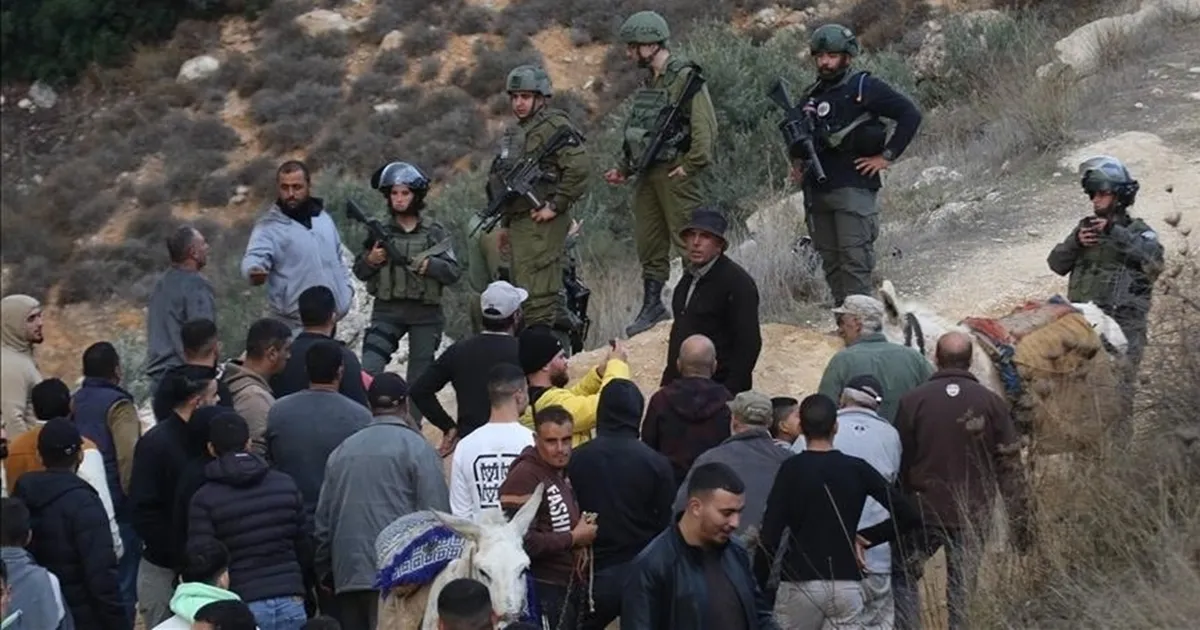
Abu Rahma explains that these policies have recently been accompanied by the spread of dozens of pastoral settlement outposts, in addition to existing settlements, military camps, and training points, which has led to the displacement of hundreds of Palestinian families as a result of repeated attacks, livestock theft, and the siege of pastures.
Abu Rahma confirms that the new wall comes to accelerate this process, targeting the remaining steadfast communities by isolating them from their surroundings and resources, and opening the way for more attacks to force their residents to leave.
Flimsy and unconvincing security pretexts..
Abu Rahma categorically refutes the occupation's claims that the purpose of the wall is to prevent arms smuggling, explaining that Israel has had a constantly militarily combed border strip since 1967, and that it built an additional wall of about 6 kilometers in length east of Ein al-Beida, Kardala, Bardala, and Al-Sakut between 2000 and 2002, in addition to the presence of a security tunnel in the Al-Buqai'a plain area.
Abu Rahma points out that the area is already teeming with settlements, army posts, and training camps, which makes this pretext "flimsy and unconvincing."
Abu Rahma emphasizes that what is happening is a comprehensive annexation and emptying policy, officially implemented by the Israeli government, and complemented by the practices of settler militias on the ground, within a broad plan targeting Area C of the northern and central Jordan Valley, passing through the Jordan Valley escarpment east of Nablus and east of Ramallah, all the way to the eastern deserts of Jerusalem and Bethlehem and Masafer Yatta; with the aim of replacing Palestinians with settlers and imposing an unprecedented settlement reality.
Imposing new borders and actual annexation..
Writer and Israeli affairs specialist Mohammed Abu Allan Daraghmeh considers the Israeli pretext that the construction of the wall east of Tubas aims to prevent arms smuggling to be a "ridiculous and flimsy pretext," stressing that the true purpose of the project is to impose new eastern borders for the Tubas Governorate, and actual annexation of the Jordan Valley area, within a comprehensive political project aimed at ending the possibility of establishing a Palestinian state in the future.
Daraghmeh explains that if the occupation were serious about preventing arms smuggling, it would have built the wall directly on the Palestinian-Jordanian border, not at a distance of more than 20 kilometers inside the West Bank.
Daraghmeh points out that the wall's route leaves behind hundreds of thousands of dunams of Palestinian agricultural land, in an area that the occupation considers "ideal" in terms of soil fertility, availability of water sources, and low number of Palestinian residents, in contrast to a dense presence of Israeli agricultural settlements.
Daraghmeh clarifies that the pattern of settlement in the Jordan Valley is based on controlling vast agricultural areas, even though the settlements themselves occupy small urban areas, which is known as agricultural settlement.
Daraghmeh believes that the new wall serves this model, by tightening control over Palestinian land and confining Palestinians to narrow areas, in preparation for expanding settlements.
Deepening suffering..
Daraghmeh confirms that the occupation deals with the Jordan Valley area as a strategic area with security dimensions, which explains the widespread presence of army camps, military training areas, and closed lands classified as nature reserves.
Daraghmeh explains that the wall, which will extend between the "Ein Shibli" area and the "Tayasir" checkpoint, will be accompanied by more checkpoints and measures that deepen the suffering of Palestinians and increase restrictions on movement and daily life.
Daraghmeh points out that this section of the wall represents only a third stage of a longer wall whose full extent the occupation has not yet revealed, which means imposing new realities and borders on the ground.
Daraghmeh notes that the Jordan Valley area has been proposed for years as an initial annexation project, considering that what is happening today is the actual annexation of the Jordan Valley, away from official announcements.
Daraghmeh explains that one of the most prominent outcomes of this wall is the creation of a hostile environment for Palestinians in the Jordan Valley, pushing them towards forced migration, in addition to confining them to the smallest possible area, in exchange for expanding the area of control of settlers who fence off thousands of agricultural dunams, not only in the northern Jordan Valley, but in a geographical extension reaching from the Jordan Valley to the south of Mount Hebron and the Masafer Yatta areas.
Targeting the two-state solution..
Daraghmeh links the new wall project to a broader political context, which is the definitive targeting of the two-state solution, referring to public statements by ministers in Benjamin Netanyahu's government, led by Bezalel Smotrich, who announced that settlement is a "correction of a historical error" resulting from the Oslo Accords, and that its goal is to prevent the establishment of a Palestinian state.
Daraghmeh believes that the new wall is consistent with Smotrich's vision based on annexing about 82% of the West Bank, and turning the remainder into isolated cantons.
Daraghmeh confirms that the confiscation of more than a thousand dunams, most of which are private lands, and in parallel with the displacement of dozens of Bedouin communities, is taking place under the protection and patronage of the occupation army, within an integrated policy aimed at imposing Israeli sovereignty over the entire West Bank, and absolutely preventing the establishment of a Palestinian state.
Emptying the area of Bedouin communities..
Dr. Hassan Breijieh, a researcher in settlement affairs, confirms that the Jordan Valley, or the Jordan River Valley, is an essential part of the (E1) settlement project, through which Israel seeks to impose full control over the area and effectively annex it, given its strategic importance in Israeli security and political doctrine.
Breijieh explains that Israel views the Jordan Valley as a geographical barrier separating Jordan and Palestine, which drives it to intensify its policies aimed at controlling the area, whether through approving existing settlements, or through building a wall there, and linking the Jordan Valley to Jerusalem, which leads to its isolation and complete subjugation to Israeli control.
Breijieh points out that what is happening in the Jordan Valley, the Jordan River Valley, and also in the (E1) area, falls within a clear plan to empty these areas of Palestinian Bedouin communities and seize control of the land.
Breijieh clarifies that the occupation authorities have succeeded in recent years in emptying large parts of the Jordan Valley of its Bedouin residents, especially the Arab al-Malihat communities and the Al-Ma'arajat area, in addition to other Bedouin communities.
Breijieh explains that the (E1) project, of which the Khan al-Ahmar area is the most prominent feature, has witnessed forced displacement and evacuation operations that affected many Bedouin communities, as part of a systematic policy aimed at almost completely emptying the area of its indigenous inhabitants.
Expanding existing settlements..
Breijieh confirms that the primary goal of these policies is to gain full control of the land, expand existing settlements, and strengthen them demographically and geographically, while maintaining absolute Israeli control over the area.
Breijieh points out that the continuous attacks carried out by settlers against Bedouin communities, especially Arab al-Malihat, come in the context of continuous pressure to force residents into forced displacement.
Breijieh emphasizes that what is happening in the Jordan Valley and (E1) are not isolated incidents, but rather part of a comprehensive settlement project aimed at permanently changing the demographic and geographical reality of the area.
Land grabbing under security pretexts..
Abdul Hadi Hantash, an expert specializing in land and settlement affairs, affirms that the Israeli occupation's attempt to build a wall in the Jordan Valley under the pretext of preventing arms smuggling into the West Bank is a "false and unrealistic claim," stressing that what is happening comes within the context of an old strategic plan aimed at controlling Palestinian land and emptying it of its inhabitants, and has no relation to real security considerations.
Hantash explains that Israel has for many years stated that the Jordan Valley area will remain an integral part of Israeli control, even if any political settlement is reached, considering it an area of security and strategic importance.
Hantash points out that in light of the current data, talking about a peace process is unlikely, considering that the occupation is exploiting this reality to impose permanent facts on the ground by grabbing large areas of West Bank land under flimsy security pretexts.
Control over water sources..
Hantash points out that among the central goals of the occupation in the Jordan Valley is to control water sources, stressing that water is a fundamental element in the Palestinian-Israeli conflict.
Hantash notes that the occupation's policies are accompanied by a systematic emptying of the Jordan Valley area of its Palestinian residents, through their forced displacement, and giving free rein to settlers, especially in pastoral settlement, to impose a hostile reality on the ground.
Extension of the "Allon Plan"..
Hantash clarifies that these policies are not new, but rather rooted in the "Allon Plan" approved in 1970, which stipulates the confiscation of a wide strip of Palestinian land along the Jordan River and the Dead Sea, with a width ranging between 13 and 15 kilometers.
Hantash confirms that this plan is based on implementing successive stages of separation and control, including separating the city of Jerusalem from its natural surroundings in the West Bank, explaining that the occupation implements these plans gradually and in a way that may not be apparent at each stage individually, but together they form a comprehensive project of control.
Hantash believes that the announcement of the construction of the wall in the Jordan Valley represents one of the links in the implementation of the "Allon Plan," aimed at tightening control over the largest possible area of Palestinian land, especially in areas rich in water and natural resources.
Expected escalation..
Hantash warns that the next stage will witness a significant escalation against Bedouin communities and Palestinian lands, as part of an Israeli plan based on two parallel tracks.
Hantash explains that the first track is to establish full control over areas classified as (C), which were described in the Oslo Agreement as "empty" areas, a description that is incorrect, given the presence of Palestinian population centers there.
The second track, according to Hantash, is to expel Palestinian residents from these areas, which confirms that the real goal is to empty them of their people.
Hantash refers to what is happening in the south and southeast of Hebron Governorate, where Palestinian villages have become besieged between settlements and settlement outposts on one side, and the Green Line on the other, making their residents constantly vulnerable to attacks and denied access to water sources, which comes within a systematic pressure policy to force them to leave.
Hantash confirms that the occupation has given unprecedented free rein to settlers, and that its forces now provide them with protection during their attacks on Palestinian citizens and their property, a clear indication of an upcoming escalation targeting both Palestinian land and people.
Direct and complete resolution..
Writer and political analyst Suleiman Basharat explains that Israel is currently moving towards a "direct and complete resolution" of the shape and nature of its future borders, by accelerating the construction of apartheid walls, foremost among them the wall currently being built in the Jordan Valley, as a physical embodiment of the borders Israel wants to consecrate for what it calls the "Jewish state."
Basharat believes that the rapid Israeli push towards annexing lands and imposing Israeli control and sovereignty over them reflects a clear desire to highlight the features of these borders on the political, security, and military map, stressing that the construction of the wall in the Jordan Valley, under the pretext of preventing arms smuggling, cannot be separated from an Israeli project extending for two decades to re-engineer Palestinian geography to serve the Israeli vision of the state and its future borders.
Cloaking expansionist projects with a security cover..
Basharat explains that Israel has accustomed itself to cloaking its expansionist projects with a security cover, always keen to present the security dimension as the main driver of all its movements, whether related to expansion projects, imposing new realities, or changing the form of control over the land.
Basharat points out that Israel uses the issue of "arms smuggling" into the West Bank as a central pretext to justify its field and political actions.
Basharat confirms that the borders in the Jordan Valley area are not new or sudden, but rather historical borders that have existed for decades, questioning the reasons for portraying them today as a source of escalating security threat. Basharat notes that many estimates indicate that the actual volume of smuggling is much less than what Israel promotes, considering that there is a deliberate exaggeration of security risks with the aim of legitimizing political and military action aimed at strengthening control and imposing Israeli borders at the expense of the Palestinian presence.
Basharat emphasizes that this move is not limited to the security dimension, but rather constitutes part of putting the "final touches" on the shape and borders of the future Jewish state, by carving out Palestinian land, reducing the geographical space available to Palestinians, and transforming their presence into a fragile and limited one.
Harmony between the wall and settler attacks..
Basharat links the construction of the wall in the Jordan Valley to the escalation of settler attacks in the West Bank, considering that there is a clear harmony and integration between Israeli security and military behavior, and settler practices on the ground.
Basharat explains that settlers are acting within a parallel and complementary plan to the official plan, based on imposing facts, displacing Palestinians, and strengthening settlement control, under direct or indirect protection from the Israeli army.
Basharat believes that this intersection between the military and settlement institutions is not accidental, but rather reflects a single strategic vision, where each side reinforces the role of the other, leading to a stage aimed at imposing almost complete Israeli control over the West Bank.
In contrast, Basharat explains that the Palestinian presence is being pushed towards disintegration and fragmentation, transforming it into besieged and fragmented communities, within narrow geographical areas that Israel can easily control, without posing a political, security, or military burden on it in the future.

PALESTINE
Wed 14 Jan 2026 9:58 am - Jerusalem Time
The Wall of the Jordan Valley… Israel uses security as a pretext to isolate land and displace residents in preparation for annexation
Tags
MORE FROM PALESTINE
Share your opinion
The Wall of the Jordan Valley… Israel uses security as a pretext to isolate land and displace residents in preparation for annexation