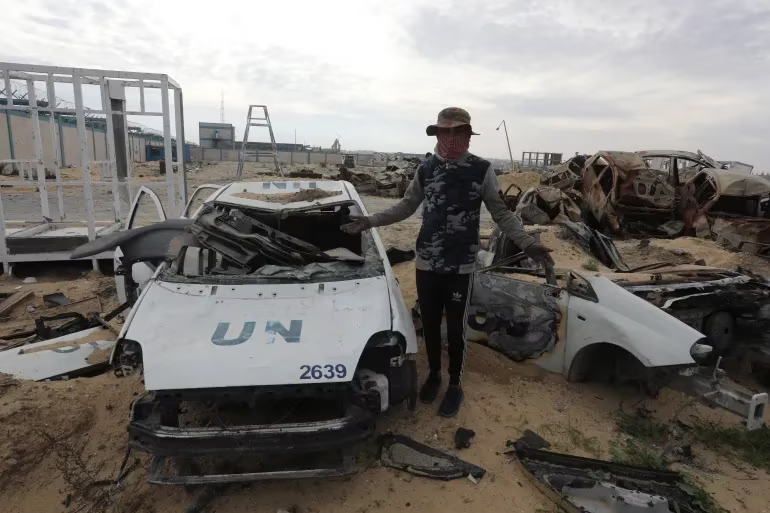







With sadness and anger, Ismail Ayash describes the decision by the United Nations Relief and Works Agency for Palestine Refugees (UNRWA) to dismiss him and hundreds of other employees located outside the Gaza Strip as "a crime and a death sentence for us and our families."
Ayash, speaking by phone from Cairo, was overcome with tears more than once as he talked about the decision's impact on his family of 7, including 3 university students, who have no source of income other than his job. He explained that he has worked as a teacher for 30 years in UNRWA schools in Gaza.
"Is this how I am rewarded after dedicating my life and youth as a teacher in the organization?" asks Ayash (54), who was forced to travel with his family in February 2024 to escape the Israeli war.
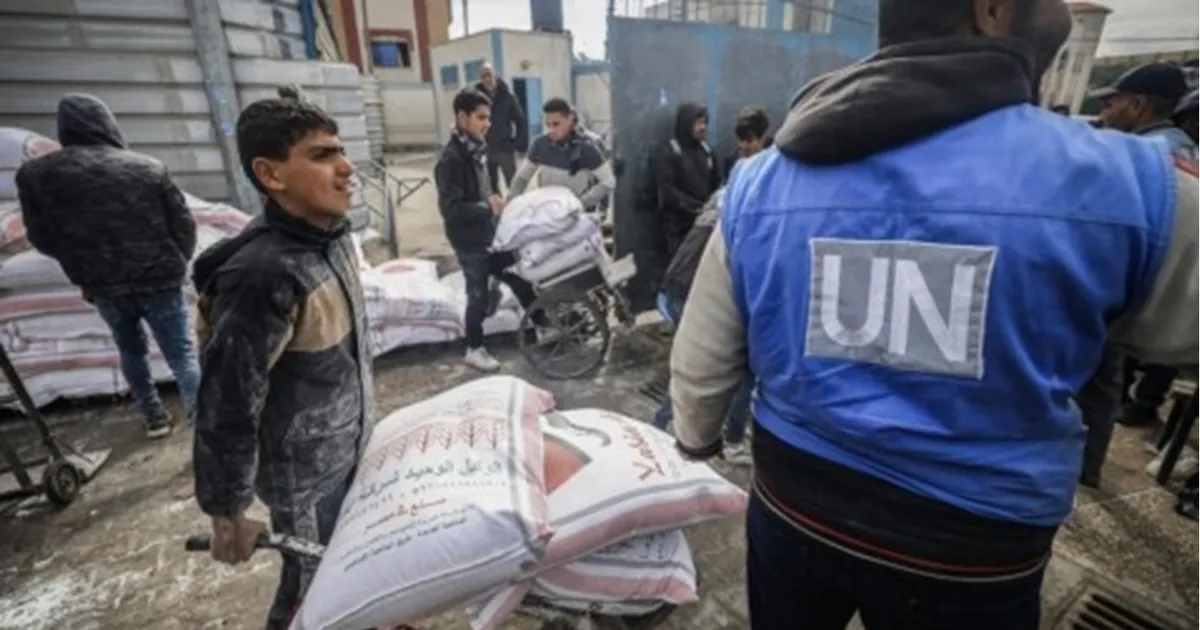
On January 6th, the UNRWA Commissioner-General, Philippe Lazzarini, decided to terminate the contracts of employees located outside the Strip, after about a year of placing them on exceptional unpaid leave. Specialized committees for refugee affairs informed me that this decision affects 622 male and female employees who left Gaza during the war for various destinations, including approximately 580 in Egypt, the majority of whom are female employees, and most of them work in education.
In March 2025, UNRWA placed its employees abroad on exceptional leave for 12 months, ending next February 28th, justifying it with a financial crisis. In a message sent to those affected by the decision, it stated that it "continued to make every possible effort to provide and secure the necessary funds to support current programs and meet obligations related to staff salaries without being able to do so."
The message, which it considered an official notice of immediate termination of services, concluded by saying, "We express our sincere appreciation for your service and valuable contributions to the Agency's work for Palestine refugees."
Ayash wondered, "Is this how our services are appreciated? Is not the miserable life we have been living without salaries for about a year enough? Our dignity as employees has been violated as we chase aid packages, and many of us cannot afford the rent for the house where we live with our families." He affirmed, "We are also displaced, and we did not leave Gaza for luxury or tourism, but to escape death and extermination. We lost our loved ones and our homes, and now the Agency's decision to dismiss us comes to destroy us and our children's future."
He explained, "In the first week of the war, the Agency warned us to evacuate the northern Strip and head south, and later no decision was issued preventing employees from traveling outside Gaza to save themselves and their families."
On the first day Ayash and his family sought refuge in the home of his niece, Lina Mohammed Ayash, in Deir al-Balah city in the central Strip, a massive explosion occurred due to a raid targeting a neighboring house. Lina (30) was martyred while praying Fajr, leaving behind 4 children, and 4 others were injured among about 25 people, most of whom were displaced in that house.
Ayash continued, "We survived death, but my mother, who insisted on staying in her home in Gaza City, did not survive a similar raid and was martyred, as was Engineer Tawfiq, Lina's brother, due to an airstrike while he was walking in the street. I had no choice but to save my family."
Ayash was among those UNRWA placed on exceptional leave and whose monthly salaries have not been paid since then. He said that debts accumulated on him and that "many employees who were generous in their jobs and homes are now living on aid and donations from benefactors."
He and his fellow male and female teachers received the decision while they were working remotely to teach students in educational points and schools managed by the Agency in Gaza, following the massive destruction of hundreds of schools due to the war. Ayash was waiting for the reopening of the Rafah crossing to return to the Strip, and he explained his current feeling by saying, "I feel paralyzed and unable to think. What will I do? And why should I return when I have lost my job and my livelihood, and my home is destroyed?"
An UNRWA official contacted refused to comment on the decision, merely stating, "Unfortunately, we are prohibited from discussing this decision."
In turn, Basil Al-Wahidi, a member of the "Joint Committee for Refugees," who worked as an UNRWA employee for about 40 years, described the decision as a "massacre" against hundreds of male and female employees and consistent with displacement plans and the liquidation of the refugee issue. He rejected UNRWA's justification that it was due to a financial crisis, and said that the agency is awaiting responses from various concerned parties and host countries to proceed with similar decisions, which may not be limited to Gaza alone, and include other areas of its operations.
According to him, 100 employees in Lebanon are currently threatened with dismissal, while UNRWA suspended 20 security guards in Jordan and replaced them with a private security company "that costs more than their salaries," asking, "Where is the justification for the financial crisis when it uses a private security company? Why does the termination decision focus on male and female teachers who were working remotely?"
Al-Wahidi added that "these employees did not leave Gaza for luxury or a picnic, but to escape certain death, bombing, and starvation. Most of them are sick or accompanying sick people, and instead of being treated fairly and protected, they are punished with dismissal and expulsion, as if saving one's life has become a crime that deserves punishment."
He held the UNRWA Commissioner-General responsible, stating that "he is at the end of his term, with only a few weeks left, to leave the institution with a black record titled 'dismissal of teachers and employees, and starvation of refugee families.'" He considered that this decision "dangerously aligns with the occupation's policies aimed at breaking Palestinian society, undermining its stability, and dismantling its social, food, and employment security."
For its part, the Department of Refugee Affairs in the Palestine Liberation Organization said that "the UN agency is taking decisions and measures that go beyond the funding crisis and amount to systematic administrative execution."
The head of the department, Ahmed Abu Houli, considered in a statement that the 20% reduction in salaries of Gaza and West Bank employees, the termination of contracts of hundreds of Gaza cadres abroad, and the suspension of UNRWA headquarters security guards in Jordan in favor of a private security company, represents "a stab in the back of employees who formed a safety valve for the agency and provided 382 martyrs from their best cadres under direct Israeli shelling."
For its part, the Islamic Resistance Movement (Hamas), in a statement, described the decision as "unjust and violates the fundamental rights of employees who are prevented by the conditions of the war of extermination, and the fascist occupation's closure of the Rafah crossing, from returning to the Gaza Strip."
The "Democratic Gathering of Teachers," in a statement, considered that the decision "largely aligns with the occupation's plans aimed at targeting UNRWA and undermining its historical and legal role," and expressed its categorical rejection that "workers pay the price for the measures and harassment the agency is subjected to by the occupation; for the employee is the first line of defense for the institution and not a scapegoat for its financial or political failure."
Is this how I am rewarded after dedicating my life and youth as a teacher in the organization?

Share your opinion
UNRWA's Decision to Dismiss Hundreds of Employees from Gaza: A Crime and a Death Sentence