







Washington – Said Arikat
News Analysis
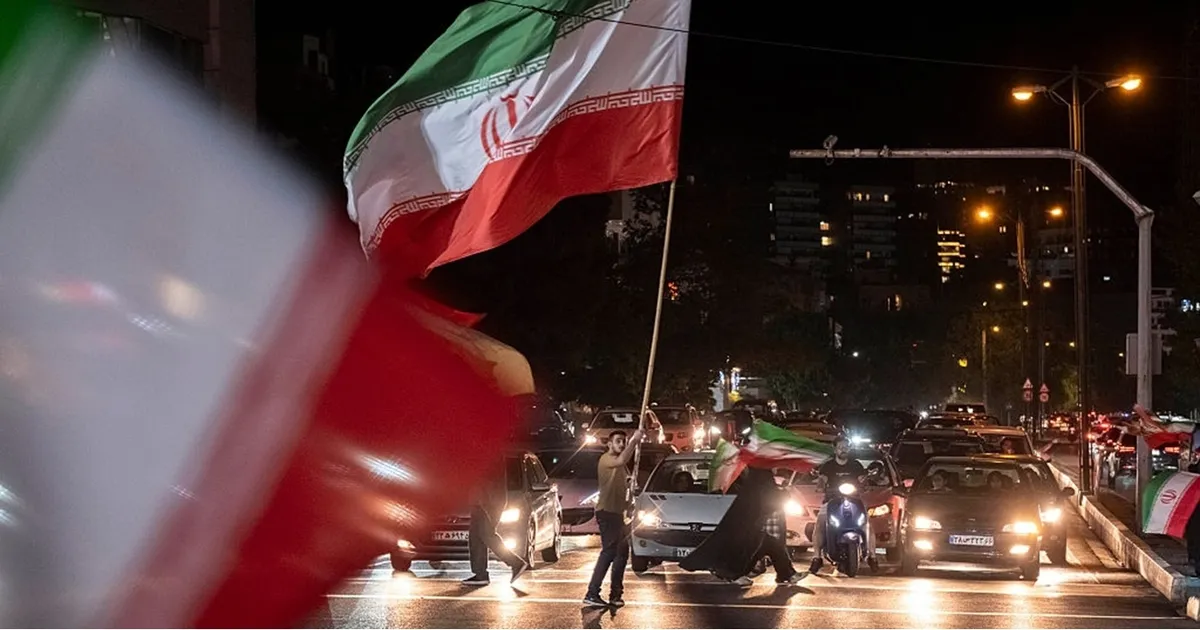
US President Donald Trump did not hesitate on Thursday to renew his public threats of retaliation against Iran if Iranian authorities target protesters who have taken to the streets over the past two weeks. However, the danger of this statement lies not only in its direct content but also in its reflection of a political mindset that views force as a legitimate tool in itself, and treats American military influence as an open mandate for intervention, deterrence, and punishment, with little regard for geographical or legal boundaries. In this logic, sovereignty is no longer an obstacle, and international law does not constitute a regulating framework; rather, it becomes a detail that can be bypassed when its provisions conflict with the will of power.
As of early 2026, the Middle East region is entering a highly critical phase, where military data intertwines with political precedents, and deterrence calculations mix with direct coercion signals. Amid escalating talk of a potential confrontation between the United States and Israel on one side, and Iran on the other, the features of a recurring American behavior are crystallizing, based on expanding the definition of threat, solidifying the logic of pre-emptive strike, and bypassing international legal frameworks. This approach, no longer exclusive to the Middle East but recently manifested in Latin America, is now clearly reflected in Washington's approach to the Iranian file.
The military confrontation between Israel and Iran in June 2025 marked a turning point in the conflict. Although it did not escalate to an all-out war, it broke the unwritten rules of engagement that had governed the relationship between the two parties for years. The widespread Israeli strikes deep inside Iranian territory, politically and militarily supported by the United States, established a new reality based on an open, unsettled conflict, fragile deterrence, and an almost complete lack of trust. No party emerged decisively victorious, but the message was clear: the ceiling of prohibitions had lowered, and the next phase would be more dangerous.
In Tehran, this conviction translated into a reorganization of the security decision-making system, through the establishment of a Supreme Defense Council that explicitly announced that Iran would not wait for the first strike if it detected what it described as an "imminent threat." This shift was not merely a change in rhetoric but reflected a growing realization that the strategic environment was no longer governed by traditional rules. When presumed intentions become the basis for military action, waiting turns into an existential risk, and pre-emption, from the decision-makers' perspective, becomes a defensive option.
In contrast, Israel continued to solidify its security doctrine based on preventing any strategic shift that might undermine its superiority, especially concerning the Iranian nuclear program. Despite the absence of conclusive indications of an immediate decision to launch an attack, Israeli political and security discourse has not receded. The repeated talk of the "last moment," the hinting at unexpected options, and the leaking of intelligence assessments are all pressure tools aimed at keeping Iran under constant threat, and psychologically and politically exhausting it.
Some experts believe that Washington appears to be walking a tightrope between escalation and containment. Trump's statements reflect a willingness to use force, whether under the pretext of the nuclear program or through vague headings such as "protecting civilians" and "preventing chaos." At the same time, American institutions are keen to suggest that there is no imminent decision to engage in war. This contradiction does not inspire reassurance as much as it exacerbates anxiety, especially in light of recent experiences.
Venezuela stands out as a revealing model for understanding this behavior. The storming of Caracas and the arrest of President Nicolás Maduro and his wife constituted a dangerous precedent in violating the sovereignty of an independent state, without international authorization or a declared legal process. Regardless of the justifications marketed, the message picked up by Washington's adversaries was clear: force has replaced legitimacy, and action precedes justification. In this context, it becomes difficult to convince Tehran that American-Israeli threats do not go beyond the framework of deterrence.
The Iranian nuclear program remains at the heart of the conflict, but at the same time, it is transforming into a flexible and adaptable pretext. Even in the absence of conclusive evidence of a transition to the weapon production phase, technical progress or deliberate ambiguity is sufficient to keep the option of attack on the table. This logic closes the door to interim solutions and pushes towards a zero-sum equation: either full compliance or confrontation.
This equation is reinforced by internal Iranian factors, foremost among them economic pressures, protests, and social tension. These elements make the leadership more sensitive to any external threat and more inclined to adopt a discourse of steadfastness and defiance. In such an environment, the risk of miscalculation doubles, not necessarily as a result of deliberate impulsiveness, but due to the blockage of alternatives.
The summary of the scene is that the available indicators do not confirm an imminent American-Israeli decision to attack Iran. However, the rush towards this option is fueled by an Israeli conviction that time is not on its side, an American behavior characterized by a decline in commitment to international restrictions, and a growing Iranian realization that waiting could be fatally costly. In a world where rules are being redefined by the logic of force, the line between deterrence and aggression erodes, and war becomes a cumulative result of an escalating trajectory, not a declared decision.
Share your opinion
On the Brink of Explosion: The Logic of Force in the Trump Administration and the Intersection of American-Israeli Calculations with Iran