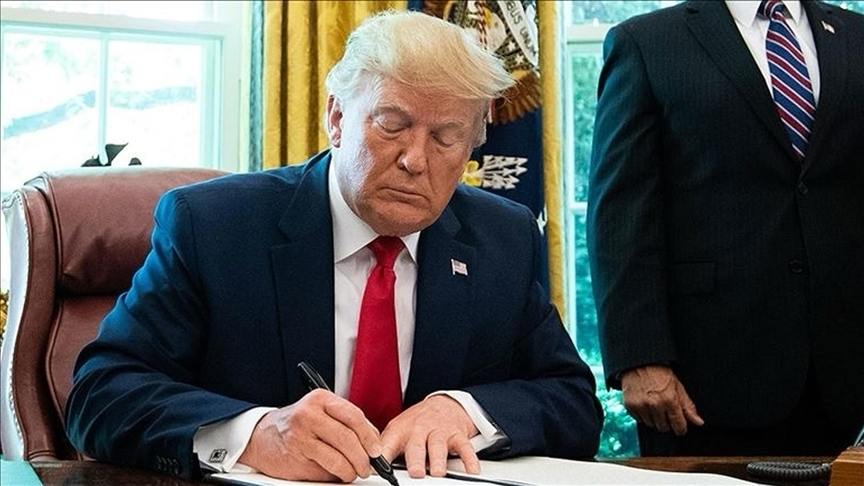







In a highly sensitive regional moment, US President Donald Trump and his administration on Monday revived the discourse of foreign intervention under the banner of "supporting peoples" and "saving protesters," in an escalating context towards Iran where the political mixes with the media, and the humanitarian with the military, reflecting a familiar American approach in managing international crises.
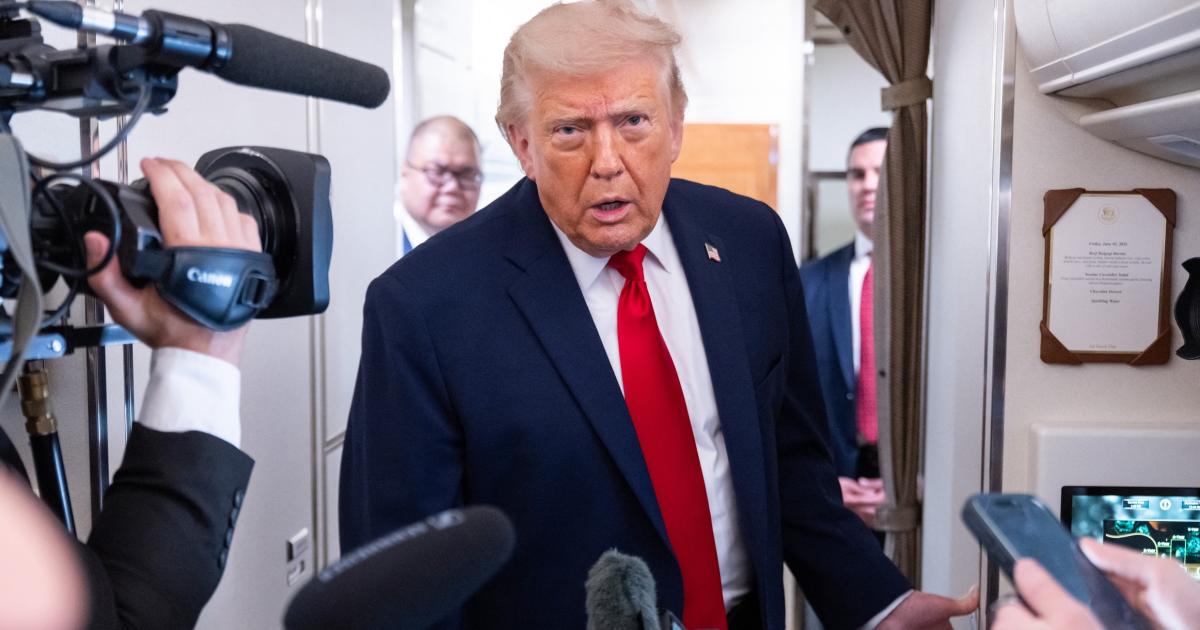
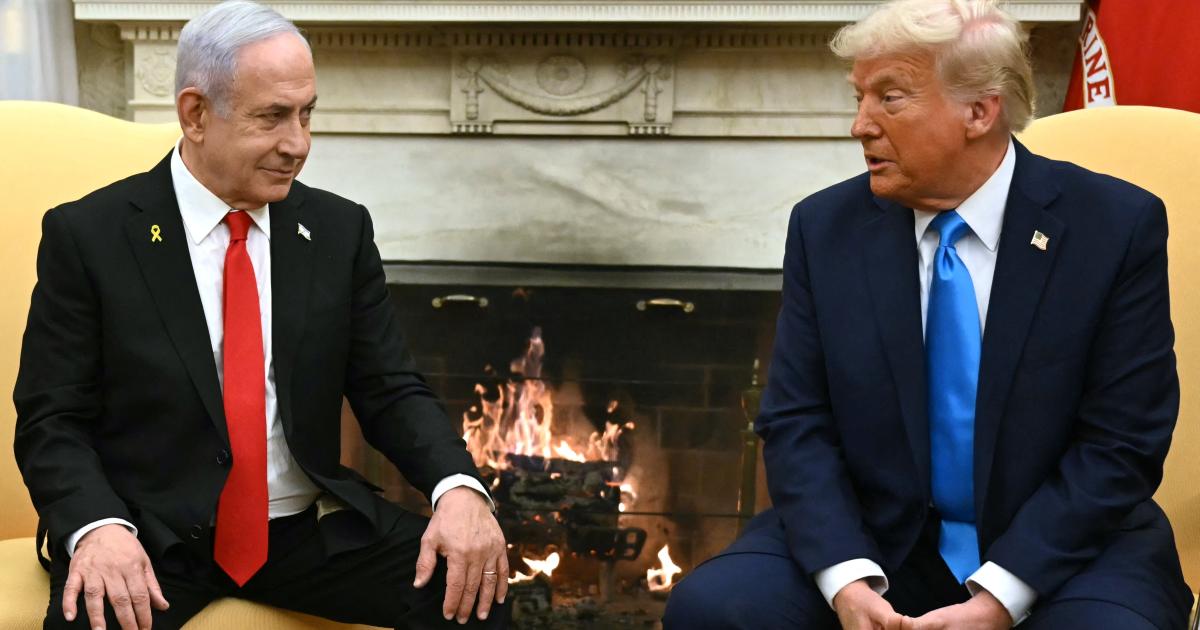
The latest public signals on this path came with Republican Senator Lindsey Graham posting a photo of him with President Trump aboard Air Force One, both wearing a hat inscribed with "Let's Make Iran Great Again." The photo, posted by Graham on the "X" platform, was not a passing detail, but carried a clear political connotation, reflecting an intersection between the President's populist rhetoric and the orientations of the hardline current within the Republican Party, calling for direct confrontation with Tehran.
Graham, known for his steadfast support of the military option, accompanied the photo with a comment praising Trump as a leader who "made America stronger than ever, domestically and abroad," before extending greetings to what he described as "the brave Iranian people standing up to tyranny." This linkage between American power and "liberating peoples" brought back to the forefront terms used repeatedly in previous American interventions, whose results have been widely debated.
It is noted that during the 12-day American-Israeli war against Iran, Trump did not hide his inclinations towards the idea of regime change, even if he tried to linguistically circumvent the term. In a post on the "Truth Social" platform dated June 22, he wrote: "It's not politically correct to use the term regime change, but if the current Iranian regime is unable to make Iran great again, why not have a change in the regime?" This statement was understood in diplomatic circles as an explicit endorsement of the idea of overthrowing the regime, in a roundabout way.
Protests as a Potential Pretext
The most prominent shift in Trump's rhetoric was manifested in his attempt to utilize protests inside Iran as a direct entry point for military intervention. In a subsequent post, he warned that the United States "will intervene to save the protesters" if the Iranian authorities violently suppress them. This threat revived the concept of "humanitarian intervention," which was previously used to justify military operations in countries like Iraq and Libya, before those experiments ended in the collapse of state institutions and the spread of chaos.
This rhetoric comes at a highly significant timing, as it was preceded by hours by a swift American military operation in Venezuela, involving limited bombing and a raid that led to the abduction of President Nicolás Maduro. This precedent raised broad legal and political questions about Washington's readiness to bypass international norms and use direct force to achieve political objectives.
Messages Beyond Iran
The escalation was not limited to Tehran. During the same trip that brought him together with Graham, Trump directed indirect threats to Colombian President Gustavo Petro, hinting at the possibility of executing a similar strike, and also indicated that Cuba "is on the verge of collapse." These simultaneous messages reflected an American approach that considers several regions of the world as open arenas of pressure, from the Middle East to Latin America, in the context of reimposing influence by force.
Observers see that this rhetoric serves more than one purpose: domestically, it aligns with Trump's populist tendency based on displaying strength, and externally, it aims to deter adversaries and reassure allies, especially Israel, which views any escalation against Iran as a strategic gain.
The American allusion to "saving protesters" reflects a fundamental contradiction in Washington's foreign policy, where the humanitarian dimension is used as a tool to justify military intervention. Previous experiences have shown that external force rarely produces stable democratic transformations, but rather often leads to the disintegration of the state and the strengthening of nationalist tendencies within it. In the Iranian case, intervention could turn into a factor that unites the interior behind the authority instead of weakening it.
Moreover, the insistence of influential figures like Lindsey Graham, Netanyahu's top supporter in the US Senate, on linking "America's greatness" to overthrowing other regimes reflects a hegemonic mindset dating back to the Cold War logic. This approach, which marginalizes diplomacy and sanctifies force, not only threatens the stability of targeted countries, but also undermines the foundations of the international order based on law, and reinforces the law of force as the sole reference in international relations.
In conclusion, it seems that Washington is once again testing the limits of using moral slogans to justify policies of force, in a path that may open the door to a broader confrontation, whose cost to the region's stability and peoples will be much higher than the declared promises of "salvation."
Share your opinion
Trump Renews His Threats to Iran and Hints at Regime Change