







Despite the commitment of US President Donald Trump to move to the second phase of the ceasefire agreement in Gaza, and promoting the formation of an international "peace council" and a multinational stabilization force, these promises continue to collide with a highly complex political and security reality. Weeks after the end of the first phase of the agreement, there are no tangible indicators of actual international readiness to engage in field arrangements within the Gaza Strip, which remains an open battlefield fraught with risks.
The latest setback to this path came with Azerbaijan's announcement, one of the countries Washington has contacted, expressing serious doubts about participating in the proposed international force. Hikmat Hajiyev, aide to Azerbaijani President Ilham Aliyev, said his country finds it difficult to join a force expected to be deployed in Gaza as part of a US-mediated ceasefire plan, pointing to the ambiguity of the legal mandate and the scope of the mission. In statements to the Japanese "Nikkei" agency, Hajiyev clarified that Washington has already contacted Baku to include its forces in what it calls the "international stabilization force," but he emphasized that "no final decision has been made yet."
This Azerbaijani position does not appear isolated, but rather reflects a broader pattern of international caution. Despite the UN Security Council approving a resolution last month to establish the force, with official support from countries like Turkey, Qatar, Egypt, the UAE, Saudi Arabia, Indonesia, Pakistan, and Jordan, practical progress on the ground is almost nonexistent. Officials attribute this stagnation to the lack of clear answers regarding the nature of the mission, rules of engagement, and limits of authority in a highly fragile security environment.
Hajiyev explicitly expressed his country's concern that the Security Council resolution "does not address the questions related to specific rules of engagement in Gaza, methods of operation, and the scope of the mission's mandate." He added that Azerbaijan, which waged a military conflict with Armenia until 2023, faces an internal challenge in convincing public opinion to send additional forces to a new and complex conflict zone. These observations reveal a central dilemma facing most candidate countries for participation: how to engage in a high-risk mission without clear authorization or sufficient political and security guarantees?
According to the American vision, the stabilization force will be tasked with maintaining security in Gaza, contributing to disarming the devastated sector, in addition to training Palestinian police forces in preparation for the post-war phase. However, this proposal raises widespread doubts, as many capitals see that combining direct security tasks, such as disarmament, with training and administrative roles, could turn the international force into a party to the conflict, not a neutral mediator, which increases the likelihood of it being targeted.
The United States had hoped to begin operations of this force at the start of the new year, but the timeline has faced repeated delays. Informed sources on the negotiations indicate that one of the main reasons for the disruption lies in disagreements over the identity of participating countries. Israel categorically rejects the presence of Turkish forces in Gaza, which has frustrated other potential partners, such as Azerbaijan, Pakistan, Saudi Arabia, and Indonesia, who see Ankara's exclusion as an indication of the mission's politicization and its subjugation to narrow Israeli considerations.
In this context, the US Central Command, responsible for coordinating humanitarian aid and establishing the force, held a summit in Doha to which several countries were invited, but Turkey was excluded based on an explicit Israeli request. This exclusion raised questions about the extent of the independence of the supposed international project, turning it in the eyes of many into an extension of the Israeli security perspective, not a multilateral initiative enjoying genuine consensus.
Moreover, caution is not limited to geographically distant countries. Jordan, one of the most prominent regional parties concerned with Gaza, announced through King Abdullah II in an interview with "BBC" late in October that it will not send forces to the sector. A high-level Emirati official also said in November that his country's accession to the force "would be difficult at the present time." As for Turkey, seen as a pivotal player, Turkish officials, who spoke on condition of anonymity, confirmed that no final decision has been made yet regarding participation, although Ankara has already prepared a military brigade for potential deployment.
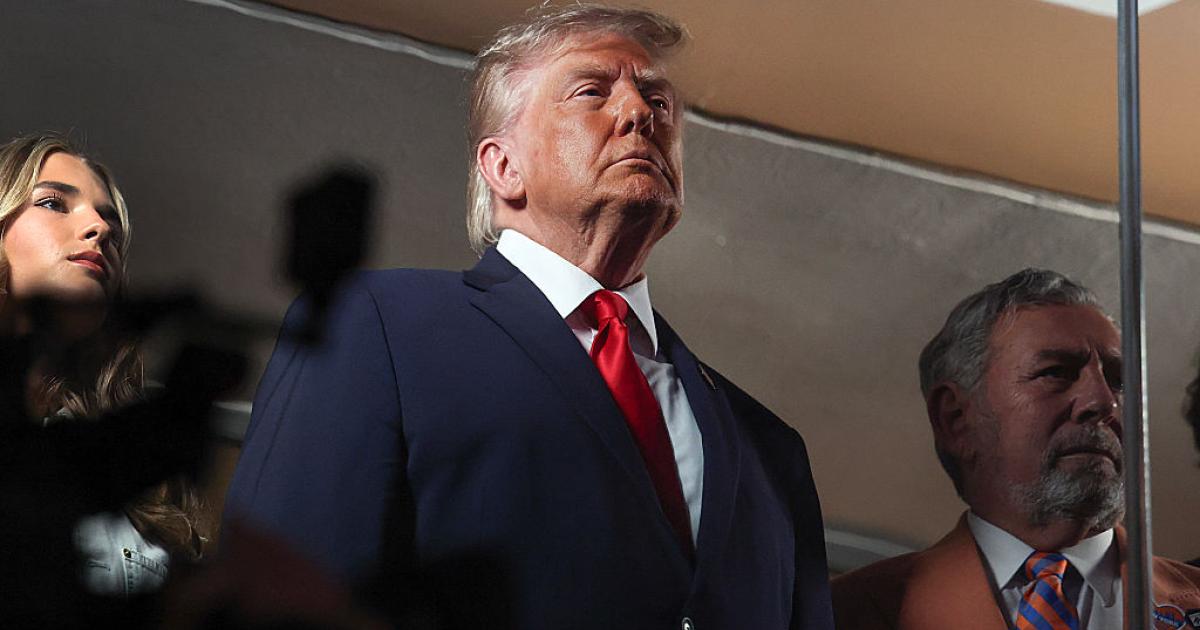
Ankara, like other capitals, awaits what will result from the upcoming meeting between US President Donald Trump and Israeli Prime Minister Benjamin Netanyahu later this month, hoping to obtain clarifications on the future of the force and the role of each party in it. However, this waiting itself reflects a crisis of confidence in the American vision, which still appears incomplete in its features.
In conclusion, it is clear that the gap remains wide between the ambitious American discourse on the second phase of the Gaza ceasefire, and the international reality cautious about engaging in implementing this discourse. The absence of a clear legal framework, conflicting agendas, and fear of being drawn into direct confrontation with "Hamas," make the "international stabilization force" more of an idea than an implementable project. While the fragile ceasefire continues under the pressure of violations and political tensions, Gaza's future remains suspended between immature international initiatives and a field reality that rejects partial and temporary solutions.

Share your opinion
Trump's Efforts to Form an International Force and Transition to the Second Phase in Gaza Falter