







US Secretary of State Marco Rubio's statements during a press conference at the State Department reflect a cautious but multi-faceted American approach toward Israel and the intertwined regional issues, from settler violence in the West Bank, to the humanitarian catastrophe in Gaza, and the file of disarming Hamas and tensions on the Lebanese front.
Without explicitly naming the phenomenon, Rubio acknowledged that Washington is exerting special pressure on Israel regarding the escalation of settler violence against Palestinians in the West Bank, which has become, according to previous American descriptions, almost unchecked by accountability. He pointed out that the US Embassy has issued public statements about specific incidents that 'raise concern' and constitute a 'point of severe friction' in the broader efforts to achieve stability. He also recalled that the US Ambassador to Israel, Mike Huckabee, recently addressed this issue 'in a firm tone,' indirectly referring to his description of this violence as 'terrorism.'
Rubio's language here reveals a familiar American paradox: acknowledgment of the problem, measured criticism, but without moving to overt coercive actions or directly linking the continuation of violence to tangible political repercussions on the bilateral relationship. The Secretary emphasized that Washington 'will continue to convey its position' regarding the impact of this violence on the 'broader challenges,' suggesting that the issue is managed through closed diplomatic channels, avoiding direct confrontation with the Israeli government.
In parallel, Rubio addressed the ongoing humanitarian crisis in Gaza, affirming the US administration's desire to increase the volume of aid allowed into the sector. He spoke of efforts to activate what he called a 'Peace Council,' alongside post-war mechanisms, in an attempt to show that Washington is not only thinking about managing the war but also the day after it. However, these statements remain general and do not address the political and security obstacles that Israel places in front of the flow of aid or any actual arrangement for managing Gaza in the future.
As for the Hamas file, Rubio did not implicitly rule out a scenario of 'selective' disarmament, distinguishing between heavy and light weapons, a proposal that has been circulating in diplomatic backchannels for months. Despite refusing to delve into negotiation details, he stressed that any disarmament formula must prevent Hamas from possessing capabilities that enable it to threaten Israel. He directly linked disarmament to the possibility of achieving peace and attracting investments for Gaza's reconstruction, arguing that the absence of this condition will keep the specter of war present in the coming years.
Rubio confirmed that any potential agreement must have Israel's approval and be imposed on Hamas through pressure from 'partners,' referring to regional and international parties. This position reflects American insistence on prioritizing Israeli security, even when discussing solutions that are supposed to be political or transitional.
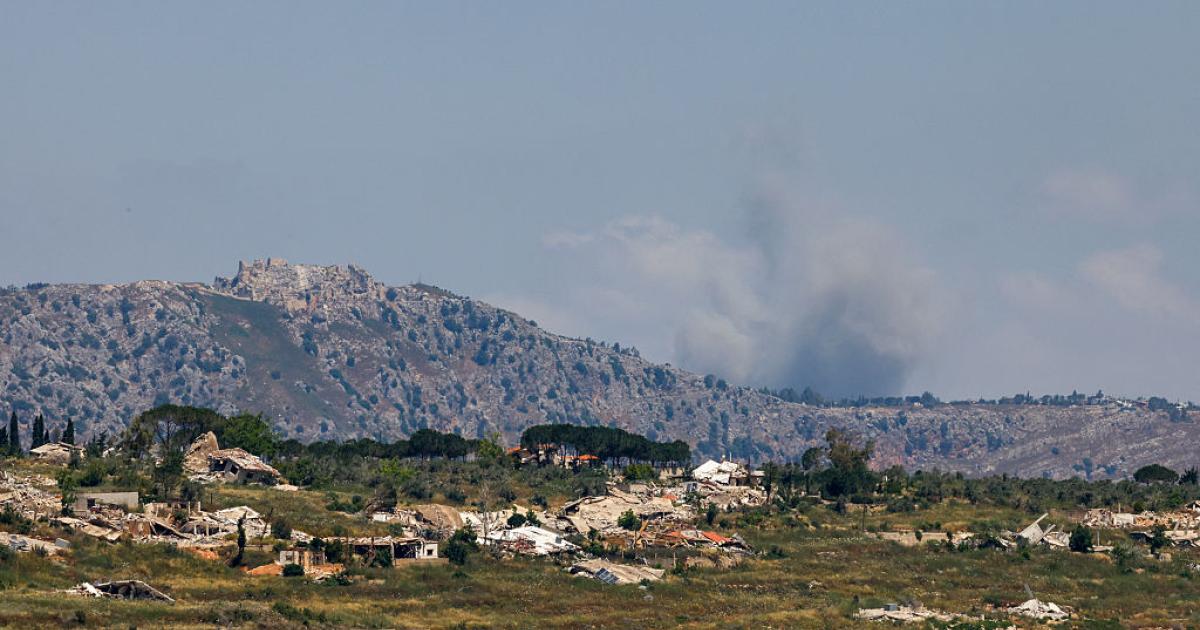
On the Lebanese front, Rubio expressed cautious optimism regarding direct talks between Israel and Lebanon, expressing hope that they lead to a path that prevents sliding into a new confrontation. But he acknowledged at the same time that Israel reserves the right to continue military operations against Hezbollah if it feels threatened. The solution, from his perspective, lies in a 'strong Lebanese state' capable of asserting its sovereignty and stripping Hezbollah of its 'armed threat' status, whether for Israel or for the Lebanese state itself.
Rubio's statements reveal an American policy based on managing crises rather than resolving them, and on sending contradictory messages to the parties: measured criticism of Israel on one hand, and constant affirmation of the centrality of its security on the other. The pressure on settler violence remains verbal, while any solutions in Gaza or Lebanon are tied to strict Israeli security conditions. This approach may temporarily alleviate tensions, but it fails to address the roots of the conflict, leaving Washington captive to an old equation: fragile stability, without political justice, and without a real horizon for a sustainable settlement.


Share your opinion
Washington Presses Quietly: Dual American Messages to Israel on Settler Violence, Gaza, and Disarming Hamas