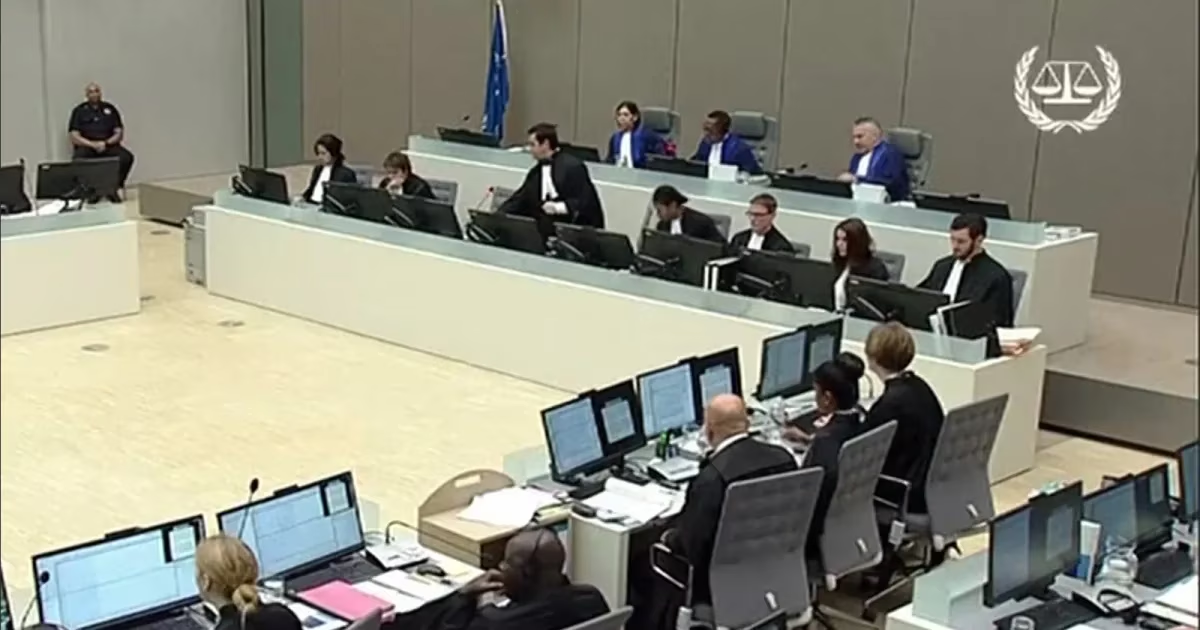







The United States imposed sanctions on two judges at the International Criminal Court, in a move that sparked widespread criticism, after they voted against an appeal filed by Israel regarding the court's jurisdiction to investigate suspected crimes in the Gaza Strip.
U.S. Secretary of State Marco Rubio announced the sanctions, justifying the decision by saying that the judges targeted a state "defending its sovereignty," referring to Israel, a step welcomed by the Israeli government and considered a political and legal defense of it.
According to the data, the two judges, one from Georgia and the other from Mongolia, voted earlier this week against Israel's appeal regarding the court's jurisdiction, which Washington described as a "legal war" on Israel.
For its part, the International Criminal Court expressed rejection of the U.S. sanctions, considering them a blatant assault on the independence of an international judicial body and an attempt to intimidate judges and influence the course of justice.
The U.S. move sparked widespread reactions among activists and international law experts around the world, with many questioning American double standards, as noted by the "Hashtag" program in its episode (2025/12/18).
In this context, journalist Natalia Morris commented, criticizing the U.S. position and its complete bias towards Israel, saying:
"The United States and Israel are not members of the International Criminal Court; imposing sanctions on its judges while denying its jurisdiction is a clear contradiction. Define your position, and just a reminder, you do not represent Israel."
From a legal perspective, human rights activist Sarah Leah Whitson considered the International Criminal Court's response insufficient, and wrote:
"Rejecting these sanctions alone is not enough; the court should legally pursue this blatant interference and intimidation of judges under Article 70 of the Rome Statute, which criminalizes any interference or tampering with the administration of justice within the International Criminal Court, to protect the court and its judges from political pressure and blackmail."
In a direct political question, Tom Elliott wrote, criticizing Washington's position and its role as the "world's policeman":
"Why should the United States intervene at all? What happened to what the administration initially said about the United States stepping back from its supposed role as the world's policeman?"
As for Marcus, he summed up his criticism with biting sarcasm, saying:
"We love imposing sanctions on judges instead of criminals; it seems we have to live with this."
In a broader comment on the impact of this step, an account concerned with international law wrote, warning of the repercussions of the U.S. move:
"Such actions targeting judges and prosecutors elected by the state parties undermine the rule of law, and when judicial actors are threatened for applying the law, the international legal system itself is at risk."
In conclusion of the interactions, a blogger expressed his fundamental skepticism about the viability of the international legal system, saying:
"Overall, this reinforces what I have always believed: international law has no real existence. This does not mean it should not usually be adhered to, but ultimately it is just a political theater, and it is better to master this game."
These sanctions come in a recurring context, as the United States previously imposed sanctions in March 2025 on two judges from France and Canada, in addition to two prosecutors at the court, on the grounds of their participation in efforts to investigate or issue arrest warrants against American or Israeli citizens.
The United States and Israel base their position on the fact that they have not signed the Rome Statute that established the International Criminal Court, considering that the court has no authority to prosecute them, in a message described as clear and loud, meaning that any legal actions against non-signatory states will face consequences.
The United States and Israel are not members of the International Criminal Court; imposing sanctions on its judges while denying its jurisdiction is a clear contradiction. Define your position, and just a reminder, you do not represent Israel.
Share your opinion
The United States Imposes Sanctions on Two Judges at the International Criminal Court