





«In Jerusalem, the Islamic-Christian relationship is not measured solely by tolerance, but by partnership in defending the land and the holy sites, and by unity of stance against policies of uprooting and Judaization, where Muslims and Christians together form a single front to protect the city's identity and dignity».
Jerusalem is more than just a spiritual capital or a sacred site for the heavenly religions; it is an open political and social arena that daily tests the meaning of national partnership between Muslims and Christians. A relationship not built on courtesies or superficial coexistence, but on a long history of brotherhood and joint steadfastness in the face of Israeli occupation policies aimed at Judaizing the city and erasing its Arab Islamic-Christian identity by targeting its historical landmarks and holy sites.
Demographic estimates indicate that the population of the Old City within Jerusalem's walls is estimated at approximately 35,000 people, with Muslims forming the overwhelming majority, ranging between 25,000 and 27,500 people, or about 70%–77% of the total population. In contrast, Christians are estimated at around 4,000–4,300 people (about 11%–12%), in addition to Armenian Christians numbering between 2,000 and 2,200 (about 6%), while the number of Jews residing in the Old City is estimated at around 3,000–3,500 (approximately 8%–10%). These figures reflect a solid demographic reality affirming that the Arab Islamic-Christian character of Jerusalem remains intact, despite continuous Judaization and Israelization attempts around the clock.
The Old City and its surroundings host about 50 churches and monasteries belonging to various Christian denominations, including the Church of the Holy Sepulchre, the Church of St. Anne, the Church of the Redeemer, the Church of the Flagellation, the Armenian Church of St. James, the Syriac Orthodox Church of St. Mark, and other historical churches that constitute a living witness to the depth of Christian presence in Jerusalem. In contrast, the Old City contains about 37 mosques, in addition to 7 mosques within the courtyards of Al-Aqsa Mosque, one of the most important Islamic holy sites in the world, alongside dozens of historical mosques and zawiyas.
This spatial and spiritual intertwining between churches and mosques has never been a source of conflict among the city's inhabitants, but rather formed the basis for unity of stance and national awareness, where Jerusalemites realize that targeting any religious holy site, whether Islamic or Christian, is a direct attack on Jerusalem's identity as a whole. Accordingly, defending the churches was not merely a Christian affair, just as defending Al-Aqsa Mosque was not solely an Islamic matter, but became a comprehensive national responsibility for all residents of the Old City.
This partnership stands out clearly during religious seasons, such as Christmas, Easter, the blessed month of Ramadan, and the Eid al-Fitr and Eid al-Adha holidays, where the relationship manifests through mutual participation in religious and social occasions, without distinction among the city's inhabitants. Positions also unite in the face of Israeli restrictions imposed on freedom of worship and movement, especially within the Old City. The exchange of congratulations, participation in events, and mutual support during crises and even in moments of loss are all daily practices reflecting the depth of Islamic-Christian relations, not merely as a religious relationship, but as a single body facing shared targeting.
The Israeli occupation, through policies of closure, imposing exorbitant taxes, confiscating properties, and seizing Islamic and Christian waqf properties, works to empty the Old City of its original inhabitants, without distinction between Muslim and Christian. However, this unified targeting has contributed to strengthening internal cohesion and transformed Islamic-Christian relations into a real political and social force in defending Jerusalem.
Today, Jerusalem's image is embodied in the scene of the crescent and the cross, and the call to prayer adjacent to the ringing of bells, not merely as a religious symbol, but as a clear political expression of unity of destiny. The Muslim defends the church as he defends Al-Aqsa, and the Christian stands by the mosque as he stands by his church, believing that Jerusalem is their compass, and whoever has Jerusalem as their compass, dignity is their path.
In light of current challenges, Islamic-Christian relations in Jerusalem remain the first line of defense for the city and its identity, and a living national model proving that unity based on partnership and justice is capable of confronting Judaization and settlement policies, and preserving Jerusalem as an Arab city embracing all its children.

OPINIONS
Wed 17 Dec 2025 11:01 am - Jerusalem Time
Islamic-Christian Relations in Jerusalem: Between Brotherhood and Shared Pain
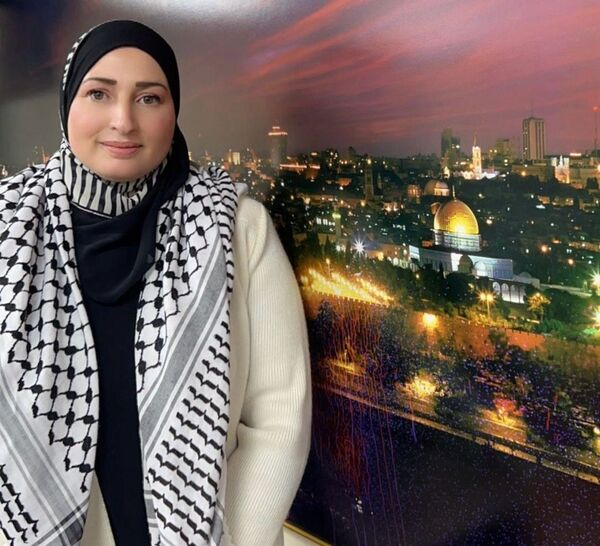
Dr. Tihani Al-Louzi
Opinion Writer
Share your opinion
Islamic-Christian Relations in Jerusalem: Between Brotherhood and Shared Pain