





In recent days, the analytical scene has been dominated by a wide wave of articles and assessments talking about an “unprecedented crisis” between Israel and the administration of US President Donald Trump, and about an imminent confrontation with Benjamin Netanyahu over the second phase of the Gaza plan. These analyses, despite their varying tones, share one assumption: that Washington is on the verge of imposing facts on Israel, and that Netanyahu stands before a decisive moment between submission or isolation.
However, this discourse, when subjected to calm examination, seems closer to Israeli political and media hype than to a realistic description of the balance of power or the nature of the American-Israeli relationship, which has historically proven its ability to absorb differences and turn them into management tools, not into a rupture or strategic clash.
The first paradox lies in the stark contradiction within these analyses themselves. The commentators who warn of “Trump's anger” and “Washington's patience running out” are the same ones who acknowledge that the American administration has not yet formed an effective international force, has not secured clear funding for reconstruction, and has not developed a practical mechanism for disarming Hamas or ensuring the contours of “the day after” in Gaza.
If Washington is incapable of producing tangible executive tools, how can it impose decisive dictates on Israel?
And if the American plan itself is faltering, where does that “deep gap” that is said to be widening lie?
In the same context, the assassination of Riad Saed is presented as evidence of Israel's challenge to Trump's will, but this description ignores a fundamental fact: Israel has never stopped testing the limits of American patience, neither in Gaza nor in Lebanon nor in the West Bank. The assassination does not represent a coup against the relationship, but a calculated tactical message: to Washington, that Israel still retains a margin for military and security action, and to the Israeli interior, that the leadership has not relinquished its tools of power. The American reaction so far confirms this understanding, as it has not exceeded the limits of verbal reservation, reflecting the continuation of the rule of “managed disagreement” rather than open confrontation.
The talk of a “strategic rift” ignores the deep structure of the relationship between the two sides. The United States does not view Israel as a party that can be dispensed with or pressured to the point of collapse, but as a fundamental pillar in its regional influence system. In return, Israel understands that Washington is not a neutral mediator, but a biased partner that sometimes disagrees with it on the method, not on the essence.
The current disagreement revolves around managing the phase, not the final goal. Washington wants politically marketable progress internationally, while Israel wants to maintain the upper hand security-wise. This is not a zero-sum equation, but a space for ongoing negotiation, where differences are managed rather than resolved.
Some Israeli analysts portray Netanyahu's upcoming visit to Washington as if it were a historic moment of submission, while reality indicates that it is closer to a session to bridge the gaps between ambitious American rhetoric and a complex field reality. Trump does not yet have practical answers to the questions Netanyahu will raise: Who controls? Who pays? Who enforces disarmament? And who guarantees no return of chaos? In the midst of this vacuum, the ability to pressure turns into the ability to persuade, a space in which Netanyahu excels at maneuvering, especially if he relies on the faltering of the American plan itself.
As for the transition to the second phase, it is presented as a political breakthrough, but in reality, it may be a reproduction of the crisis in a different form. It is a phase based on fragile balances, incomplete understandings, and international forces whose form of participation or ability to influence has not yet been decided. From here, it does not appear that the American-Israeli disagreement has reached the level of confrontation, but rather a disagreement on the speed of steps and their sequence, whose severity is inflated media-wise – especially by Israeli opposition analysts – more than it is actually manifested on the ground.
However, the most dangerous thing in this analytical debate, and in the mutual hype about the “gap” between Washington and Tel Aviv, is that it is happening while Gaza pays the full price. While American-Israeli differences are managed as differences in method or timing, Israel is practically given wide freedom to continue military operations, delay withdrawal, and disrupt reconstruction, under the cover of joint American-Israeli plans that do not aim to stop the crime, but to organize it and prolong its duration.
The talk of American pressure becomes, in this context, political deception. The United States does not pressure to stop the killing, but negotiates on its form, ceiling, and timing. It does not differ with Israel on the essence of what is happening in Gaza, but on how to market it internationally, how to manage its political cost, and who bears the burden of “the day after” without affecting Israel's freedom of military action.
In this sense, the “managed disagreement” is not a flaw in the relationship, but part of its function. It is the mechanism that allows the continuation of genocide without breaking the alliance, and the continuation of support without bearing direct responsibility. Washington waves pressure, Israel shows reluctance, while Gaza is left to pay the price alone: with killing, starvation, destruction, and an open delay for any political or humanitarian horizon.
In conclusion, the gap between Israel and the United States does not appear to be widening as portrayed. It is more rhetorical than political, used in the media for pressure, in politics for bargaining, and in analysis to fill the void of the absence of solid data. As for the relationship itself, it is still governed by a fixed rule: Israel is a constant in American policy, disagreements are manageable, while interests are unbreakable. Between hype and simplification, the most important question is lost: not whether Washington will pressure Israel, but how this pressure will be managed without changing the essence of the existing equation, and without stopping Gaza's bleeding.

OPINIONS
Mon 15 Dec 2025 10:35 am - Jerusalem Time
Between Hype and Reality: Is the Gap Really Widening Between Israel and the United States?
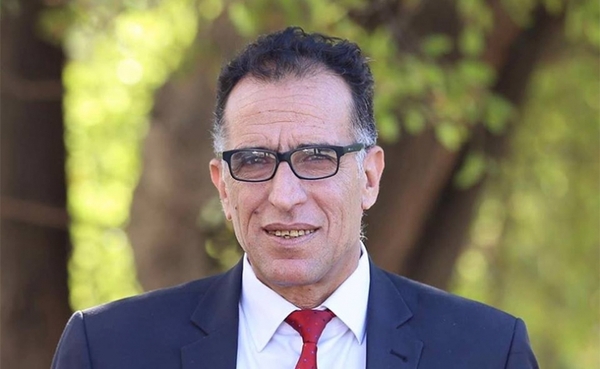
Mustafa Ibrahim
Opinion Writer

Share your opinion
Between Hype and Reality: Is the Gap Really Widening Between Israel and the United States?