







Lebanese Foreign Minister Youssef Raji affirmed on Friday that the government's decision to confine weapons to the state comes in the context of achieving the supreme Lebanese interest in building a strong and capable state, and not in response to pressure or desires from any external party.
Minister Raji's statements came during his reception of a delegation of ambassadors from the fifteen member states of the UN Security Council at the Ministry of Foreign Affairs headquarters in Beirut, according to a statement issued by the ministry.
The UN delegation's visit to Lebanon comes to discuss the stage that will follow the end of the mandate of the United Nations Interim Force in Lebanon (UNIFIL), following the UN Security Council's decision issued last August to end the force's mandate on December 31, 2026, to be followed by a withdrawal and gradual reduction plan for the forces over a full year.
Minister Raji's statements come amid increasing discussions about the arrangements related to the post-UNIFIL mission phase in southern Lebanon, where the Lebanese Prime Minister stated earlier today that his country needs a supporting international force after the end of UNIFIL's mandate, in order to prevent any security vacuum in the region after the force's departure.
The Lebanese Foreign Minister also expressed his appreciation for the continued support provided by the United Nations to his country, and for the important role played by UNIFIL forces over the past years.
The Minister pointed out that "the search is currently underway to find a suitable formula for the stage that will follow the end of UNIFIL's mission in Lebanon".
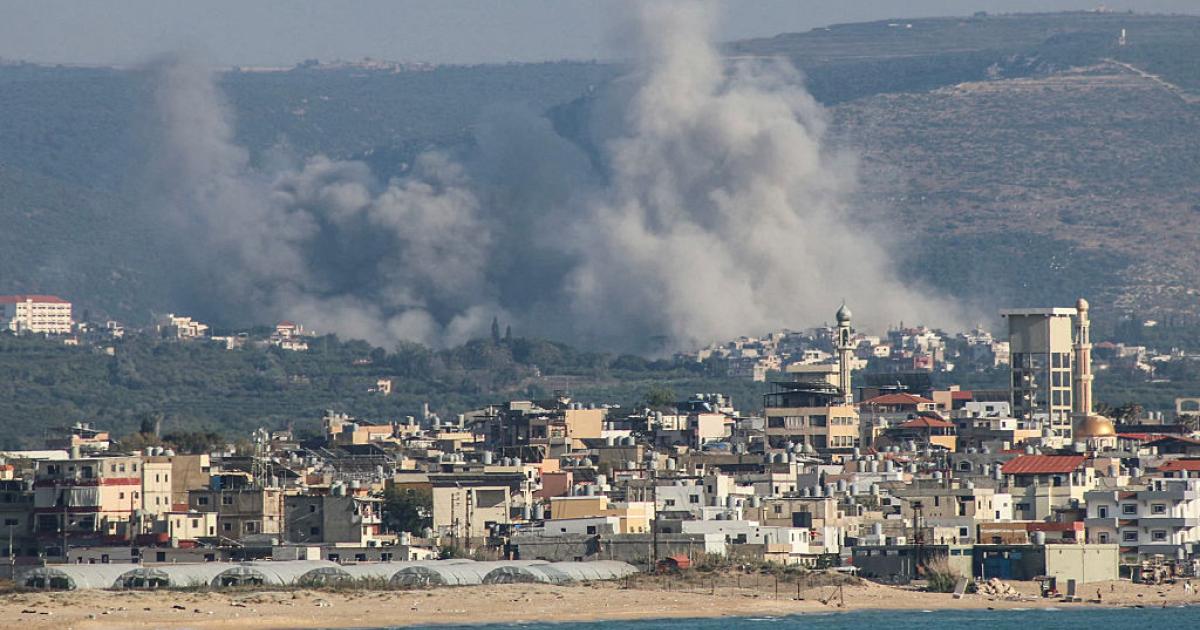
Raji stressed the need for Israel to stop its repeated attacks on Lebanon, and to "withdraw immediately and unconditionally from all the territories it occupies".
He affirmed that his country's government is "proceeding with its decision to extend its full authority over all its territories, and that it is the only one responsible for defending Lebanon and protecting its sovereignty".
In response to questions from members of the delegation regarding "Hezbollah"'s weapons, Raji explained that the government's decision to confine weapons to the state is not aimed at satisfying any external party, but rather is a "purely Lebanese interest aimed at building the state and enabling it to extend its control over all its territories and enforce the law".
According to the Foreign Ministry statement, Raji emphasized the "importance of giving a real opportunity to diplomatic solutions, especially after military options have proven their inability to defend Lebanon and deter repeated Israeli attacks".
It is worth mentioning that, under US and Israeli pressure, the Lebanese government approved last August a plan aimed at disarming "Hezbollah", which was met with rejection by the party, which described this plan as a "major sin", reiterating its demand for Israel's complete withdrawal from the occupied Lebanese territories.
In a related context, the official Hebrew Broadcasting Corporation recently announced that Israel is "preparing for a possible military escalation" to confront what it describes as "the deterioration of the security situation in Lebanon" against the backdrop of what it considers "the increasing military capabilities of Hezbollah".
It should be noted that the ceasefire agreement was supposed to end an aggression launched by Israel against Lebanon in October 2023, which turned into a full-scale war in September 2024, resulting in the death of more than 4,000 people and the injury of more than 17,000.
Since the agreement came into effect, Israel has committed thousands of violations, leading to the death and injury of hundreds of Lebanese, in addition to significant damage to property and infrastructure.
The government's decision to confine weapons to it is not aimed at satisfying any external party, but rather is a Lebanese interest to build the state and enable it to extend its control over all its territories.



Share your opinion
Lebanese Foreign Minister: The decision to confine weapons to the state serves Lebanon's interest