







The Saudi Crown Prince Mohammed bin Salman arrives in Washington to meet with U.S. President Donald Trump at the White House on Monday, November 17, 2025, carrying a heavy "security list" that reflects the scale of transformations in bilateral relations. The visit comes at a moment of extreme regional complexity, amid the ongoing Gaza war and U.S. pressures on its allies to reshape the regional landscape in line with Washington's priorities.
Informed sources indicate that bin Salman's agenda includes three main files: security arrangements with the United States that could reach the level of a special defense partnership, acquiring advanced F-35 fighter jets that Riyadh has aspired to add to its fleet for years, in addition to a civilian nuclear energy program with U.S. guarantees. However, what stands out in this visit is the absence of the normalization file with Israel from the list of demands, despite Washington's insistence for years on making it a condition for any strategic progress in bilateral relations.
This absence is not a mere protocol detail; it reflects a Saudi reading that considers any step toward normalization amid the Gaza war to be costly both domestically and regionally. It also expresses Riyadh's desire to recalibrate its relationship with Washington based on mutual interests, away from linking it to the Israeli-Palestinian track, especially after the erosion of the previous Biden administration's standing among Arab public opinion due to its unconditional support for Israel.
Today, Saudi Arabia is trying to take advantage of the current political moment as the Trump administration returns to the global scene with a more aggressive stance and ambitions to reshape Washington's influence in the Middle East. In this context, Riyadh seeks to solidify its position as an indispensable partner, whether through its economic and investment role or through its symbolic position in leading the Arab and Islamic worlds. Notably, the Crown Prince enters the White House this time with greater confidence, supported by a more stable internal transitional phase and the ability to make strategic decisions without the hesitation that characterized the early years of his rise to prominence.
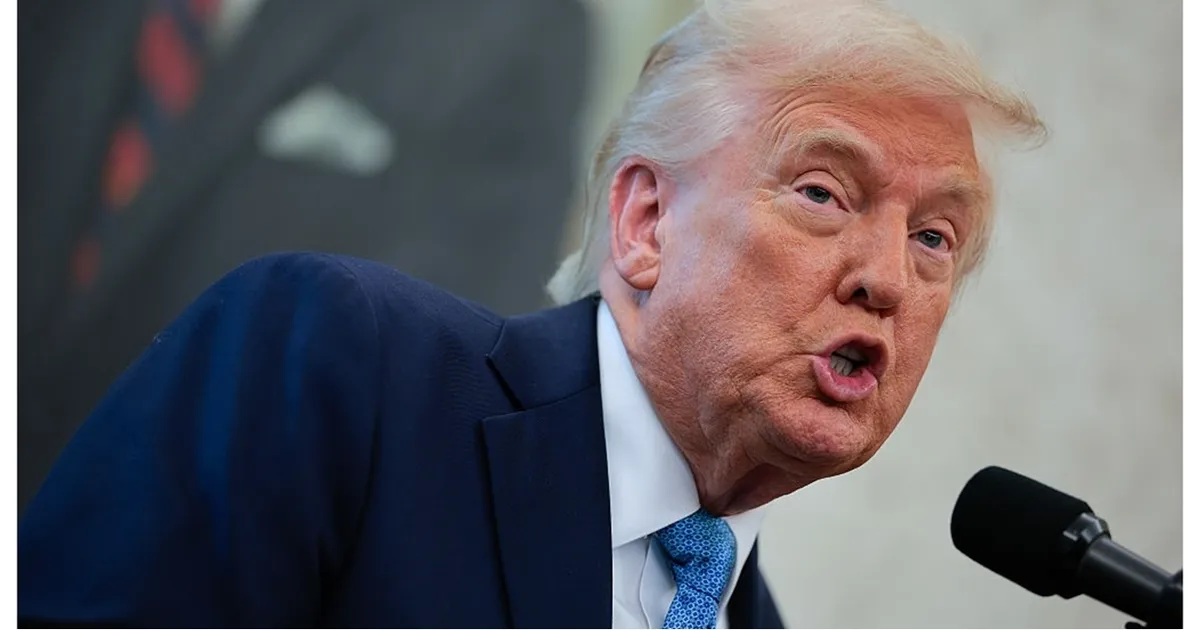
For Trump, hosting bin Salman represents an opportunity to reinforce his narrative that his administration can achieve what others have failed to do. The president, who returned to power with a discourse blending political realism and nationalist populism, wants to prove to his allies and adversaries that the United States remains the pivotal power capable of rearranging the region's dynamics. Trump is expected to use the meeting to assert that Washington is ready to offer unprecedented "security guarantees" to Saudi Arabia in exchange for broader cooperation on issues including energy, investments, and curbing Iranian influence.
However, the normalization dilemma with Israel remains a major challenge. Trump, who considers the "Abraham Accords" one of his administration's most significant achievements, understands that convincing Saudi Arabia to join this path would grant him a substantial political victory. Yet, Riyadh appears determined to separate the two tracks: security-strategic on one hand, and relations with Israel on the other. Observers believe this shift reflects a Saudi awareness that normalization amid the Gaza war would place the kingdom in direct confrontation with the peoples of the region and with part of its religious and tribal institutions, a price the Saudi leadership does not seem willing to pay at this time.
Israel is watching this visit with clear concern; a potential Saudi acquisition of F-35s or an advanced civilian nuclear program could change the regional balance of power, especially if it comes without a direct political quid pro quo for Tel Aviv. Israeli circles fear this could diminish Washington's ability to use the normalization file as a tool of influence over Riyadh, suggesting that a new era of balances may be forming away from traditional Israeli considerations.
Nevertheless, several experts believe that Riyadh fully understands that Washington remains a player that cannot be circumvented in sensitive areas such as advanced armaments and nuclear technology. Therefore, Saudi Arabia is leaning towards a strategy of "expanded bargaining": enhancing its reliance on the United States in security matters while leaving room for independent maneuvering in regional political issues. In this way, the Saudi leadership seeks to create a partnership formula that preserves its central role without tying its political decision-making.
Bin Salman's visit to Washington shows that Riyadh is moving today with greater confidence in shaping its foreign policy, benefiting from its diverse international options, from China to Russia, and from its ability to maneuver in the energy market. However, the balance of the relationship with the United States remains a crucial factor in its strategic calculations. Thus, Saudi Arabia is trying to extract as many security and technological gains as possible while avoiding any political commitments that might constrain its future regional maneuverability.
The visit also represents a test of both parties' ability to reshape their alliance away from old equations. Saudi Arabia wants a broad security-technical agreement that enhances its regional influence, while Washington seeks to engineer new arrangements that ensure its continued influence in a region where Chinese and Russian presence is increasing. While Israel remains the absent presence in this scene,



Share your opinion
Mohammed bin Salman's visit to Washington... "Expanded security list" without normalization with Israel