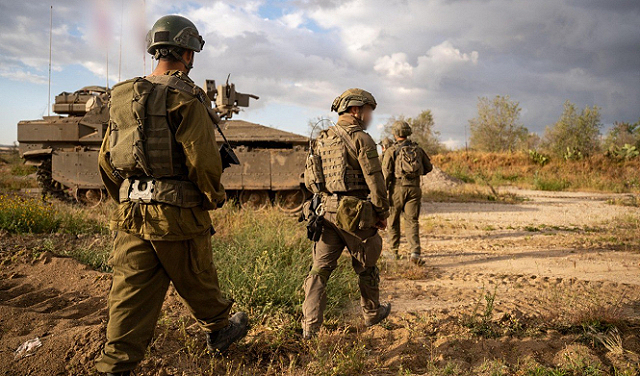







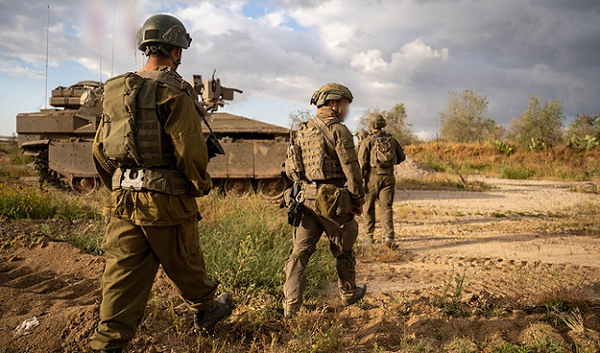
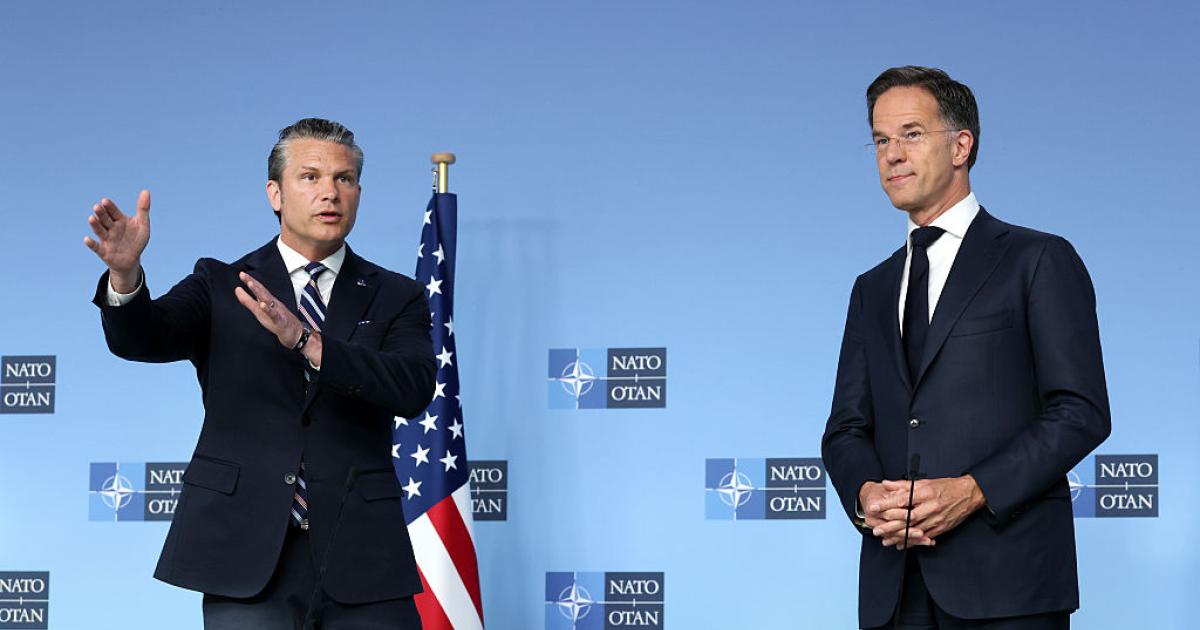
Arab leaders are flocking to the U.S. capital, Washington, to finalize massive economic, security, and military deals with the administration of President Donald Trump, as part of what Washington describes as a "new stability partnership" in the Middle East. However, behind these repeated visits lies a steadfast truth: no matter how varied the deals or how high their figures, the American weapons purchased by Arabs will never be used against Israel.
For decades, the United States has inundated Arab countries with weapons, in deals amounting to tens of billions of dollars annually. Yet, the outcome is almost the same in every war waged by Israel against the Palestinians or its Arab neighbors: American weapons are never used against Israel.
This reality is not a coincidence, but a firmly established American policy based on a clear principle: Israeli military superiority is a red line. Therefore, the American arms system in the Middle East is built on a delicate equation that always ensures Israel has the upper hand, turning American weapons in Arab hands into a constrained force, whose primary function is to maintain the balance as seen by Washington, not as desired by Arab capitals.
American laws themselves, particularly the Arms Export Control Act (AECA), grant the U.S. administration the authority to monitor the "end use" of any weapon it exports and to ensure that it is not used against "Washington's allies," foremost among them Israel. Under this rule, Arab countries do not have the freedom to use American weapons except within the limits set by the United States.
Thus, no Arab country has ever used an American aircraft or missile against the repeated Israeli aggression on Gaza, Lebanon, or Syria. In contrast, Israel uses the same American weapons, including bombs, missiles, and aircraft, to wage its wars against the Palestinians and Arabs.
This glaring contradiction reveals the essence of the relationship: American weapons are not a tool for Arab defense, but a tool for controlling Arabs. They serve more as a means of political influence than as a means of military deterrence.
Syria appears to be a clear example of this rule. Since the arrival of Ahmad al-Shara, formerly known as Abu Muhammad al-Julani, to power about a year ago, Syrian military capabilities have declined to their lowest level. Israel has destroyed most of the Syrian arsenal in a series of airstrikes that received little to no effective response. It succeeded in this because it knows, in coordination with Washington, the locations and nature of Syrian defenses, and it ensures in advance the absence of any significant response.
In Iraq, the American role was clearer. After 2003, Washington restructured the Iraqi army, but designed it to fit its own interests. It supplied it with third-rate American weapons but stripped it of military decision-making freedom. When it decided that Iraq no longer needed a strong army, it allowed it to be practically dismantled, turning it into a limited internal security force that lacks the decision-making power for war or deterrence.
In conclusion, American weapons have become a symbol of dependency rather than a guarantee of security. Arab countries pay a high price for the weapons, but they do not have the keys to operate them without Washington's permission. Even when they possess the latest aircraft and fighters, their technical systems, munitions, and software remain under direct American supervision.
Thus, weapons become a means of American political influence, not a tool for protecting Arab issues. When repeated Israeli wars against the Palestinians break out, those arsenals filling Arab warehouses do not move. Not a single shot is heard in defense of Gaza or Jerusalem, because the military decision itself is not independent.
Washington benefits from this dual equation: it sells weapons to the Arabs while giving them for free to Israel. In every war, American aid to Tel Aviv is used to destroy what Washington sold to the Arabs themselves. It is a closed circle of dependency and depletion, ensuring the continued military superiority of Israel indefinitely.
The problem is not in the quality of the weapons or their efficiency, but in the nature of the political decision that accompanies them. Washington does not sell weapons to strengthen its Arab allies, but to constrain them and tie them to itself. In this way, American weapons become a sword wielded against the Arabs themselves, not against those who occupy their land and violate their sovereignty.
As long as the United States considers Israel a strategic extension of itself in the Middle East, and as long as Arab armies rely on Washington for their armament, the equation will remain unchanged: American weapons will never be used against Israel, but they will always be used to ensure that no one dares to do so.


Share your opinion
Washington prohibits the use of its weapon against Israel and restricts it to the Arabs.