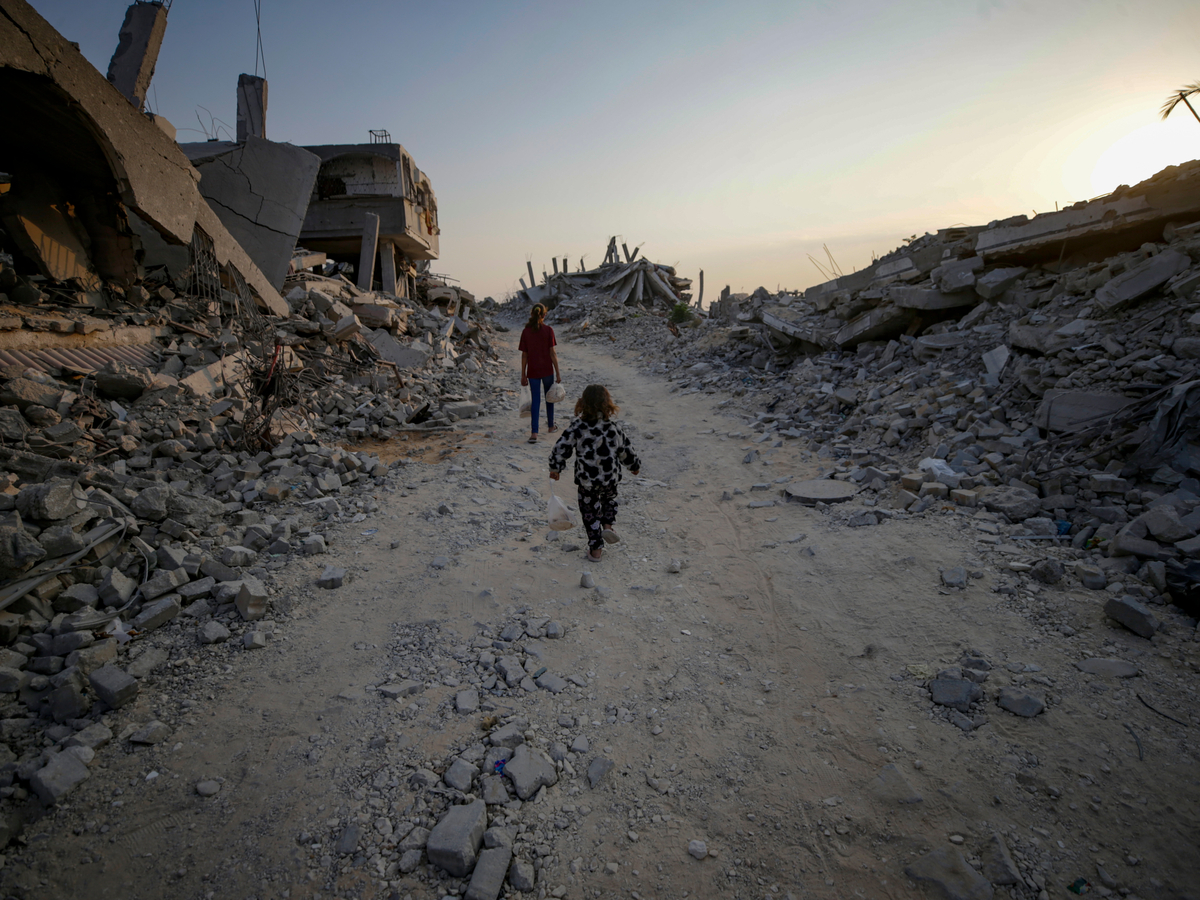







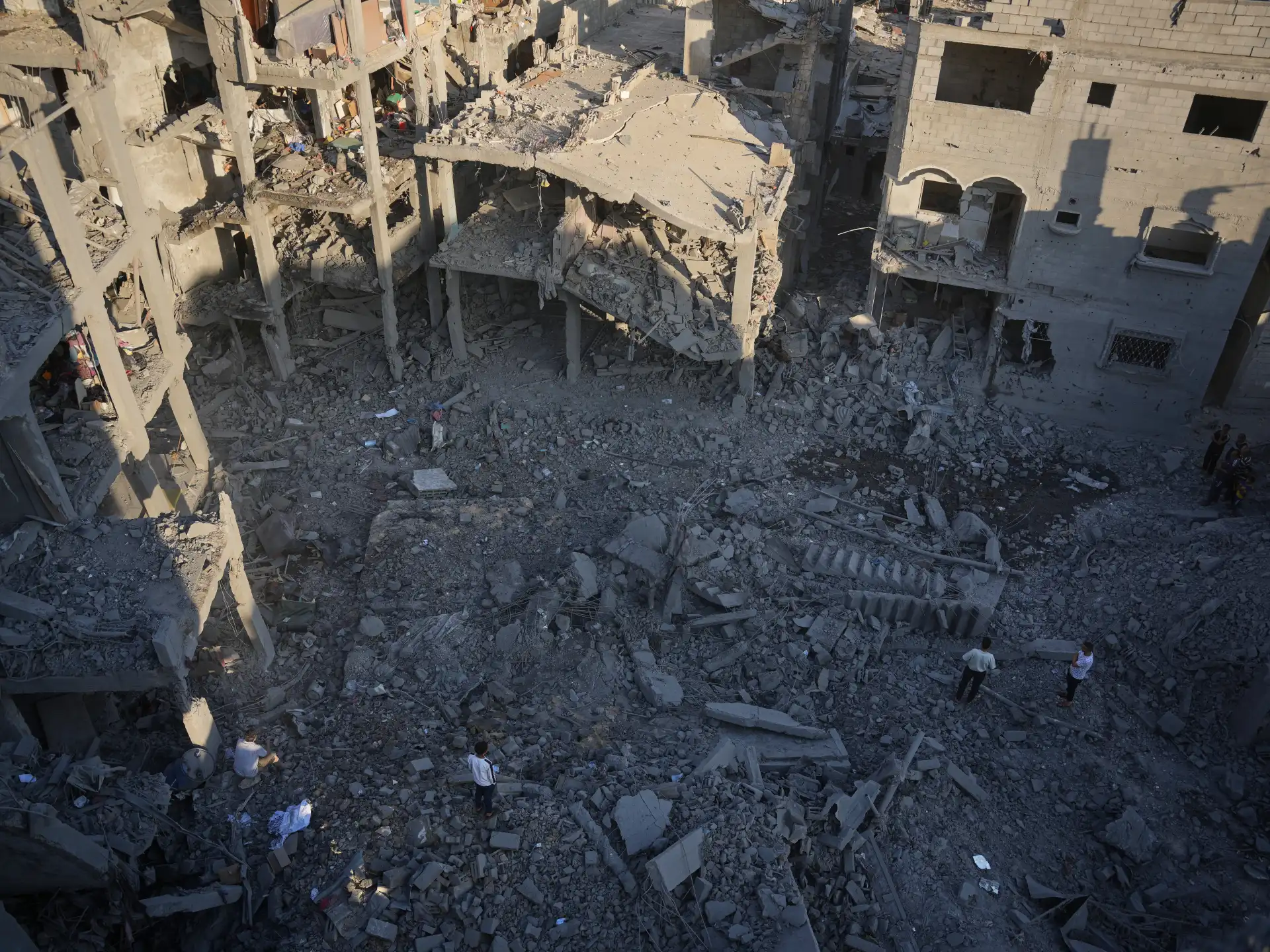
After two years of fierce war in Gaza, the fragile ceasefire - which is the first phase of President Trump's 20-point plan - offers some calm to the weary population.
For my colleagues at UNRWA on the ground in Gaza, the ongoing fear of death from explosions and airstrikes may have diminished, but there is still much to be concerned about.
Access to shelter, food, and clean water remains a challenge, and winter is approaching rapidly.
There is no time to waste in addressing hunger and widespread diseases.
The scale of physical and psychological trauma is immense, and expectations regarding access to healthcare and education are on the rise.
The coming weeks and months will determine whether this critical turning point will lead to a new dawn or be another phase of further despair.
The United Nations, including UNRWA, has the expertise and resources necessary to effectively and widely meet critical humanitarian needs.
But we must be allowed to work freely and independently, without arbitrary and unreasonable restrictions on the entry of supplies and staff and their movement.
The road to recovery in Gaza will not be easy; the ceasefire is fragile, as near-daily violations test the commitment of the parties that guarantee it.
A ceasefire that prolongs the absence of war without charting a viable path to peace will only repeat the catastrophic mistakes of the past.
A truly peaceful future requires a real investment in a final political solution to the Israeli-Palestinian conflict.
Basic security is essential to underpin recovery.
The ceasefire must support the presence of an international stabilization force, tasked with maintaining calm, protecting critical infrastructure, and ensuring access to humanitarian aid.
This force will create the necessary space to rebuild Palestinian institutions.
The success of the international stabilization force, and the transition from emergency to stability, will also depend on providing the people of Gaza with reliable public services, a credible path to peace, and respect for human rights.
This can only be achieved through a capable civil service that enjoys the trust of the community.
We have previously seen the consequences of underestimating the importance of providing stable and effective public services, most clearly in Iraq, where the dismantling of civilian administration in 2003 created a governance vacuum that brought years of instability.
The lesson is clear: public institutions capable of delivering essential services to civilian populations must be maintained.
Professionals, administrators, and local community leaders in Gaza must be part of the solution, not victims of political rearrangements.
UNRWA, with its thousands of Palestinian staff, has the capacity, experience, and community trust necessary to provide healthcare, education, and other public services to a population that has suffered devastation.
For decades, UNRWA teachers, doctors, and engineers have been a vital part of an effective public service system for millions of Palestinian refugees in Gaza and the region.
In its advisory opinion, the International Court of Justice reaffirmed the professionalism of UNRWA staff, emphasized the indispensable humanitarian role of the agency, and concluded that UNRWA remains a neutral and impartial actor.
UNRWA's educational services, including its highly regarded human rights program, will be a key factor in preventing the emergence of extremism, which is fueled by the severe blockade on Gaza and the atrocities committed over the past two years.
Currently, nearly 700,000 school-age children live among the rubble, deprived not only of their homes and loved ones but also of education, which has always been a source of hope and pride.
Returning children to an educational environment is an investment in peace and stability in Gaza and the region as a whole.
Alongside humanitarian relief efforts and the resumption of public services, an environment of trust is also needed to open the door to long-term investments.
Businesses and donors must be confident that peace will endure and that reconstruction efforts will not be in vain.
They must be assured that there will be no relapse into another cycle of destruction.
The people of Gaza need a commitment to a normal life, with permanent housing, hospitals, and well-functioning schools.
Rebuilding Gaza means restoring good governance and justice, and reinforcing the belief that peace is still possible within the framework of a two-state solution.
This requires that the "yellow line" of the agreement - drawn for temporary security coordination - does not turn into further fragmentation with a new dividing line within Gaza and between Gaza and the West Bank.
Finally, the difficult and necessary work of reconciliation must begin without delay.
Today, Israelis and Palestinians are neighbors who no

Share your opinion
Gaza: A Long and Difficult Road to Recovery