






Members of both the Republican and Democratic parties in the U.S. Senate reached a preliminary agreement on Sunday evening aimed at ending the longest government shutdown in U.S. history, following more than five weeks of political paralysis that disrupted the work of federal institutions and negatively impacted the national economy.
Informed sources on the closed negotiations indicated that at least eight Democratic members agreed to support a settlement reached with the White House and Senate Republicans, a number sufficient to pass the plan and send it to the House of Representatives. A procedural vote in the chamber was expected to take place late Sunday evening.
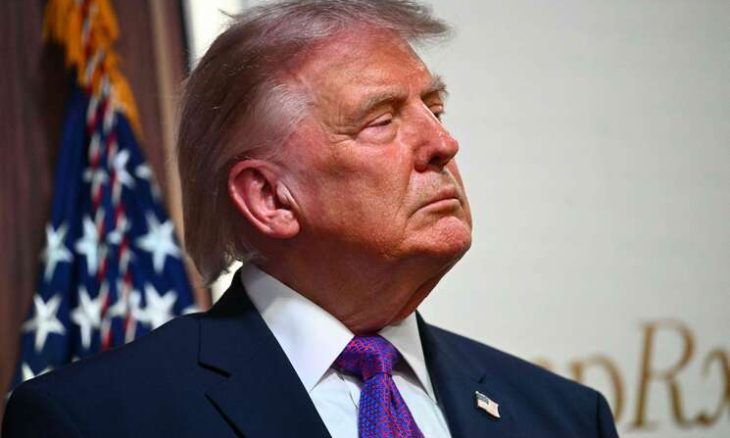
U.S. President Donald Trump, upon returning to the White House on Sunday evening, stated that negotiations were close to achieving a breakthrough to end the crisis, adding: “It seems we are very close to ending the shutdown… You will know that very soon.”
The agreement entails reopening and funding federal agencies until the end of January, canceling temporary layoffs of federal employees and ensuring they receive their back pay.
However, the settlement included a concession from the Democratic side regarding tax credits for healthcare, which were the main point of contention between the two parties. While Democrats demanded an extension of these credits, which expire at the end of the year, the agreement only included a commitment to hold a vote on them by mid-December, without any guarantees for their extension.
This provision raised objections from several Democratic lawmakers, as House Democratic Leader Hakeem Jeffries announced his rejection of the agreement, stating in a statement: “We will fight against the Republican bill in the House, as it does not protect the healthcare tax credits that millions of American families rely on.” He added: “Due to Republicans' refusal to address the healthcare crisis they caused, ordinary Americans will bear a huge increase in their costs.”
This development came on the fortieth day of the government shutdown, following warnings from the Trump administration that the continuation of the crisis could lead to a sharp slowdown in air travel and economic contraction. Treasury Secretary Scott Pruitt stated that the impact of the shutdown “is worsening day by day,” noting that the disruption of flights and the halt of food assistance for low-income families threaten the economic and social stability of the country.
The U.S. government had shut down on October 1, following Congress's failure to reach an agreement on the budget for the new fiscal year, leading to the disruption of hundreds of thousands of federal employees and forcing others to work without pay.
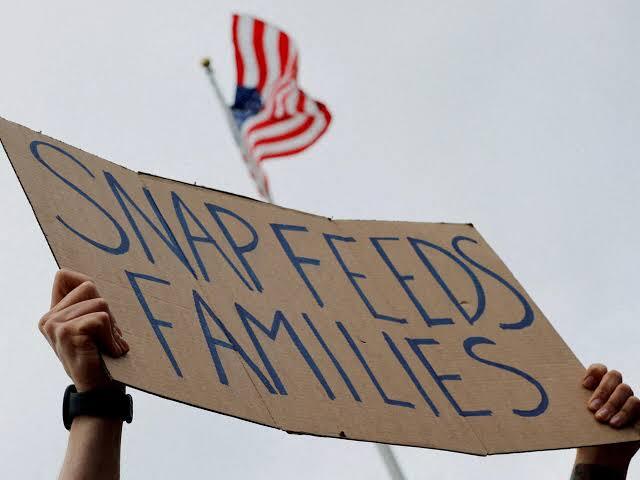
The repercussions of the crisis have intensified in recent weeks, with the suspension of benefits for the Supplemental Nutrition Assistance Program (SNAP) since November 1, affecting more than 40 million Americans who rely on food stamps. The Federal Aviation Administration ordered last Friday to gradually reduce the number of flights by up to 10 percent by November 14 if the deadlock continues.
Republicans were pushing for the passage of a Continuing Resolution that would keep spending at current levels, while Democrats conditioned the inclusion of an extension for healthcare tax credits in this resolution.
In a series of social media posts, President Trump attacked health insurance companies and rejected the idea of extending those credits, instead suggesting direct payments to Americans, stating: “Pay the money to the people, not to the insurance companies!”
The temporary agreement reflects the fragility of the political balance in Washington, as both parties seek to avoid being blamed for the continuation of the shutdown amid increasing public and economic pressure. While Republicans, led by Trump, wanted to appear as the saviors who reopened the government, Democrats attempted to mitigate their political losses by extracting a commitment to revisit the issue of health credits later, making the agreement more of a tactical step than a final settlement.
The course of the crisis also shows how issues of federal funding and healthcare have become tools for early electoral conflict a year before the 2026 elections, as both sides seek to establish different political narratives before American voters: Republicans claim they are fighting “waste and bureaucracy,” while Democrats present themselves as defenders of social justice. Therefore, ending the shutdown does not necessarily mean the end of the crisis, but may rather be a prelude to a new round of conflict over spending priorities and the role of the state in the economy.



Share your opinion
Agreement to End the Longest Government Shutdown in U.S. History