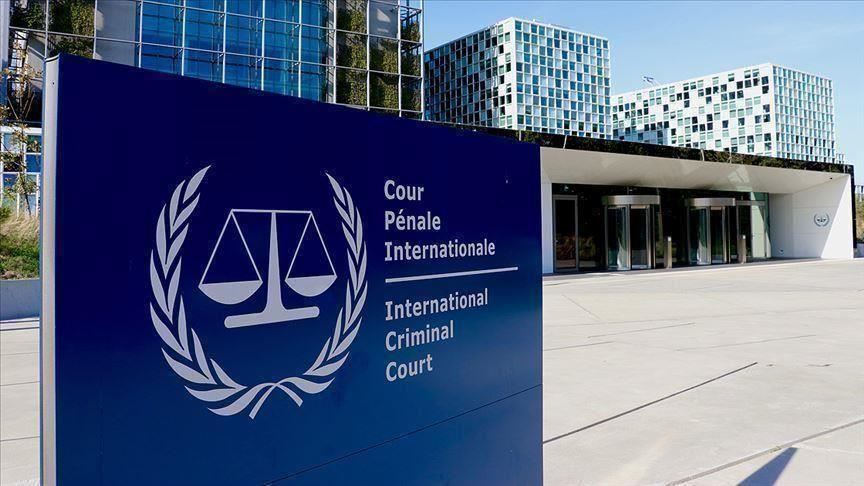







The administration of U.S. President Donald Trump is expanding its campaign against the International Criminal Court (ICC) by imposing new sanctions on three Palestinian human rights organizations that requested the ICC to investigate Israel for genocide in Gaza. Analysts say these designations issued by Secretary of State Marco Rubio could hinder the court's efforts to gather evidence on Israel's conduct in its war against Hamas, according to an investigation by The Washington Post.
These designations, issued on Thursday, September 4, 2025, prohibit U.S. entities from dealing with the Palestinian Center for Human Rights, the Al-Mezan Center for Human Rights, and the Al-Haq organization. Foreign entities, such as banks or website providers, have been given a month to terminate their business transactions with these organizations, according to the Office of Foreign Assets Control.
Rubio stated in a press release: "These entities have directly participated in the ICC's efforts to investigate, arrest, detain, or prosecute Israeli citizens without Israel's consent." We oppose the politicized agenda of the ICC, its overreach, and its disregard for the sovereignty of the United States and its allies.
In November, the ICC issued arrest warrants for Israeli Prime Minister Benjamin Netanyahu and former Defense Minister Yoav Gallant on charges of war crimes and crimes against humanity. (Arrest warrants were also issued for three Hamas leaders; all were killed by Israeli forces). Neither Israel nor the United States recognizes the court's jurisdiction.
Legal experts have warned that the sanctions threaten international norms and could undermine the United States' standing as a defender of human rights.
The newspaper attributed to Mohsen Farshneshani, the lead attorney at the Washington-based Center for Penal Law, his statement: "The sanctions are designed to hold perpetrators of crimes accountable or punish those acting against U.S. foreign policy and national security interests. They are not intended to silence those documenting human rights atrocities."
These designations were issued under emergency powers that President Donald Trump invoked in February when he accused the ICC of "unlawful and baseless actions targeting America and our close ally Israel." He stated that any effort to investigate "protected persons" or prosecute them, including Israeli officials, constitutes an "extraordinary threat" to U.S. national security.
Trump also used emergency powers to impose tariffs on imports, deport immigrants, and send the National Guard to U.S. cities, among other measures. This exploitation allows the president to temporarily bypass congressional scrutiny.
The administration has also imposed sanctions on the ICC's chief prosecutor, Karim Khan, his two deputies, six judges, and on Francesca Albanese, the UN Special Rapporteur on human rights in the occupied Palestinian territories. Albanese described Israel's campaign in Gaza as genocide.
A former official in the U.S. sanctions office (who spoke to the newspaper on condition of anonymity) commented on this sensitive issue: "This is how we apply sanctions to warlords and drug traffickers." He added: "We want to hit the broader network so that the core of the network finds it difficult to operate. In this case, the core is the ICC." Attorney Brad Brooks-Rubin wrote in New Lines magazine last month: "Sanctions are like a punch in the face. Sometimes one punch is enough to change someone's course. But usually, it takes more than that." (Brooks-Rubin did not address the Trump administration's campaign against the ICC in his article.)
Analysts say that without the help of human rights groups in documenting war crimes, ICC investigators may struggle to meet the minimum evidence required to prosecute suspects.
Brad Parker, an attorney at the Center for Constitutional Rights in New York, described last week's designations as "a cynical attempt to punish accountability advocates at the height of the genocide committed by Israel against the Palestinian people with U.S. support."
Parker added that organizations led by Palestinians will now likely face difficulties in paying their staff or raising funds, and employees may face civil and criminal penalties. He said: "Everything is likely to come to a halt. It is a retaliatory attack aimed at creating an existential problem."
Analysts have warned that U.S. sanctions could burden the entire human rights sector, deterring organizations from working with Palestinian organizations or the court.
Emily Schaffer Omer Mann, an attorney and lecturer at American University, said: "It's a cascading reaction." "Once an organization is designated as a specially designated entity, any support—material,

Share your opinion
Sanctions on Palestinian human rights organizations expand Trump's battle against the International Criminal Court.