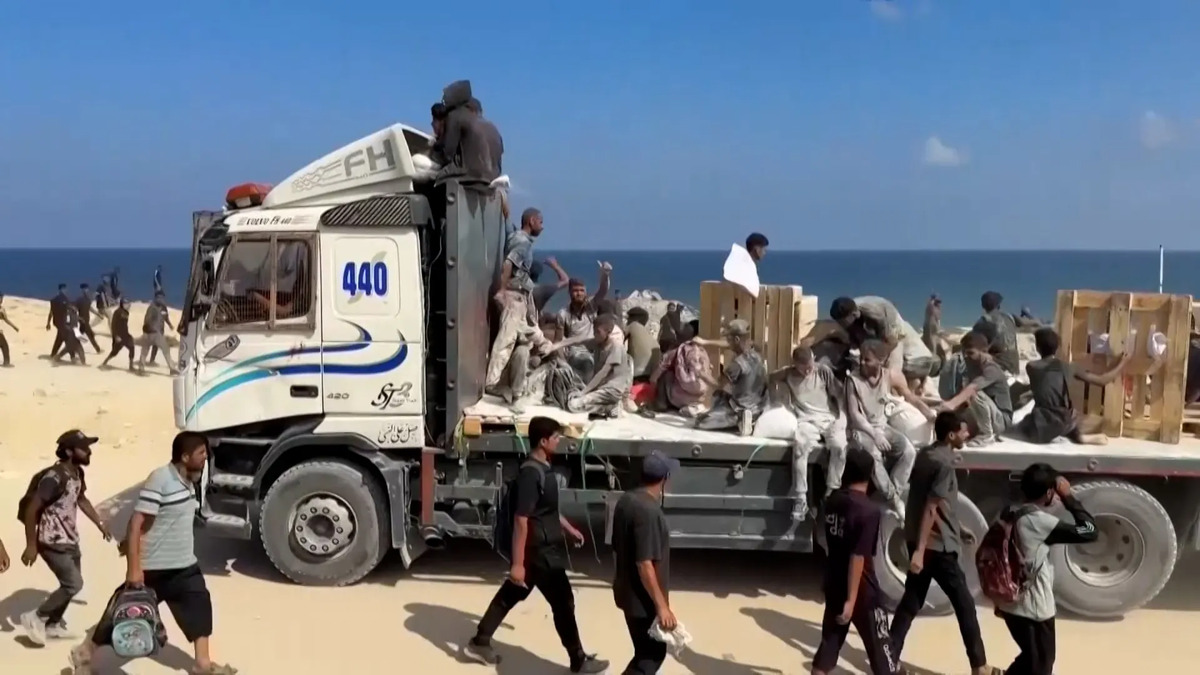







More than half a million Palestinians in the Gaza Strip are threatened by death after reaching a stage of severe hunger, according to UN estimates, at a time when famine is worsening in the besieged Palestinian territory.
The needs of people in wartime focus on five main areas: food, health, water, shelter, and additional needs, which applies to the Gaza Strip, which has been suffering under an unprecedented Israeli war for 22 months.
An individual needs about 2,000 calories daily for food and nutrition to survive and perform the minimum daily activities, in addition to the necessity of providing essential medicines, urgent services, and vaccination campaigns against epidemics.
For water and sanitation, an individual needs 15 liters of water daily, with the assurance of safe sanitation facilities and personal hygiene tools to prevent epidemics.
It is also necessary to provide tents or temporary shelters and maintain them periodically to ensure their continued suitability, along with additional needs such as providing fuel and electricity to operate hospitals and water stations.
In light of the tight Israeli blockade on the Gaza Strip, there is a focus on the need for food and the details related to the quantities of aid being brought in, its type, the method of entry, and distribution mechanisms.
According to estimates from the United Nations and the World Health Organization, the Gaza Strip needs at least 500 aid trucks daily, as 80% of the population suffers from food insecurity, and 25% have reached a stage of famine leading to death.
In terms of aid, food and medicine must be of complementary and essential quality, while data indicates that the number of trucks carrying medical supplies has not reached a full truck per day.
According to UN estimates, less than 8% of World Food Program trucks reached their destination in Gaza over the past 10 weeks, while the remaining trucks were looted by armed militias working in coordination with the occupation army.
The mechanism for distributing aid is of great importance, as more than 1,700 martyrs have fallen to the bullets of the occupation forces in food distribution areas, representing 40% of the total number of martyrs during the same period.
Before the formation of what is called the "Gaza Humanitarian Foundation," the UN aid mechanism was transparent and professional for 14 months, according to local human rights organizations.
The report from the American International Development Foundation also confirmed that there was no systematic leakage of aid to fighters of the Islamic Resistance Movement (Hamas), and that the mechanism of the United Nations Relief and Works Agency for Palestine Refugees (UNRWA) for distributing aid was functioning well.
However, Israel insists on finding an alternative to the UN aid distribution mechanism, indicating a clear desire to sabotage the aid distribution process and continue the starvation of Palestinians in Gaza.
Since October 2023, the occupation army - with American support - has been waging a war of extermination against the residents of the Gaza Strip, resulting so far in the martyrdom of more than 61,000 Palestinians, the injury of more than 153,000, and the displacement of nearly all the residents of the strip.
The Gaza Strip needs at least 500 aid trucks daily, as 80% of the population suffers from food insecurity.




Share your opinion
5 Basic Needs of Populations in War Situations: Are They Available for the People of Gaza?