






Israeli Report Reveals Netanyahu's Rejection of a Prisoner Exchange Deal
Netanyahu's refusal to conclude a prisoner exchange deal reflects the continuation of Israeli policy in complicating efforts to release Palestinian prisoners.
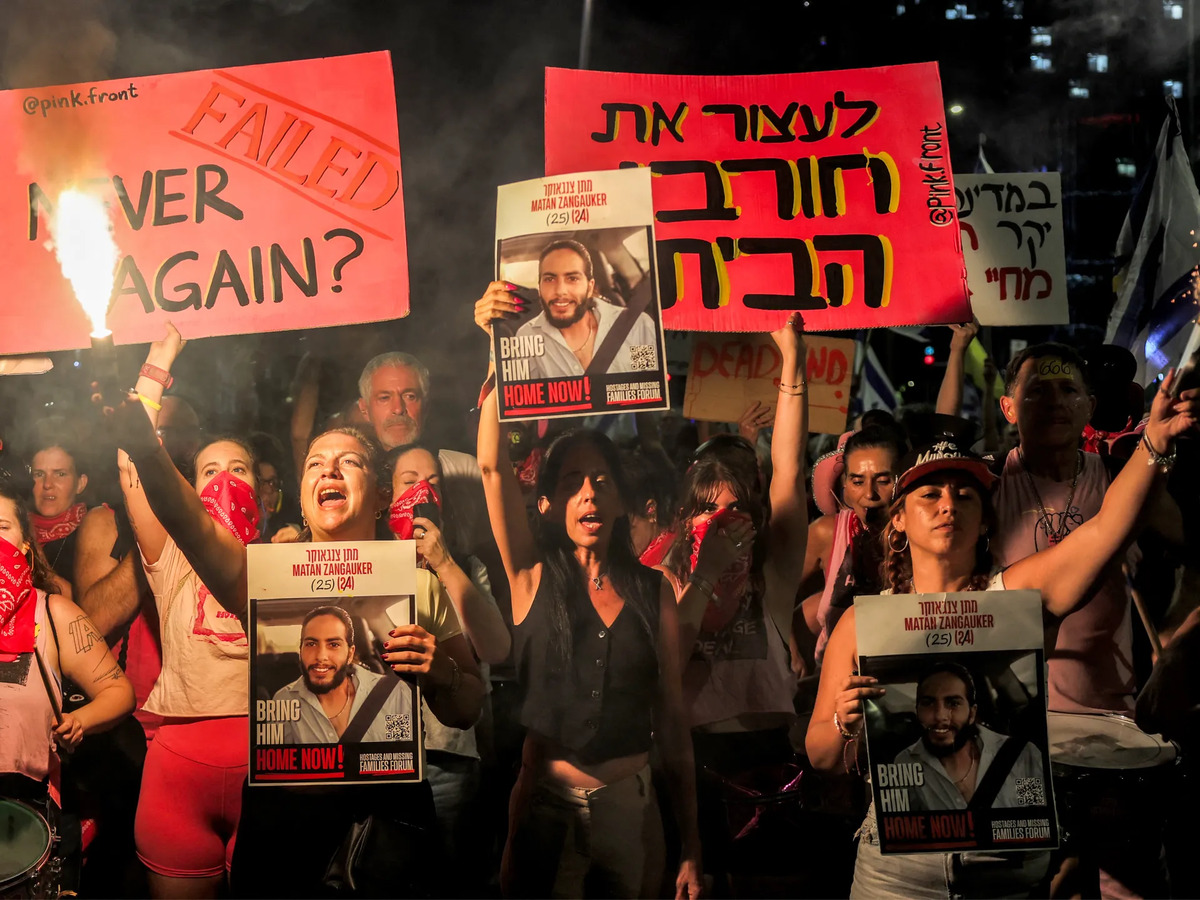
Israeli Channel 13 revealed in a special report that government talks took place months ago regarding a deal to end the Gaza war and exchange prisoners, showing that the political leadership headed by Prime Minister Benjamin Netanyahu rejected security proposals that would have led to the release of detainees in preparation for resuming fighting later.
According to the report, Israeli security leaders have been convinced since last March, after the first phase of the previous agreement ended, that reaching a comprehensive agreement was possible; however, the political decision prevented that, leading to a continued state of stalemate.
Leaked protocols show that initial discussions began in early March when the military's detainee file officer, Nitzan Alon, stated that the only opportunity to return the detainees was through a deal, but Minister of Strategic Affairs Ron Dermer refused to proceed in this direction, asserting that Israel was not ready to end the war while Hamas remained in power.
At the same time, the head of the internal security service (Shabak), Ronen Bar, expressed his preference to proceed with a deal to return all detainees and then continue fighting until Hamas is defeated, as he put it, a position that reflects differing viewpoints within the security establishment.
However, the political leadership rejected the approach towards a prisoner exchange deal, especially since Finance Minister Bezalel Smotrich considered the option of stopping the war and then returning to it after the release of Palestinian prisoners as ignorance, which further complicated negotiations.
In family reactions, the families of the detainees described the leaked talks as "dangerous," asserting that the Israeli government continues the war for political reasons and works to thwart efforts to release the prisoners, without any real concern for the interests of Palestinian detainees or their families.
Israel estimates that there are about 50 Israeli captives in Gaza, of whom 20 are alive, while more than 10,800 Palestinians are imprisoned in its jails suffering from torture, hunger, and medical neglect, which has led to the deaths of many of them, according to Palestinian and Israeli human rights and media reports.
In a related context, Israel withdrew from indirect negotiations with Hamas in Doha, sponsored by Qatar and Egypt, and supported by the United States, due to Tel Aviv's rigid positions regarding withdrawal from Gaza, ending the war, releasing Palestinian prisoners, and the mechanism for distributing humanitarian aid.
In repeated statements, Hamas announced its readiness to release Israeli prisoners all at once in exchange for ending the genocide war, the withdrawal of the occupation from Gaza, and the release of Palestinian prisoners, but Netanyahu evades this and imposes new conditions, including disarming Palestinian factions, and insists on reoccupying Gaza.



Share your opinion
An Israeli report reveals Netanyahu's refusal to finalize a prisoner exchange deal.