






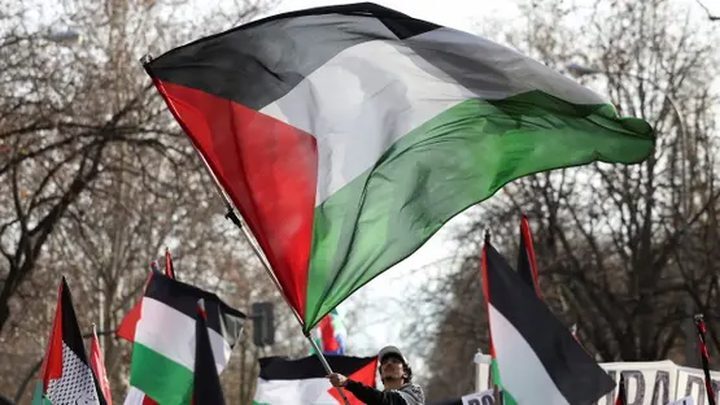
Johnny Mansour: This is an advanced step in the policies of countries like Britain and France, and this means that the suffering of the Palestinian people has reached a point that requires the West to take a step.
Dr. Adnan Al-Afandy: The recognition of these countries is a rolling international "tsunami" that could force the occupying state to face difficult choices, especially regarding the war on Gaza.
Shadi Al-Sharafa: Linking recognition in September to conditions does not serve the Palestinian cause, and there must be a correction of the historical path taken by Britain.
Al-Sanea's request: We welcome this realization, even if it comes late, but the real test is not only in recognizing the Palestinian state, but in actually establishing it.
Imad Abu Awad: Israel will either radically and rapidly change its policies, which is unlikely, or it will find itself unable to confront the future.
Osama Al-Sharif: The ongoing massacres and war of extermination in Gaza have triggered a political "tsunami" that is pressuring Western governments thanks to the awakening of the street there.
The threats issued by extremist and racist extremists in Israel following France's and later Britain's announcement of their intention to conditionally recognize the State of Palestine next September reveal the truth about Israeli plans and raise real fears of actual measures to annex the West Bank, end the Palestinian Authority, and completely eliminate the idea of establishing a Palestinian state. What steps must these countries take to implement their pledges and prevent the occupying state from imposing facts on the ground that would prevent the realization of the desired Palestinian state?
Writers, analysts, and academics who spoke to "I" considered these admissions a significant step forward in the policies of countries like Britain and France, emphasizing that this step is a ripple of international "tsunami" that could force the occupying state to face difficult choices, particularly regarding the war on Gaza.
However, some analysts and writers believe that linking recognition in September to conditions does not serve the Palestinian cause, and that there must be a correction of the historical course taken by Britain. They add, "The real test lies not only in recognizing a Palestinian state, but in actually establishing that state."
An advanced step in state policies
Historian and Israeli affairs researcher Johnny Mansour said, "There are those who consider the initiative of Britain and a number of world governments, including Western European countries, a positive step toward a two-state solution, and thus achieving justice for the Palestinian people and spreading stability and peace throughout the Middle East."
He added, "There are those who consider it a step towards a virtual Palestinian state in the absence of executive forces that can force Israel to withdraw from the Palestinian territories occupied in 1967."
Mansour continued, "But let's look at the issue more deeply. This is an advanced step in the policies of countries that will follow suit, such as Britain, France, Norway, and others. This means that the pain, suffering, and wounds of the Palestinian people in Gaza and the West Bank have reached a point where the West must take action."
On the other hand, Mansour believes that the scenes of starvation, killing, genocide, and humiliation of the Palestinian people in Gaza have reached every home around the world.
He said, "We believe that Israel's position on this step confirms its rejection, especially since we are facing a right-wing government par excellence, to find a solution to the conflict."
Mansour asserted that Netanyahu himself had come out against British Prime Minister Keir Starmer and his announcement that his country would soon recognize a Palestinian state, accusing him of the most absurd of comparisons, to the point of comparing him to the naive Chamberlain before Hitler on the eve of World War II.
He pointed out that some have likened him to paving the way for Hitler, or Nazism, and we all know the intent behind such comparisons. He noted that the intent behind them is to portray Starmer and other world leaders as Nazis who are giving a gift to "Palestinian terrorism."
The era of hypocrisy is over and the era of telling the truth has come
Researcher Mansour explained that Israel will remain convinced that the Palestinians do not have the right to establish a state on their homeland, and that Western support in particular is deeply wrong.
He stated that, according to Chinese wisdom, "much water flows in the river," which means the world wants to rid itself of the legacy of World War II. He also noted that the governments of many countries, in light of Israel's crimes in Gaza, are moving to support the steadfastness and survival of the Palestinian people in the face of Israeli aggression, supported by the US administration.
He added that Europe, in particular, stands up to the United States, which restores its position in global politics.
Mansour said: "We are facing another confrontation between the Israeli government and the countries that have and will announce their recognition of a Palestinian state, and they will work to convince the world of the sincerity of their intentions." However, he emphasized that the era of whitewashing, cover-up, and official and media hypocrisy is over. Now is the time to tell the truth in full view of the world, and the images of the starving people behind screens are screaming loudly into the conscience of the world.
He asked: Will the confessions produce a practical plan to implement them on the ground? Time will tell.
Israel's isolation is increasing day by day.
For his part, Israeli affairs analyst Dr. Adnan Al-Afandy said that Israel's isolation is increasing day by day due to the massacres committed by the Israeli occupation state against the Palestinian people in the Gaza Strip, as well as its racist and repressive policies in the occupied West Bank and Jerusalem.
He stressed that the occupying state has become, in the eyes of the world, a racist colonial power practicing ethnic cleansing and genocide against the Palestinian people. This will have a significant positive impact on the Palestinian cause, will lead to the isolation of the occupying state from the rest of the world, and will weaken the occupying state internationally.
Al-Afandy pointed out that this is what actually happened recently, especially with Britain announcing that it would recognize a Palestinian state in September if the occupying state did not completely stop its war against the Palestinian people, and clarifying that the West Bank would not be annexed. He added: This comes after French President Macron also announced a few days ago his intention to move forward with recognizing a Palestinian state, and this was met with official Israeli reactions from the Israeli Foreign Ministry, which considered this step to weaken efforts aimed at a ceasefire in Gaza and a possible settlement of the prisoners’ issue.
The analyst, Afandi, noted that Australia and Canada joined France's call to recognize a Palestinian state, while other countries that signed the call included Malta, New Zealand, Portugal, Norway, Spain, Slovenia, Luxembourg, Ireland, Finland, and Iceland.
He emphasized that this recognition by these countries represents a rolling international "tsunami" that could force the occupying state to face difficult choices, particularly regarding the war in the Gaza Strip and the killing of Palestinians by starvation, in addition to killing by fire, especially since the number of Palestinian martyrs in the Gaza Strip has reached 60,000, and the occupying state is forced to end its occupation of Gaza.
Confession in the wake of the occupation's massacres in the Gaza Strip
Al-Afandy believes that this recognition comes as a result of the massacres and killings committed by the occupation in the Gaza Strip, and as a result of the transmission of images of Palestinian martyrs, whether by fire or starvation, to the entire world. He pointed out that this has dispelled the false Israeli narrative and highlighted the truth of the Palestinian narrative, following the United Nations' confirmation that a quarter of Palestinians in Gaza go hungry every day.
He pointed out that various reactions and numerous questions within diplomatic circles in the occupying state pointed to the reasons and motives behind the tsunami of recognition of a Palestinian state, and warned of the potential expansion of this tsunami, which could lead to many other countries joining in recognizing a Palestinian state.
Al-Afandy believes that the occupying state is experiencing its most difficult period ever, diplomatically and internationally. This was evident in the reactions expressed by Netanyahu, who said that the Palestinians are not seeking a state alongside Israel, but rather a state in its place. Meanwhile, the occupation's Minister of War, Katz, said: "Macron's announcement recognizing the State of Palestine is a disgrace and a surrender to terrorism." He added: "We will not allow the establishment of a Palestinian entity that threatens our security and existence and infringes upon our historical rights."
Al-Afandy addressed the statements of Smotrich and the opposition leader, who also spoke in a manner that demonstrated the great pressure and clear impact on the occupying state in many aspects, both on the internal situation and on the occupying state's relations with countries around the world, and the great pressure exerted on them.
Gradual structural transformations that start from the bottom up
For his part, Israeli affairs analyst Shadi Al-Sharafa emphasized that the reality is not limited to a state of political stagnation, but also includes the ongoing genocide and persecution of the few who remain steadfast, whether in the West Bank or the Gaza Strip.
He added: "This reality has begun to impose new variables at the international level, as countries, particularly European and Western ones, as well as the United States of America, are witnessing gradual structural transformations that originate from the bottom up, not the other way around.
He said that these changes have begun to worry Israel politically, as they are reflected in official positions in Europe and the United States. This is evident in the positions regarding recognition of the Palestinian state, which constitutes a Palestinian diplomatic achievement resulting from enormous sacrifices and the blood of martyrs and wounded in the battle that has been ongoing for nearly two years.
Al-Shurafa pointed out that the Israeli response was ready, as if the recognition of the Palestinian state had been made according to a pre-arranged deal. Israel considered any recognition of an independent Palestinian state to be a reward for terrorism. Some Israeli officials even used the term "reward for Hamas," emphasizing that such recognition legitimizes terrorism and does not serve peace. This is an extremely dangerous position, as, from the Israeli perspective, an independent Palestinian state has become synonymous with terrorism.
Israel promotes its false narrative
Al-Shorafa believes that Israel is promoting a false narrative that its withdrawal from Gaza led to disastrous results, and accordingly, it considers any form of Palestinian independence an existential threat. Among the Israeli reactions are Minister Smotrich's statement regarding cutting off financial transfers and tax revenues to the Palestinian Authority, along with repeated threats to annex Palestinian territories. All of this is aimed at obstructing international efforts to reach a formula for recognizing an independent Palestinian state.
He explained that it is necessary to return to the past, from Rabin to Olmert, where Israel considered any unilateral Palestinian step an obstacle to the political process, as it negated the principle of direct negotiations. This formula, adopted previously, did not ultimately lead to the establishment of an independent Palestinian state, but rather allowed Israel to evade its international obligations.
He said: Today, Israel views the wave of international recognition of a Palestinian state as a "political tsunami" that not only disrupts the political process but also poses a direct and existential security threat. Anyone who raises the issue of recognizing a Palestinian state is now viewed as anti-Semitic, a supporter of terrorism, and an existential threat to Jews.
Netanyahu's dependence on the fascist right is turning Israel into a pariah state.
Al-Shurafa pointed out that one of the most prominent statements in this context was made by Israeli Foreign Minister Katz, who said that "paper does not change reality," referring to the fact that "this land is the historical land of Israel, and we must continue to settle there." This was a statement directed at the Israeli public, but it was not widely accepted. Harsh criticism began to be heard from influential figures, research centers, prominent academics and journalists, as well as reserve generals, all of whom assert that the current government has failed diplomatically, politically, and strategically.
He added: "Many believe that Netanyahu, because of his dependence on the extreme and fascist right, is making strategic mistakes that could lead to Israel's global isolation and turn it into a pariah state, similar to what happened with the apartheid regime in South Africa. This is what Israel fears, as it realizes that its economic collapse could be similar to what happened to that regime, and that it would only survive a few months if it were imposed with international isolation."
Al-Shorfa emphasized that international recognition represents a diplomatic victory for the Palestinians, but it was not the result of the efforts of the political leadership alone, but rather the result of the collective sacrifices made by the Palestinian people.
Al-Shurafa said, "Even if this recognition comes late, it cannot be conditional. The British statement in September that linked recognition to conditions does not serve the Palestinian cause, and there must be a correction of the historical course that Europe, specifically Britain, has taken against the Palestinian people."
Israel is a moral and political burden on its supporters.
For his part, Israeli affairs analyst Talab Al-Sanea asserted that the colonial powers that supported, financed, and armed Israel for decades, and were party to the establishment of the State of Israel as an extension of the colonial project in the region to protect their interests, have realized, albeit belatedly, that this project has become a burden on them.
Al-Sanea explained that this burden is no longer merely moral, but has also become political, leading to conflicts between these countries and their peoples. Consequently, they are now trying to be more consistent with their declared slogans regarding human rights, in an attempt to reconcile their governments and their peoples.
Al-Sanea added that this explains the apparent acceleration in the positions of these influential countries, despite their dark and colonial history, especially France and Britain. He said, "Ultimately, we welcome this realization, even if it comes late. But the real test is not only in recognizing the Palestinian state, but in actually establishing this state."
He pointed out that the Palestinian people paid a heavy price as a result of this colonial project, and that they were its direct victims, starting with the Balfour Declaration and continuing with the British Mandate. Britain, as a mandate state granted by the United Nations, failed to implement the mission of establishing two states in the region, and instead sought to establish a single state, contributing to the creation and manufacture of this destructive conflict, for which the Palestinians paid the price in blood and occupation for decades.
Al-Sanea concluded by saying, "It is time for these countries to atone for their mistakes and sins, by truly recognizing the Palestinian state and working diligently to establish it on the ground, rather than simply relying on symbolic speeches."
Israel fears rapid shifts in public opinion.
In this context, Israeli affairs analyst Imad Abu Awad said that Israel has begun to feel increasingly concerned about international reactions.
He pointed out that this concern is not necessarily based on current political positions, as Israel, with the support of the United States, can overcome these positions through various means, such as launching a formal political process, reaching a truce in the Gaza Strip, easing the starvation, and so on.
However, according to Abu Awad, Israel's real fear lies in the rapid shifts in public opinion, which many Israeli circles are discussing, raising questions about how to deal with future generations.
He said: "For example, one poll showed that 21% of young Britons do not believe Israel has a right to exist, and 50% of French people said they would be happy if Jews left France. There has been a 300% increase in anti-Semitism around the world, according to reports.
Abu Awad believes that Israel, with its current behavior and the genocide it has perpetrated in the Gaza Strip, has effectively contributed to shaping a new global consciousness, particularly in Western countries, that rejects the very idea of Israel's existence. He believes that its actions reflect the fascist mentality of the Israeli regime.
He emphasized that this does not mean that the judgment should be generalized against Jews, but that the prevailing view of Israel today has taken on this character in international public opinion.
Abu Awad said, "Israel has two options: either to radically and rapidly change its policies, which is unlikely given current trends, or it will find itself unable to confront the future, especially in light of the growing global mood against it, which could become an insurmountable pressure factor in the coming years."
A late crisis of conscience in Western capitals
For his part, Jordanian writer and political analyst Osama Al-Sharif said that the ongoing massacres in Gaza, the war of extermination, ethnic cleansing, and famine devastating children and infants, have all triggered a political tsunami that is pressuring Western governments, thanks to the awakening of the street there.
He pointed out that living democracies take into account the street and its impact on the ballot boxes.
Al-Sharif stressed that the irony is that this movement is not found in the capitals of the Arab and Islamic worlds.
He said: "This popular movement, angry and resentful of the hypocrisy of its governments, their silence, and even their complicity with the criminal, has all led to a late crisis of conscience in the capitals of the West."
Al-Sharif noted that recognizing the State of Palestine is a positive step. He added, "But let's be realistic. Israel, backed by the United States, will fight this recognition, and this may push the right-wing government to announce the annexation of the West Bank and the dissolution of the Palestinian Authority. All of this is expected."
Al-Sharif believes that the real test lies in the presence of the political will to confront Israel politically and economically and deepen the unprecedented political isolation that Tel Aviv is experiencing.
Al-Sharif emphasized that the international movement is ending the United States' monopoly over the so-called peace process that began in Madrid and ended with Oslo and its false promises. He noted that the Palestinian issue is returning to the international fold, ending Washington's monopoly, which deceived the Palestinians and allowed Netanyahu's Israel to shed Palestinian blood in this manner.



Share your opinion
Israel's Response to Promised Recognitions: Practical Measures to Thwart International Attitudes