







Dr. Raed Abu Badawi: The current American approach is nothing more than "media management of the crisis," the primary goal of which is to protect Israel from moral and diplomatic exposure to the world.
Khalil Shaheen: Trump still clings to the "Gaza Riviera" plan, which is based on displacement, and seeks to absorb global anger through a formal negotiating scene.
Dr. Tamara Haddad: Moves aimed at restructuring the Gaza Strip, consolidating Israeli military rule, and giving residents the choice between staying or leaving, paving the way for a "Middle Eastern Riviera."
Awni Al-Mashni: Trump has only one course of action left: to stop the war on Gaza after exhausting all other tools and methods, including genocide, starvation, and negotiating conspiracies.
Dr. Mohamed El-Tamawy: Trump is not clearly embracing the path of calm and is instead adopting a "calculated cooling-off strategy" to manage the crisis in a way that neither angers Israel nor embarrasses Washington internationally.
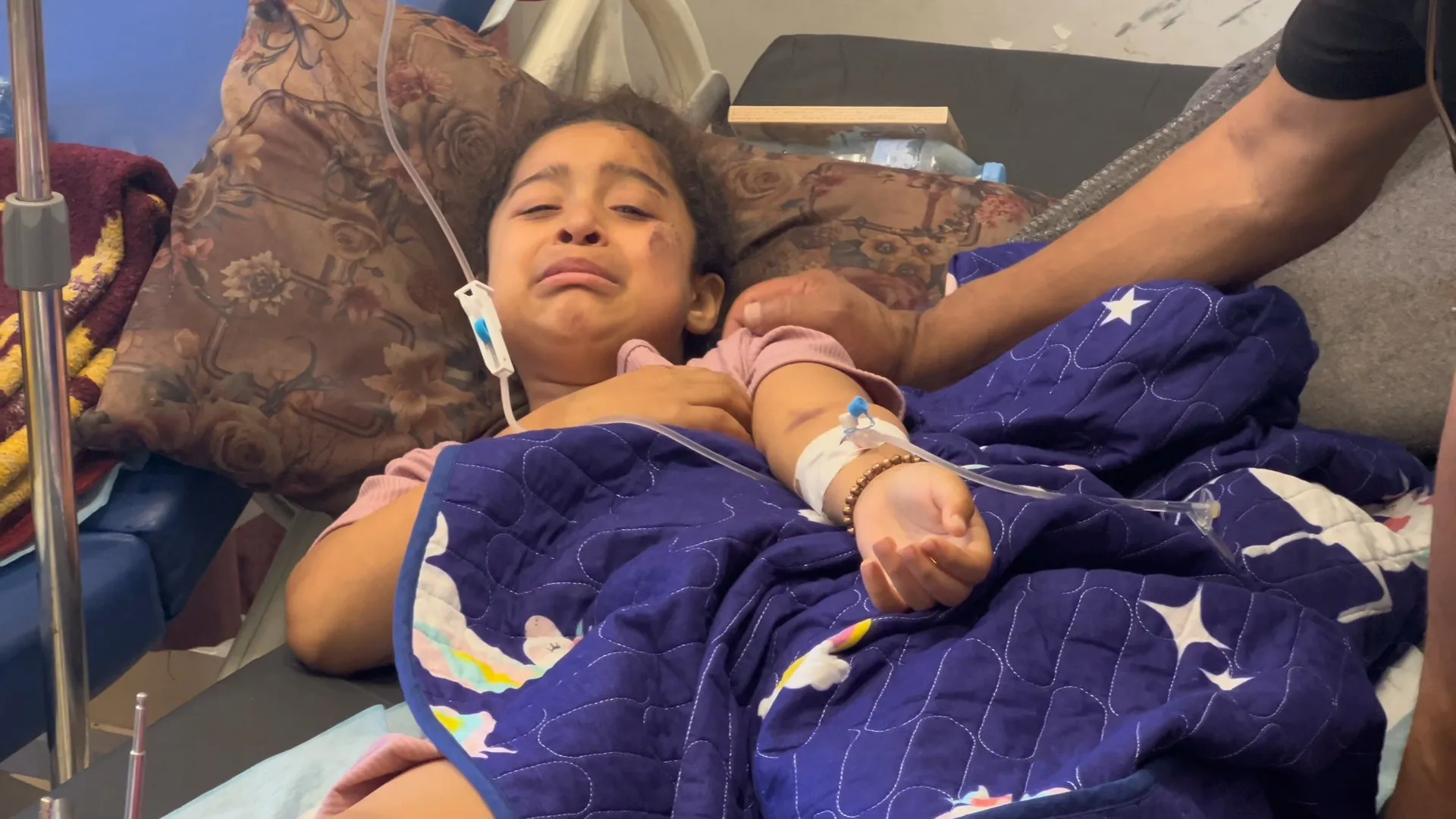
Daoud Kuttab: Media pressure, horrific images coming from Gaza, and the electoral context may push Trump to support a de-escalation approach aimed at improving America's image.
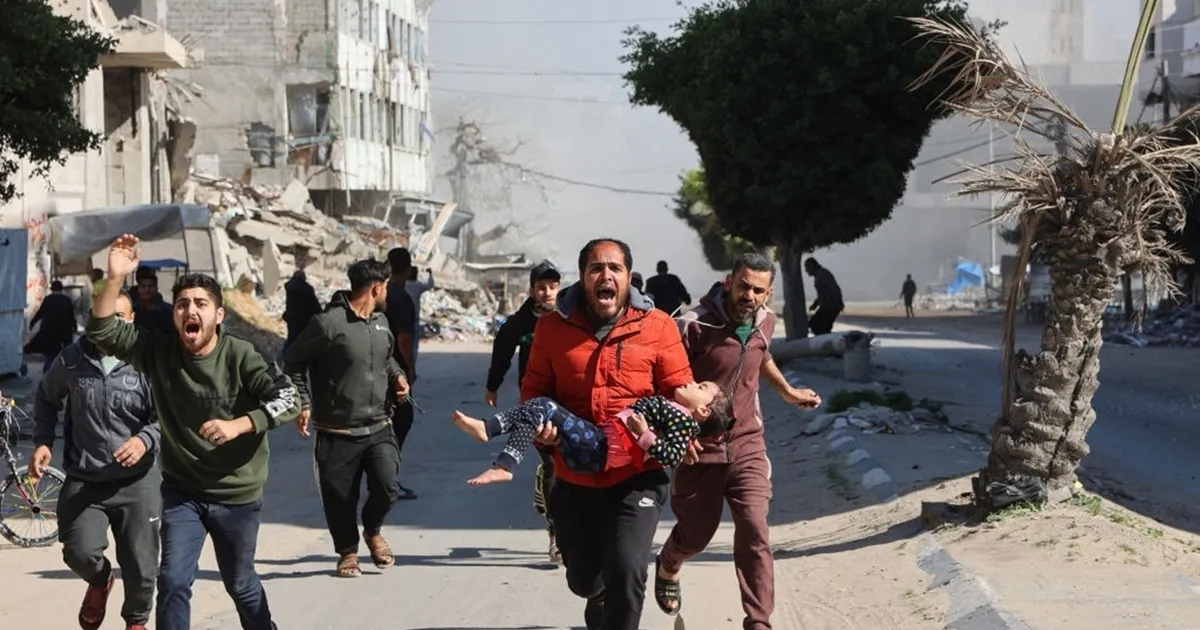
Amid the ongoing crisis in the Gaza Strip, US President Donald Trump is promoting what he calls a "new approach" to dealing with the situation there. However, according to experts and observers, this approach does not reflect a real shift in US policy. Rather, it represents a media façade aimed at beautifying the US position and providing humanitarian cover for the continuation of the war.
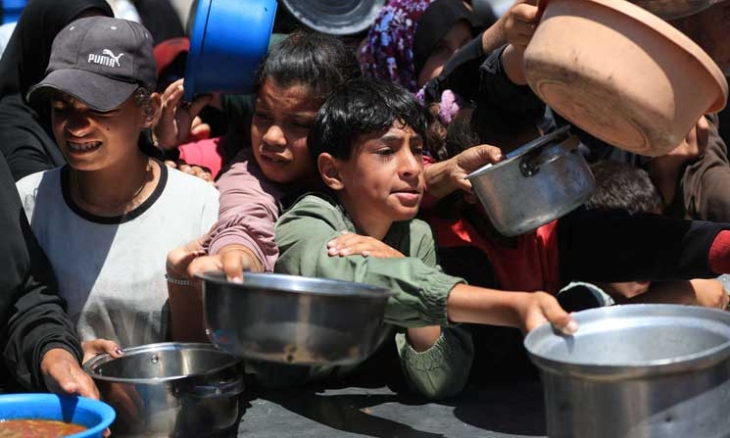
According to writers, analysts, specialists, and university professors speaking separately to "I," these statements come amid international warnings of an impending famine, with Washington adopting a humanitarian discourse that is not based on a ceasefire or lifting the blockade, but rather on bartering food for Israeli detainees held in Gaza.
This approach, as writers, analysts, specialists, and university professors point out, reflects a dual policy that oscillates between managing mounting international pressure on Israel and providing cover for broader plans to reshape the demographic and political reality in Gaza. Food aid is used as a pressure tool linked to providing "food security" in certain areas, but not others. This could encourage internal displacement and pave the way for "forced displacement" within a long-term strategic vision.
In depth, writers, analysts, specialists, and university professors believe that the American approach, despite its humanitarian overtones, is inseparable from a broader political project aimed at reengineering the Gaza Strip, whether through economic and humanitarian pressure or through Israeli field measures implicitly supported by Washington.
While the US discourse promotes "humanitarian solutions," writers, analysts, specialists, and university professors assert that this proposal lacks any clear commitment to halting the aggression or guaranteeing Palestinian rights. This raises fundamental questions about the true nature of the "new approach" and whether it is a prelude to a political settlement of the Gaza Strip issue.
A political maneuver aimed at beautifying the American position
Dr. Raed Abu Badawi, a professor of international law and international relations at the Arab American University, believes that US President Donald Trump's announcement of a "new approach to dealing with Gaza" does not reflect a real shift in US policy, but rather represents a "political maneuver aimed at beautifying the US position and providing humanitarian cover for the continuation of the war without direct diplomatic costs."
According to Abu Badawiya, this statement comes amid the ongoing Israeli war on the Gaza Strip and the near-total stagnation of political negotiations. This prompted the US administration to announce an initiative to establish "international food centers" within the Strip, under the pretext of responding to the deteriorating humanitarian situation, particularly in light of UN and European warnings of the imminent threat of famine.
Abu Badawiya believes that the American initiative does not carry any real intention to change the reality of the war or exert serious pressure on Israel.
Abu Badawiya asserts that "talk about a humanitarian approach without a ceasefire or lifting the blockade is in reality a policy of cooling the crisis, aimed at absorbing mounting international pressure, particularly from European capitals, which have increasingly begun to express their dissatisfaction with Washington's silence regarding the humanitarian catastrophe in Gaza."
He emphasizes that US Secretary of State Marco Rubio's statements regarding the "need for new options to end the war" and "recognizing the negotiating stalemate" are not out of step with media coverage of US policy, particularly since these statements linked any real action to the release of Israeli detainees, without addressing basic Palestinian rights or a halt to the aggression.
Abu Badawiya warns that these steps could create a more dangerous reality, as Israel uses this humanitarian cover to advance its "soft forced displacement" project.
Abu Badawiya explains that "the introduction of limited quantities of food aid to some areas in the northern Gaza Strip, in conjunction with the opening of relief corridors to the south, may at first glance appear to be a positive move, but in reality, it may be aimed at encouraging residents to flee, linking their survival to the availability of food or security, thus emptying the northern areas of their inhabitants as a prelude to redrawing the demographic map of the Strip."
Abu Badawiya emphasizes that these movements cannot be separated from the context of war and control, asserting that "any humanitarian initiative is meaningless unless it is accompanied by clear political guarantees that protect the population, ensure a cessation of military operations, and establish a just settlement process."
Abu Badawiya considers the current American approach to be little more than "media management of the crisis," whose primary goal is to protect Israel from moral and diplomatic exposure to the world, given its failure to achieve a decisive military victory, the ongoing prisoner exchange crisis, and the growing international demand to hold its leaders legally accountable.
Implicit partnership in the continuation of the disaster
Abu Badawiya asserts that "American actions, no matter how humanitarian they may appear, are in reality an implicit partnership in the continuation of the catastrophe, unless they are based on a genuine political solution that guarantees Palestinian rights and puts an end to the ongoing aggression."
Abu Badawiya emphasizes that "there is no humanitarian solution to a political problem," noting that separating relief from the siege, displacement from the bombing, and aid from the occupation is a dangerous misrepresentation that could lead to more disastrous consequences in the long run.
Trump pursues a dual policy toward the Gaza Strip
Writer and political analyst Khalil Shaheen believes that US President Donald Trump is pursuing a dual policy toward the Gaza Strip, based on a temporary negotiating tactic centered around "food for prisoners," coupled with a long-term strategic vision aimed at displacing the Strip's residents and imposing full Israeli security sovereignty over the territory. This is consistent with a long-term Israeli plan that re-establishes settlement expansion and gradual annexation.
Shaheen asserts that Trump hinted at his own vision for Gaza and its future, but deemed the timing inappropriate for disclosing it. This reflects "implicit collusion" with Israel, especially given the identical positions of the American and Israeli delegations during the recent negotiations, from which both sides withdrew simultaneously.
Shaheen points out that US behavior toward Gaza demonstrates that Washington is not a neutral mediator, but rather a direct party to the ongoing political and humanitarian battle. This is evident in the fact that a ceasefire has been linked to the release of Israeli detainees in exchange for the entry of limited humanitarian aid distributed according to Israeli conditions. Shaheen describes this as "starvation engineering" through the inhumane Gaza Foundation.
He notes that Trump appears keen to recover the living detainees, due to internal pressure from their families in Israel, while he appears less interested in recovering the bodies of the dead detainees.
Shaheen points out that Hamas continues to demand dual guarantees: a 60-day ceasefire and a guarantee of continued negotiations to end the war. Washington rejects this, reflecting its desire to keep the door open for Israel to resume the war at any moment.
Shaheen explains that Trump still adheres to a strategic plan, the "Gaza Riviera," which involves displacing Gaza's residents abroad, either through humanitarian pressure or through the "Humanitarian City" project being implemented by Israel in Rafah, with the support of the Gaza Humanitarian Foundation, which is being used as a tool to enforce displacement policies as part of a plan of systematic starvation and impoverishment.
Israel prepares Kerem Shalom crossing to facilitate the exit of Gazans
Shaheen points out that Israel is preparing the Kerem Shalom crossing not to bring in aid, but rather to facilitate the exit of Palestinians from Gaza. Israeli officials, led by Netanyahu, repeatedly assert that what is happening in the Strip is fully in line with Trump's vision, despite the absence of any official American denials from either the White House or the State Department.
Shaheen asserts that Trump prefers reaching an agreement that would lead to Hamas's surrender and disarmament, followed by the subsequent expulsion of its leaders and cadres from the Gaza Strip. This would pave the way for the gradual displacement of the Palestinian population, while Israel maintains security control over all of Gaza.
Shaheen points to other indicators that Trump has embraced this vision, including a report published by Haaretz about an Israeli plan that gives Hamas a limited deadline to agree to surrender terms, otherwise Israel will begin annexing the security belt and parts of northern Gaza, as part of a gradual process to occupy the entire Strip. Shaheen described this as a re-creation of the annexation scenario "piece by piece."
Shaheen notes that Israeli government officials, such as Finance Minister Bezalel Smotrich, National Security Minister Itamar Ben-Gvir, and Settlement Minister Orit Struck, are promoting the re-establishment of settlements in northern Gaza, which were dismantled as part of the 2005 disengagement plan. Trump considers this an "unwise move," and has stated this several times.
Shaheen asserts that these policies intersect with what Trump previously proposed in his "Deal of the Century," which called for the establishment of a "Palestinian state" without true sovereignty, under Israeli security control, and with the annexation of large parts of the West Bank.
Today, Shaheen believes this trend has become more extreme, with a clear retreat even from the "Deal of the Century," amid complete American silence regarding Israeli statements calling for the annexation of Gaza and an explicit rejection of the two-state solution.
Shaheen notes that the US State Department considered the conference supporting the two-state solution a "propaganda ploy," while US Ambassador to Israel Huckabee stated that Washington no longer believes in the two-state solution, a complete departure from the policies of previous US administrations.
Shaheen believes that Trump is seeking to absorb global anger through a formal negotiation scenario centered around a ceasefire in exchange for partial aid, provided Hamas agrees to the terms of surrender, without any written guarantees.
Shaheen points out that this scenario may be merely a transitional phase toward a larger strategic goal: imposing Israeli security control over Gaza and forcing the population to migrate en masse or gradually out of the Strip.
hidden political and strategic goals
Writer and political researcher Dr. Tamara Haddad asserts that US President Donald Trump's recent statements regarding a "new approach" to the Gaza Strip ostensibly center on the humanitarian dimension, but at their core, they conceal political and strategic objectives related to the future of the Strip, specifically with regard to Hamas.
Haddad explains that the mechanism for rapidly delivering humanitarian aid to Gaza through limited hours of humanitarian pauses came with a US green light, and that Trump's statements focused on describing the famine in Gaza as "real," in marked contrast to statements by Israeli Prime Minister Benjamin Netanyahu, who downplayed the scale of the humanitarian catastrophe.
Haddad points out that Trump spoke of a humanitarian priority, namely providing food to civilians, establishing feeding centers, and expanding aid distribution without restrictions. However, all of this is a process of managing starvation and paving the way for a broader military plan.
However, according to Haddad, this move carries hidden political dimensions, including easing external pressure on Israel and separating the humanitarian aid issue from political negotiations, particularly those related to the Israeli military's withdrawal from Gaza or a ceasefire.
Haddad believes the goal of this approach is to neutralize aid from being a means of pressure on Israel, allowing it to continue military operations without international impediments.
Haddad believes there is a clear future US-Israeli plan to grant Hamas a short deadline—no more than three days—to accept conditions related to handing over the hostages without an Israeli withdrawal, a request she expects the movement to reject.
Haddad explains that if Hamas rejects the plan, the alternative Trump proposes is to continue the military option until Hamas's presence is completely eliminated, which would lead to further escalation and a large number of casualties.
Haddad points out that statements by Israeli Finance Minister Bezalel Smotrich converge with this trend, as he spoke of a secret plan to deal with Gaza and eliminate Hamas, while also pursuing its members abroad, imposing sanctions, and confiscating their assets.
Haddad asserts that these moves essentially aim to completely restructure the Gaza Strip and reestablish Israeli military rule, with residents given the choice between staying or leaving, as a prelude to realizing the shared US-Israeli vision of transforming Gaza into the "Riviera of the Middle East."
Haddad explains that the goal of bringing in aid is to "manage the starvation, not end it," in parallel with the intensification of military operations, as part of a broader American strategic project to reshape Gaza's political and geographic reality and link it to an American-international project related to the Indian corridor.
The only "new" option now may be to go for a comprehensive deal.
Writer and political analyst Awni Al-Mashni explains that the US administration, in light of its "strategic constraints," may find itself compelled to push for a comprehensive deal to end the war in the Gaza Strip. This is after Israel and the United States reached a dead end, having exhausted all previous tools, including genocide, starvation, and negotiating conspiracies.
Al-Mashni asserts that the American approach, which has always supported Israel in achieving its goals through war, has relied on various methods, including genocide in its most horrific forms, starvation policies, negotiation plots, and intimidation tools such as threats of hell and the lure of illusions such as the "Gaza Riviera."
Al-Mashni believes that these tools have been used in every way, which means that the only "new" option available now may be to move toward a comprehensive deal, something the administration of US President Donald Trump is hinting at in various ways.
Al-Mashni asserts that the United States, which legitimized displacement and considered it a normal procedure, is now facing mounting accusations of complicity in war crimes and genocide in Gaza, not only from the people but also from governments and international institutions. This complicates and constrains the American political position.
Al-Mashni believes that Israel is experiencing a profound crisis, as military escalation has not achieved its political objectives, while de-escalation may undermine its strategic goals. The same situation applies to the United States, which is suffering from a crisis of "excessive power" that has failed to achieve "absolute victory."
"Therefore, Trump's options have become narrow, and he has only one course of action left: stopping the war," Al-Mashni says, suggesting that the new Israeli threats we are currently witnessing, such as crushing the resistance and "opening the gates of hell," are merely preliminary maneuvers to present the ceasefire resolution as "honorable" for Israel.
Al-Mashni asserts that Gaza will heal its wounds, even if it takes a long time and considerable effort. However, the genocide its people were subjected to will remain a political and moral reality from which Israel will not escape, no matter how hard it tries. He believes that the recent French recognition of a Palestinian state may be the first repercussions of this shift, but it will certainly not be the last.
A dual policy in dealing with the Palestinian issue
Egyptian political economy and international relations researcher and political science professor Dr. Mohamed El-Tamawy asserts that US President Donald Trump's recent statements regarding a new approach to the Gaza Strip reveal a dual policy he has adopted in dealing with the Palestinian issue, based on combining political pressure with humanitarian blackmail, without engaging in a genuine de-escalation or pushing toward a comprehensive escalation.
Al-Tamawi explains that Trump's use of the phrase "new approach" does not reflect an actual shift in the American position, but rather serves as a propaganda indicator suggesting renewal, while his true position remains governed by domestic and foreign political equations. According to Al-Tamawi, Trump remains a strategic supporter of Israel, but his recent statements blaming Netanyahu for the starvation in Gaza express an attempt to hold Israel morally responsible for the deteriorating humanitarian situation in the Strip, without reaching the level of real pressure.
Al-Tamawi points out that Trump does not favor a military escalation in Gaza, realizing that any open war at this time could harm American interests and weaken his electoral standing in the future, especially given the decline in popular support for pro-Israel policies within the United States.
Trump uses the Gaza card to achieve domestic gains
In contrast, Al-Tamawi points out that Trump is not clearly adopting a de-escalation approach, but rather is relying on a "calculated cooling-off strategy," which involves managing the crisis in a way that neither angers Israel nor embarrasses Washington before the international community.
Al-Tamawi notes that Trump is using the Gaza card to achieve political gains domestically, by hinting at the possibility of pressuring Israel if the humanitarian crisis worsens. At the same time, he is courting his conservative base with promises of "strong deals," reflecting a high degree of pragmatism in leveraging the Palestinian cause within his upcoming electoral agenda.
Reflection of personal impressions
Writer and political analyst Daoud Kuttab believes that US President Donald Trump's statements regarding the war in Gaza and his intention to adopt a new approach may not necessarily reflect a genuine US policy or actual direction. Rather, they may reflect his personal impressions and the influence of what he sees on global television screens.
"Understanding Trump's statements is not easy, as he often says things that are not directly related to political reality or official plans," the authors say. "However, he made a crucial point: Trump is influenced by the intense media coverage of the famine in Gaza, which has become a major focus of global television broadcasts."
Writers explain that Trump, who is known for his excessive television viewing, may be motivated by a desire to change the negative image that has become blaming Israel in the eyes of international public opinion.
Writers believe that Trump does not appear inclined to escalate at this stage, pointing out that returning to the negotiating track and easing the blockade—even partially—is more in line with his current approach, especially since his election campaign focused on finding solutions to wars, not igniting them.
According to the authors, media pressure and horrific images coming from Gaza, coupled with the US electoral context, may push Trump to support a de-escalation approach, with the aim of improving the United States' global image and lifting the mounting moral burden from its allies in the region.


Share your opinion
Trump's New Approach to Gaza: A Cooling Strategy or Escalation?