






• Israeli Foreign Minister: We will not accept a state for Hamas through the two-state solution.
• Smotrich: "We will not transfer Gaza from one Arab to another. Gaza is an integral part of the Land of Israel."
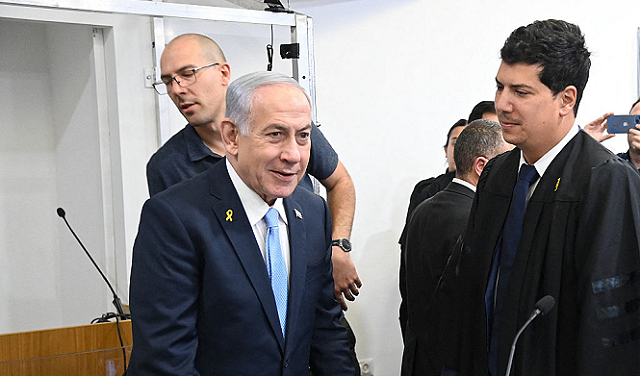
Amid the ongoing war of extermination, killing, and starvation, Israeli Prime Minister Benjamin Netanyahu presented a new action plan for the Gaza Strip during a meeting of the "Small Ministerial Forum" held Monday evening. He said it represents a "change in the Israeli political and strategic approach."
According to the Maariv newspaper, the plan stipulates giving international mediators a new opportunity to persuade Hamas to accept the deal proposal, which was put forward about two weeks ago and which Israel had already approved.
Netanyahu asserted that Israel "will not wait indefinitely," emphasizing that a specific period of time will be given to the other side to provide a positive response that will enable progress in the talks. In the event of refusal or procrastination, Netanyahu announced his government's intention to take unilateral steps, most notably the annexation of territory in the Gaza Strip.
The meeting also proposed establishing a special security and military administration to manage areas to be annexed from the Gaza Strip. This represents a radical shift in Israeli policy, from a strategy of pressure for a settlement to imposing a new reality on the ground in Gaza. Despite implicit warnings, the Israeli political leadership believes there are realistic opportunities for concluding a prisoner exchange deal and a ceasefire, if Hamas demonstrates flexibility in the ongoing negotiations.
Israel's security cabinet held what were described as "sensitive" discussions on the stalemate in indirect negotiations with Hamas over a ceasefire and prisoner exchange, and pressure from European countries to halt the war. However, the cabinet also discussed "drastic military steps, including reoccupying the Gaza Strip or imposing a comprehensive blockade on cities under Hamas control," Channel 12 reported Tuesday.
During the cabinet meeting, he stated that imposing a blockade on the Gaza Strip would include "stopping the entry of humanitarian aid." The channel quoted Israeli ministers as saying that "any attempt to impose an effective blockade requires stopping the entry of aid, including food and electricity, otherwise it will be ineffective."
Israeli Prime Minister Benjamin Netanyahu claimed in an English-language statement following the cabinet meeting that "Israel will continue to work with international agencies, as well as the United States and European countries, to ensure the flow of significant amounts of humanitarian aid into the Gaza Strip."
But Yedioth Ahronoth newspaper quoted Israeli officials on Tuesday as saying that Netanyahu "behaves as if he does not intend to allow a temporary ceasefire to become permanent and end the war in the Gaza Strip."
The newspaper noted that some of the negotiations regarding the agreement are taking place on the island of Sardinia, and that officials from Qatar, Israel, and the United States have held a series of meetings that are continuing despite the fact that Qatari Prime Minister Mohammed bin Abdulrahman Al Thani has left the island.
Netanyahu is attempting to appear to be under pressure from Religious Zionism Party leader and Finance Minister Bezalel Smotrich, who has proposed a plan to the cabinet for the gradual annexation of parts of the Gaza Strip in an attempt to keep Smotrich in the government.
According to Haaretz, the plan stipulates that Israel will give Hamas several days to agree to a proposal for a ceasefire and prisoner exchange. If Hamas rejects the proposal, Israel will begin gradually annexing areas of the Gaza Strip.
In turn, Israeli Foreign Minister Gideon Sa'ar said on Tuesday that Israel rejects any efforts to establish a Palestinian state that includes Hamas, noting that attempts to force Israel to agree to a two-state solution "will not happen."
The minister added that "international pressure on Israel over the past months has allowed Hamas to strengthen its position," warning that the movement's continued intransigence in negotiations could lead to a new military escalation.
The minister noted that "military pressure has succeeded twice in the past in pushing Hamas to sign hostage agreements," adding that Hamas "bears responsibility for Gaza's suffering."
The minister stressed that continued Hamas rule in the Gaza Strip would be a "tragedy for both Israelis and Palestinians," asserting that Israel "will not allow a rift in relations with the United States" and will not yield to "any external pressure to sacrifice its security."
Regarding the humanitarian situation in Gaza, the minister described it as "difficult," but said there were "lies about starvation," noting that Israel was "ready to cooperate with any party willing to participate in airdrops of aid."
Meanwhile, Smotrich announced yesterday morning that he would not withdraw from the government immediately due to Netanyahu's decision on Saturday to allow aid into the Gaza Strip and a daily ceasefire of several hours.
Smotrich opposes this decision, from which Netanyahu's office claimed that Smotrich and National Security Minister Itamar Ben-Gvir were excluded from and not invited. However, Smotrich said in his statement that "it is not right to make political calculations during a war," adding that "we will be tested according to the results – the defeat of Hamas."
Smotrich continued, "We are advancing a good strategic process, and it's not worthwhile to expand on it now. In a short time, we will know if it was successful and where we are headed."
Smotrich rejected Ben-Gvir's proposal that they work together against Netanyahu and form a "blocking bloc" against negotiations with Hamas over a ceasefire agreement to end the war on Gaza and a prisoner exchange. In this context, Ben-Gvir also sought to persuade rabbis to pressure Netanyahu.
Ben-Gvir withdrew from the government following the agreement on a ceasefire and prisoner exchange in January, then returned to the government after Israel violated the agreement and resumed the war in March.
Likud Knesset member Moshe Saadeh revealed a new approach by Netanyahu, which involves imposing direct control over Gaza and establishing a humanitarian zone. Netanyahu speaks of occupying Gaza, establishing a humanitarian city where we will provide energy, food, and healthcare, and then allowing the Palestinians to emigrate.
During a visit to an intelligence unit base, Netanyahu reiterated his commitment to the operation's dual objectives, saying, "We have a job to do: eliminate Hamas and return our hostages. These are two interconnected goals, and we will not abandon them for a moment," Haaretz reported Tuesday.
For his part, Education Minister Yoav Kisch stated that talks on a prisoner swap had completely collapsed and were no longer on the agenda.
"The possibility of returning the kidnapped soldiers through a specific agreement is nonexistent. This is the reality. We must continue to pressure Hamas and look for other ways to release them and subdue the movement," he said in an interview with Israeli state radio.
Kish emphasized that this assessment is not limited to the Israeli position, but is shared by the Qatari and Egyptian mediators, as well as US envoy Witkoff. He explained that the delivery of humanitarian aid to Gaza is primarily aimed at easing international pressure on Israel, nothing more.
On Tuesday, the head of the Religious Zionism Party and Israeli Finance Minister Bezalel Smotrich reiterated his call for settlements in the Gaza Strip, which he described as "an integral part of the Land of Israel." Smotrich's remarks came during a conference held by the Gush Katif Heritage Center to mark the 20th anniversary of the implementation of the Gaza Disengagement Plan.
Smotrich said, "We have been saying for 20 years that this is a wish, and now this is also a realistic plan of action. We did not sacrifice these prices to transfer Gaza from one Arab to another. Gaza is an integral part of the Land of Israel."
Smotrich added, "I don't want to return to Gush Katif (the former settlement bloc in the Gaza Strip). It's too small. This (settlement) should be much bigger and much wider. Gaza allows for big thinking."
He continued, "No one in the world will allow us to wage war and eliminate Hamas and the threat posed by Gaza if we starve two million citizens."
Smotrich addressed the situation in the occupied West Bank, saying, "We are carrying out a revolution there. We are imposing de facto sovereignty, construction through legalization (i.e., the legalization of settlement outposts), confiscations, changing the DNA of the entire regime, and paving roads." He said that the current government will impose official Israeli sovereignty in the West Bank.
In contrast, the families of the Israeli hostages held in the Gaza Strip expressed their growing anger at the Israeli government's performance, accusing it of inaction and abandoning their sons' case.
"The moral devastation taking place in Gaza will be paid for by generations to come," the families said in a statement issued Tuesday. "The Knesset members have abandoned the prisoners, and their case is no longer a priority."
The families emphasized that the government has missed real opportunities to release their sons and insists on ignoring their suffering. These statements come amid the intensification of the Israeli aggression on Gaza and the continued stalling of negotiations regarding a prisoner exchange deal, which is increasing political and popular pressure on the Netanyahu government.
Powered by Froala Editor




Share your opinion
Netanyahu doesn't want to end the war with the new plan in Gaza.