






Professor Jamal Harfoush: A systematic Israeli plan to evacuate the land
Palestinian owners and the implementation of forced displacement in stages
Thaer Hanani: Settler attacks and violations have reached their peak in targeting agricultural lands and pastoral areas.
Fakhri Abu Diab: The occupation seeks to empty the Bedouin communities, which constitute the eastern gateway to Jerusalem, and to strengthen the settlements.
Bassam Bahr: Targeting Bedouin communities by establishing "settlement belts" aims to prevent any future Palestinian expansion.
Abu Imad al-Jahalin: After rebuilding what the occupation destroyed, it has resorted since the beginning of the aggression on Gaza to a policy of pastoral settlement.
Aseel Malihat: Settler attacks on Bedouin communities and villages are not random, but rather part of a plan for forced displacement.
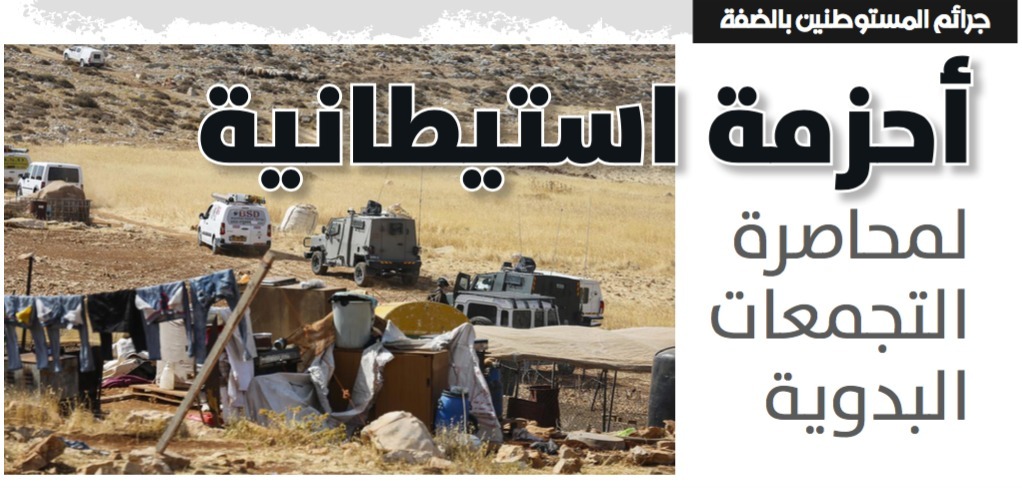
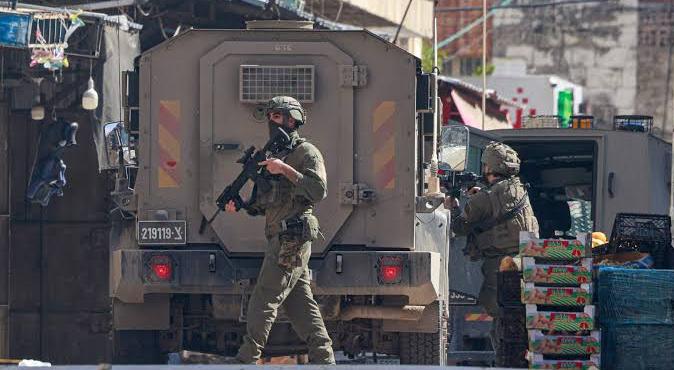
Armed settler militias continue their attacks in the West Bank, culminating in the targeting of agricultural lands and Bedouin communities. These attacks are backed and supported by the occupation forces and under the direct supervision of extremist Israeli ministers Bezalel Smotrich and Itamar Ben-Gvir. This is part of a systematic plan to evict Palestinian landowners and implement forced displacement in stages.
Writers and analysts, speaking to Al-Monitor, believe these crimes amount to "ethnic cleansing," and are part of the ongoing, gradual annexation of the occupied West Bank and attempts to empty it of its inhabitants and indigenous people. Meanwhile, settlement expansion and control over more of the State of Palestine's natural resources are being reinforced, thus undermining any possibility of establishing a Palestinian state on the ground with East Jerusalem as its capital.
They stressed the need to pursue these complex crimes, which are punishable by international law. They pointed out that all resolutions and sanctions issued by the international community or states regarding colonial settlements and colonists who commit crimes against citizens, their lands, and their property do not rise to the level of the crime of "ethnic cleansing." They called for deterrent international sanctions against the colonial settlers and their armed militias, as well as against the ministers and officials in the occupation government who provide them with protection, support, funding, and backing.
Escalation in crimes that fall within the framework of "ethnic cleansing"
Professor Jamal Harfoush, professor of scientific research methods and political studies at the Academic Center for Research University, emphasized that "the increasing and accelerating settler attacks in various areas represent part of a systematic plan aimed at evacuating Palestinian land of its legitimate inhabitants, particularly in villages and Bedouin communities, which are considered the first line of defense for the land."
He stressed that "this policy embodies the occupation's intention to implement forced displacement in stages, which is a flagrant violation of international humanitarian law, specifically Article 49 of the Fourth Geneva Convention, which prohibits the forced transfer of populations under any pretext."
Harfoush pointed out that what we are witnessing is nothing more than attempts to tighten control over the land through various tools, such as establishing settlement outposts, destroying the livelihoods of residents, and imposing dire living conditions that force them to leave.
He said, "These crimes fall within the framework of 'ethnic cleansing,' which constitutes a crime against humanity under the Rome Statute of the International Criminal Court."
Regarding confronting the scenario of settler attacks on Bedouin villages and communities, Harfoush stressed that “confronting this scenario requires an integrated strategy at the popular, legal, and media levels, as follows:
At the grassroots level: Strengthen the resilience of Bedouin communities through national initiatives that provide direct support, such as improving infrastructure, providing basic services, and securing livelihoods. Popular campaigns must be launched to encourage residents to cling to their land, regardless of the circumstances.
On the legal level: Documenting every violation against Bedouin communities in a professional and accurate manner, including photographs, testimonies, and reports. These documents constitute legal tools used to file complaints before international courts and the United Nations Human Rights Council.
Calling on the international community, through diplomatic channels, to take practical steps to pressure Israel to stop these practices that violate international law.
On the media level: Exposing the crimes of the occupation and settlers in local and international media, with a focus on telling human stories that highlight the suffering of affected families.
Launching global awareness campaigns to highlight the severity of the violations committed against Bedouin communities and their impact on the Palestinian fabric.
Cooperation with international organizations: Leverage the support of NGOs and UN organizations such as the Office for the Coordination of Humanitarian Affairs (OCHA) to provide immediate protection to the population.
Urging the International Criminal Court to open an urgent investigation into these violations as war crimes.
Harfoush concluded his remarks to "I" by emphasizing that "adherence to land and rights is not limited to the Bedouin communities alone, but rather is a national and international responsibility that requires Palestinian unity and comprehensive support from all the vital forces in the world."
Continuous violations and harassment
Thaer Mohammed Hamed Hanani, coordinator of the Popular Campaign to Defend Khirbet Tana and a member of the Factional Coordination Committee in Beit Furik, Nablus Governorate, believes that settler attacks have reached their peak, targeting agricultural lands and pastoral areas.
For example, he said, the occupation established a herding settler nicknamed "Kobi" on the lands of Khirbet Tana in 2014. This settler began harassing the residents of the village, located east of Beit Furik, by restricting and reducing grazing areas, stealing and poisoning sheep.
He added: This led to a decline in the village's population from 40 families who relied on livestock and grazing in 2014, to 30 families in 2017, and then to just 20 families by 2020.
Hanani confirmed that after October 7, 2023, the pastoral settler escalated his attacks, demolishing caves and tents, severely beating residents, and firing live ammunition at them, forcing them to flee.
He continued, saying: However, thanks to the activities of the Popular Committee for the Defense of Khirbet Tana and the mobilization of the masses, thousands of citizens gathered and performed prayers at the trench dug by the settler "Kobi", which separates Beit Furik from Khirbet Tana.
He stressed that these pressures forced the occupation government to open the road leading to the village, enabling ten families to return there.
However, he noted that these families faced ongoing provocations and harassment, as settler "Kobi" took control of water sources, depriving residents of watering their livestock. He also continued his attacks on the school and mosque in the area, stealing solar panels, a refrigerator, and a water tank for ablution, in addition to completely destroying the school.
Hanani stated that, in a dangerous escalation, "Kobi" attacked the remaining residents with bullets and tear gas, leading to their complete expulsion from the village on January 5, 2025.
He pointed out that Khirbet Tana constitutes half of Beit Furik's area, which amounts to 36,000 dunams, and was considered the food basket for Beit Furik and the Nablus Governorate.
He said that in 2020, in light of the dangers facing Khirbet Tana, a popular committee was formed to defend the village. The committee held prayers in the village's mosque and planted trees in memory of the martyrs. Dozens of large trees bearing the names of the town's martyrs were planted. The committee also worked to support residents and confront settler attacks, sometimes involving physical confrontations.
Hanani emphasized that the Popular Committee's efforts contributed to delaying settlement projects, highlighting the importance of popular action in confronting settlement activity.
However, he added that these activities require broad political support from the Palestinian government, and that every effort should be made, regardless of the sacrifices, to halt the settlement project targeting pastures and agricultural lands.
Hanani emphasized that the loss of these lands is forcing residents to voluntarily migrate to neighboring Arab countries, which calls for serious action to preserve the steadfastness of the Palestinian people on their land.
Increased settler attacks
Palestinian affairs researcher Fakhri Abu Diab confirmed that the frequency of settler attacks has increased, especially in Area C, and specifically in Bedouin communities.
He pointed out that these communities constitute the eastern gateway to Jerusalem, noting that the occupation is working to expand the city into what is called "Greater Jerusalem," which, according to its plans, will encompass 10% of the West Bank.
He stressed that the occupation is seeking to strengthen settlements in the area to create geographic contiguity between them, thus blocking any future possibility of establishing a Palestinian state.
He explained that the occupation is focusing on separating the northern part of the West Bank from the southern part by constructing a belt or wall of settlements in the area between Jerusalem to the east, the Jordan Valley, and the Jericho area.
Abu Diab said that the occupation aims to change the demographic composition of these areas in favor of settlers and to expel Bedouin communities that reside in areas richer in water and animal resources.
He added: This is part of the occupation's policy to strangle and weaken the Palestinian economy.
He explained that the current occupation plans, managed by the so-called "Civil Administration" and the settlement entities, include the displacement and evacuation of Bedouin communities in order to seize Palestinian lands and fragment the Palestinian territories. He noted that the occupation's goal is to eliminate any future possibility of establishing an independent Palestinian state.
Carrying out covert annexations
Abu Diab revealed that the occupation is currently carrying out covert annexation operations by seizing land and displacing residents. He considers the presence of these Bedouin communities an obstacle to its expansionist projects, including the expansion of settlements such as Ma'ale Adumim and Kedar.
He pointed to the occupation's growing appetite with the approaching arrival of a new US administration headed by Trump, who is expected to support annexation and expansion plans. He said, "Despite the international community's opposition, it may remain powerless without US intervention, which will either support Israeli plans or at least turn a blind eye to them, particularly with regard to settler activities."
Abu Diab believes that to confront this scenario, we must focus on strengthening the resilience of the local population by empowering them economically and socially, supporting them to remain on their lands, investing in Bedouin communities through development projects that contribute to their stability and limit forced migration, and developing strategic plans to empower them and strengthen their resilience on their land.
The occupation seeks to force Palestinians to displace
Attorney Bassam Bahar, a specialist in settlement affairs, believes that recently, and particularly over the past year with the outbreak of the war in Gaza, the West Bank has witnessed a daily escalation in settler attacks, which have become noticeably more frequent.
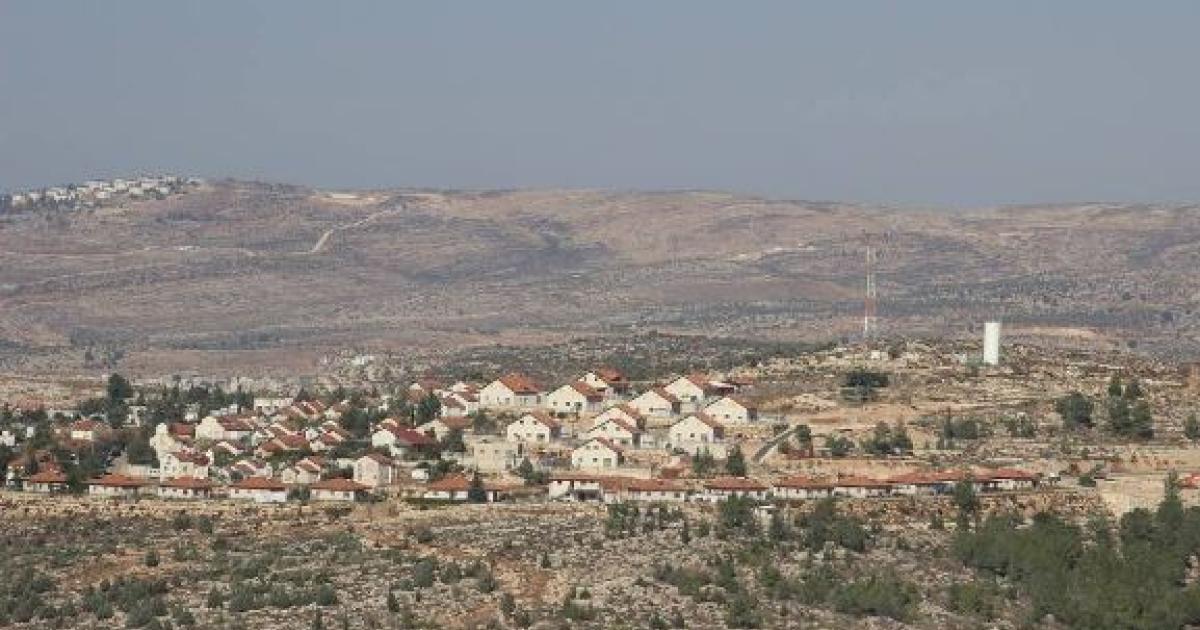
He pointed out that these attacks aim to expand control and impose a fait accompli on the ground, through the construction of caravans, excavations, agricultural lands, and facilities, all to empty Palestinian lands and ensure they are not included in any future negotiations.
He explained that settlers are targeting Bedouin communities and residential areas in the West Bank by establishing "settlement belts."
He said that these settlements hinder the urban expansion of Palestinian villages and cities, whether in East Jerusalem, Ramallah, Bethlehem, Hebron, or elsewhere.
Bahar stressed that the occupation forces do not leave a hill or area in the West Bank without erecting a tent or caravan on it, with the aim of preventing any future Palestinian expansion.
He stated that this targeting extends to attacks on farmers, schools, and homes, as well as the burning of agricultural land and crops, as part of a systematic and deliberate policy to force Palestinians into forced or voluntary displacement.
Distribution of roles between the army and the settlers
Lawyer Bahar added that settlers receive full support and armament from the Israeli occupation, particularly in the West Bank, to confront and threaten the Palestinian population.
He explained that these practices are carried out in an organized manner, with roles distributed between settlers and the Israeli army to ensure control over the lands and implement de facto annexation plans on the ground.
Strengthening unity and developing strategies
To confront the occupation's plans
Concluding his remarks, lawyer Bassam Bahar emphasized that confronting this reality requires a unified Palestinian popular movement on the ground, along with the activation of peaceful popular resistance.
He also called for strengthening national unity and developing national strategies to confront the occupation's plans, which aim to eliminate any chance of establishing a future Palestinian state.
Bedouin communities in the Jerusalem Governorate are steadfast
For his part, Abu Imad al-Jahalin, head of the Abu al-Nuwar Bedouin Communities Committee, said that after the occupation's demolition of Bedouin communities across the West Bank, particularly in the Jerusalem Governorate, and the communities' continued efforts to thwart these operations by rebuilding everything destroyed by the occupation, the latter has resorted to a policy of pastoral settlement since the beginning of the aggression on the Gaza Strip.
He added: "Dozens of settlement outposts have spread, particularly in the eastern areas of Ramallah and Nablus, leading to the displacement of dozens of communities in the northern region."
Al-Jahalin added: Today, in the Jerusalem Governorate, specifically in the eastern slopes of the city, there are many settlement outposts, such as "Boaz" in the Sawahreh desert in the Al-Mintar area, and "Boaz" near Khan al-Ahmar.
He continued: A new settlement point was also established above the Khan al-Ahmar settlement, only 20 meters away from the Khan al-Ahmar school, and another point in the al-Shamis area, about 50 meters away from the Wadi Sa'b settlement.
Al-Jahalin asserted that these outposts aim to displace Bedouin communities by unleashing settler gangs to attack and forcibly displace civilians.
However, he pointed out that thanks to the will and steadfastness of the citizens of these communities, a new catastrophe was not inflicted on the Jahalin Arabs and the Bedouin communities.
He said that these communities continue to confront and resist the settlers, and are steadfast in the Jerusalem Governorate. For example, in the Bir al-Maskub community, we were able to regain control after settlers took over it on May 7, 2024, and remained there for three days. We obtained orders from the occupation courts to evict them.
Abu Imad Al-Jahalin concluded his interview with "I" by saying: "Today it is full of its people, as we succeeded in returning families and rehabilitating homes, and the residents are still there."
An existential threat to marginalized communities
For her part, Aseel Malihat, media officer for the Al-Baydar Organization for the Defense of Bedouin Rights and Targeted Villages, believes that the escalation of settler attacks against Bedouin communities and targeted Palestinian villages poses an existential threat to these communities, which already suffer from marginalization and deprivation of their basic rights.
She said that these attacks are not random, but rather part of a systematic plan that seeks to forcibly displace residents and force them to leave their lands through continuous restrictions, whether through direct violence or occupation policies that deprive them of the most basic necessities of life. She stressed that the clear goal of these practices is to strengthen settlement control over Palestinian lands, especially in Area C, which is a primary target in the gradual annexation project.
Malihat emphasized that what is happening today is not merely a series of attacks, but rather an extension of the occupation's escalating policy of Judaizing the land.
She pointed out that Bedouin communities, which are among the most vulnerable Palestinian communities, are subjected to multiple pressures, ranging from construction bans and the destruction of homes and vital facilities, to the confiscation of land and property, and to organized attacks carried out by settlers under the protection of the Israeli army.
She considered these policies to be nothing more than tools to weaken the resilience of these communities and push them toward forced displacement, which constitutes a flagrant violation of all international laws and conventions.
A catastrophic scenario requires comprehensive action at all levels.
Malihat believes that confronting this catastrophic scenario requires comprehensive action at all levels. To begin, all violations must be documented accurately and systematically, including daily attacks, demolitions, land confiscation, and physical and psychological assaults to which residents are subjected.
She said that evidence-based documentation, whether visual or written, contributes to exposing the occupation's practices at the local and international levels and gives those affected a strong voice before human rights organizations and international forums.
Malihat believes that the media's role is of great importance in conveying the true picture of what is happening in these areas.
She said that the media is a key means of shedding light on the daily suffering of the population and exposing the true face of the occupation's racist policies. She emphasized the importance of leveraging all media outlets, both traditional and digital, to reach the widest possible audience and mobilize international solidarity with these threatened communities.
She stressed that, in addition to the media, legal support is one of the most important tools in confronting these policies.
She said: Legal efforts must be strengthened to defend the rights of the population, whether by appealing to Israeli courts or resorting to international institutions such as the International Criminal Court.
She stressed that Al-Baidar Organization is working hard to provide legal support to the affected population, with the aim of ensuring their right to remain on their lands and countering any attempts to displace them.
She said that strengthening the resilience of the Bedouin communities also requires providing them with direct support at the livelihood and economic levels, and improving their living conditions through the provision of basic services, such as water, electricity, education, and healthcare. This is a crucial step in strengthening their ability to withstand the increasing pressures. The occupation is betting on weakening these communities from within, but providing the necessary support can turn the tide in the population's favor.
Malehat emphasized that these policies cannot be confronted without mobilizing international support for the Palestinian cause in general, and the Bedouin community in particular. She noted that international campaigns targeting UN institutions, human rights organizations, and global public opinion play a fundamental role in exposing these practices and garnering support for the Palestinian cause.
She said that the international community bears a great responsibility to pressure the occupation to halt its ongoing violations and ensure the protection of the rights of the population in accordance with international law.
She pointed out that the resilience of Bedouin communities is key to confronting these occupation policies, and that remaining on the land is the strongest option in the face of forced displacement attempts. She said, "We at Al-Baidar Organization are committed to standing by these communities and providing everything necessary to strengthen their resilience, whether through legal support, media documentation, or international pressure."
She pointed out that the issue is not merely a battle over land, but rather a battle for existence, identity, and rights, and that the Palestinian people have proven time and again that they are capable of persevering no matter how difficult the circumstances. She said: The occupation may possess military power, but it does not possess the legitimacy of its existence on this land, and it cannot break the will of the people who are defending their land and rights.
"We will continue to work with all our energy in the Al-Baidar Organization, relying on our belief in the justice of the cause and the support of all who believe in the Palestinian people's right to life and freedom," Malehat concluded.

Share your opinion
Settler crimes in the West Bank: Settlement belts to besiege Bedouin communities