





It is of paramount importance to use the growing soft power and employ it constructively.
Humanitarian aid must pass through UN institutions and reach people directly.
- The German position: End the war as soon as possible and reach a ceasefire agreement.
Israel's withholding of "clearance" funds and its failure to transfer them to the Authority is completely unjustified.
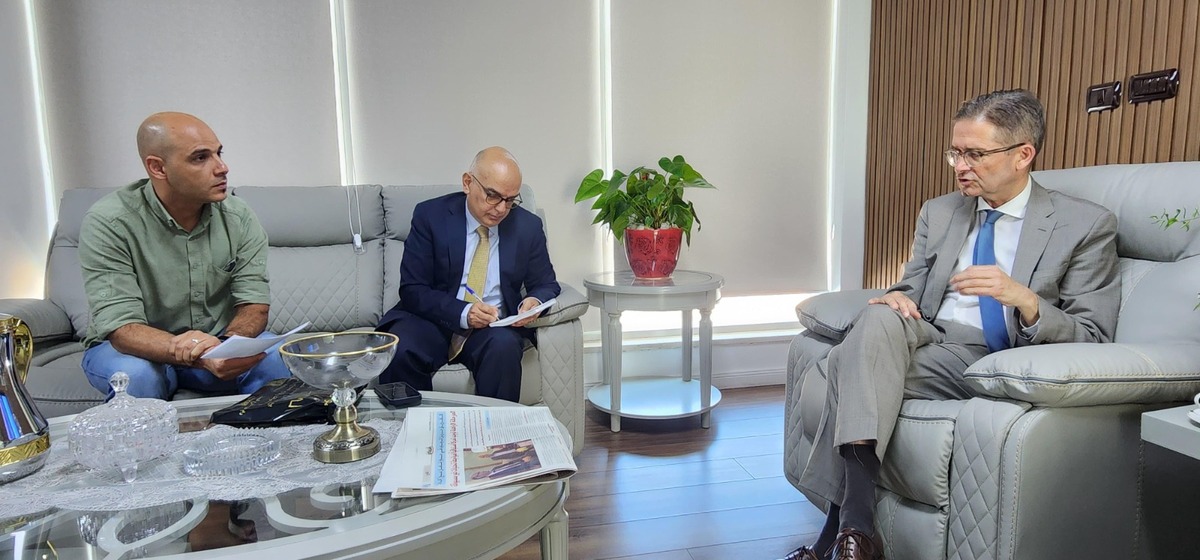
The head of the German mission to the Palestinian Authority, Ambassador Oliver Owcza, made a series of candid statements during an exclusive interview with "I" at the conclusion of his official mission to the Palestinian territories. During the interview, he expressed his views on the current political and humanitarian situation and highlighted his profound impressions of the Palestinian people.
In a clear and diplomatic conversation, Ovcha reflected on his observations from Nablus to Bethlehem to Gaza, believing that the collective awareness of the Palestinian cause and the goal of self-determination represents a solid foundation of consensus that constitutes a real possibility for progress.
During the meeting, Ovcha addressed highly sensitive issues, most notably Germany's position on the international conference on the two-state solution, scheduled to be held at the United Nations headquarters in New York at the end of this month under Saudi-French sponsorship. He also addressed Berlin's position on suspending funding for UNRWA and the lawsuit filed by Nicaragua against Germany before the International Court of Justice.
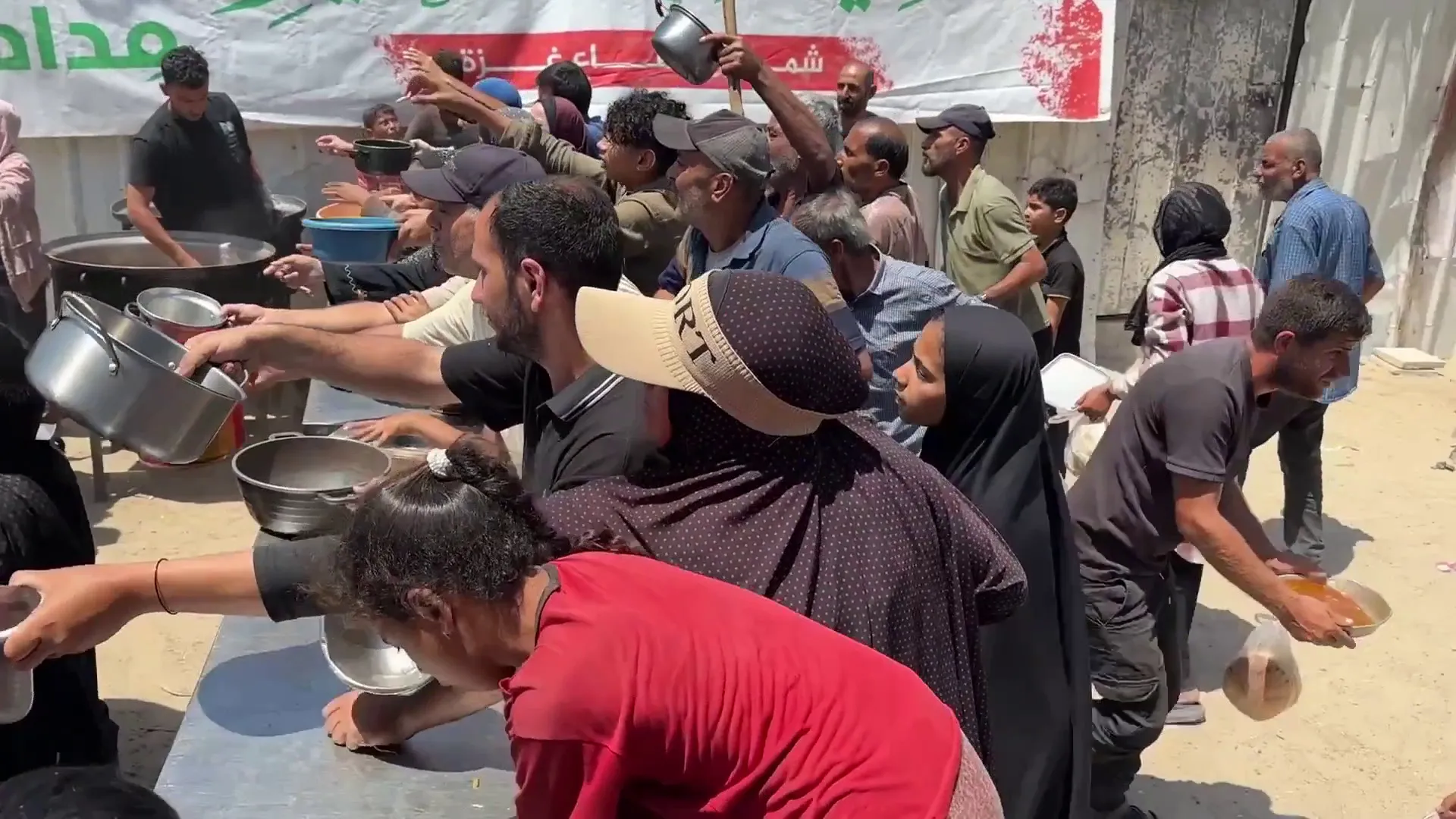
The German representative affirmed his country's strict adherence to international law, noting that Germany has now become the largest financial supporter of UNRWA, despite the current challenges. He also expressed his deep concern over the deteriorating humanitarian situation in Gaza, the escalation of settler violence in the West Bank, and the continued freeze on the transfer of clearance revenues, stressing that Germany attaches special priority to these issues. He reiterated his categorical rejection of the militarization of aid or any move toward establishing detention camps in Rafah.
inspiring collective consciousness
Q. Your Excellency Ambassador Owcza, as your official mission in the Palestinian territories comes to an end, what are your most salient impressions of this experience? What has most caught your attention during your tenure, especially in light of the transformations the region has witnessed? What message and advice would you like to convey to both the Palestinian people and German diplomacy at this critical juncture?
A: I think I should be careful about offering advice, but what I would like to say here is that the Palestinians, as a people and as individuals, have impressed me greatly; whether the people in the Casbah neighborhood of Nablus, or in Bethlehem, or in Gaza when I visited Gaza and met with people. The shared and collective understanding of the national cause, the right to self-determination, and the pursuit of freedom is shared by everyone I met, and this consensus is impressive and I have the utmost appreciation and respect for it. I believe that in this understanding lies real possibilities for moving forward.
Two-state solution conference
Q. How do you view the two-state solution conference scheduled to be held at the end of the month at the United Nations headquarters in New York under Saudi-French sponsorship? Does Germany intend to recognize the State of Palestine and join France in this process?
A: I believe this initiative is extremely important, and we have been following it continuously since its inception. As for the German position on the issue of recognizing the State of Palestine, it is based on the premise that such recognition should be the result of a negotiated process between the Palestinians and the Israelis, and we are continuing our efforts to resume these negotiations.
UNRWA and Germany
Q. Germany's suspension of funding for UNRWA has sparked widespread criticism. What are the justifications for this decision? Is there any intention to review it in light of the escalating humanitarian crisis in Gaza?
C- Germany acted quickly and directly after accusations were leveled against the UN agency regarding the infiltration of "terrorist" elements into its territory. Germany then demanded an immediate internal investigation. Following the results of this investigation, published under the title "The Colonna Report," which concluded that it was positive and fair to the agency, Germany fully resumed its support for UNRWA at the same level as before. This resumption occurred about a year ago, and thus support has continued for a year. Furthermore, after the United States halted its funding to the agency, Germany has now become the largest and most important supporter of UNRWA.
consistent German policy
Q. Given the changes taking place in Germany's political landscape and the rise of new parties, do you anticipate a shift in Berlin's policy toward the Palestinian issue? How do you assess the current official German discourse: is it merely a temporary reaction, or does it represent a long-term trend?
A: I believe that the major determinants and broad outlines of German policy toward the Middle East will remain constant and will not undergo major changes. This includes the special relationship between Germany and Israel, as well as the German position that recognition of a Palestinian state should come as a result of a negotiated process and comprehensive peace.
Currently, two issues are of the utmost priority in German policy regarding events in the region:
First: The catastrophic humanitarian situation in the Gaza Strip.
Second: Settler violence and the increasing horrific settler attacks in the West Bank.
I do not believe that the new German government will change its position on these two issues, as the official position on them is clear and decisive.
A shift in media coverage
Q: Germany has been criticized for its media's bias toward the Israeli narrative and marginalization of Palestinian voices. How do you assess the German media's coverage of the Palestinian issue? Is there official awareness of the impact of this bias on public opinion?
A: My impression is that since October 7, 2023, when the German press was initially deeply affected by the shock of that day, it has since begun an internal review of its performance and coverage. Today, we see a different discourse than at the beginning; one that includes an increased focus on issues of international law, human rights, and the violations committed in this context. This is a positive development we are now observing in the German media landscape.
Nicaragua and German weapons
Q. In light of Nicaragua's lawsuit against Germany for complicity in the genocide in Gaza through its military and political support for Israel, is it time to review these policies? And to what extent does Berlin actually adhere to international law and human rights in Palestine?
A: This is an important question, but at the same time it must be noted that the International Court of Justice rejected the lawsuit filed by Nicaragua against Germany.
One of the most prominent reasons for the refusal was that Germany, in its defense, asserted that it considers every arms export decision to be consistent with the required standards related to respect for international law and human rights.
However, it is clear that the ongoing war in Gaza raises numerous questions and criticisms regarding violations of international law and human rights. Therefore, the current position of the German government is to call for and strive to end this war as soon as possible and reach a ceasefire agreement.
Settler violence under the microscope
Q. In light of the recent escalation in settler attacks and crimes, how do you assess the situation? What steps can be taken to curb them?
A- These are horrific and completely unacceptable attacks, and constitute clear, blatant and flagrant violations.
As for settlements, we generally consider them a violation of international law and a breach of international norms.
Regarding the increasing violence perpetrated by settlers in the West Bank, we condemn this violence in the strongest terms.
I think the question today is: What concrete steps can we and our European partners take to put an end to these violations?
mass concentration camps
Q. What is your position on the Israeli occupation's plans to establish mass detention camps for Palestinians in Rafah under the name "Humanitarian City"?
A- We do not know the full details of these plans, because they have not been officially presented to us, but what we hear about what is being planned raises a great deal of concern for us.
When it comes to the mass gathering of large numbers of people in a specific area, this is deeply disturbing. The militarization of humanitarian aid is also unacceptable.
From our perspective, humanitarian aid should flow through UN institutions and reach people directly, rather than forcing them to go and seek it or move to certain locations for it.
Q: How does Germany view the stifling financial crisis facing the Palestinian Authority? And what are you doing to address the causes?
A: We are fully aware of the financial crisis facing the Palestinian Authority, and we understand that the primary cause is the failure of the Israeli government to transfer tax (clearance) funds. This action, in our view, is completely unjustified.
We are working with the Israeli side to overcome this obstacle, and we hope that the upcoming meeting today and tomorrow between the Israeli Foreign Minister and the European Union Foreign Ministers will achieve tangible progress on this issue.
Q: Any last words?
C- The Palestinians enjoy growing soft power, evident in the increasingly prominent flag symbolizing the Palestinian people, which is being waved at international forums, during football matches in global stadiums and on the streets of world capitals. This is a significant presence that did not exist in the past. We also observe this rising soft power through the Palestinian diplomatic presence in international forums. It is crucial to utilize this growing soft power constructively to enable the Palestinians to play roles and tasks within the international system, which will also lead to the realization of the Palestinian people's legitimate right to freedom, self-determination, and the establishment of an independent Palestinian state within the framework of the two-state solution supported by Germany.

PALESTINE
Wed 16 Jul 2025 8:40 am - Jerusalem Time
The head of the German mission to the Palestinian Authority, in an interview with Al-Quds before the end of his mission: The Palestinians have the right to self-determination.
Tags
MORE FROM PALESTINE
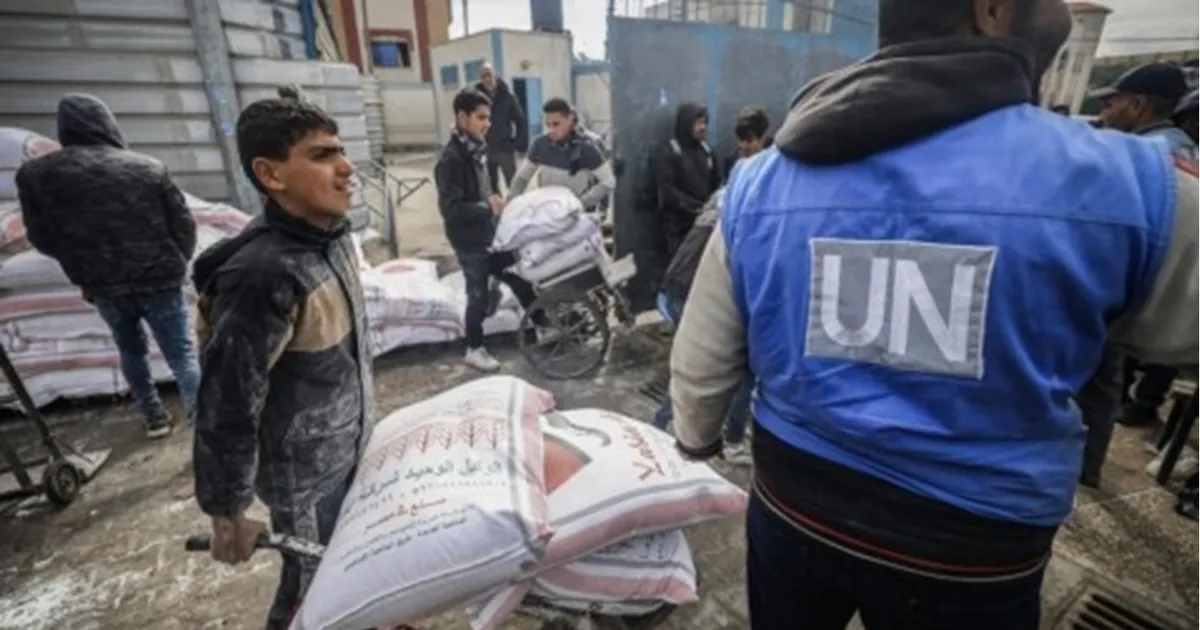
Human Rights Organization Accuses 'UNRWA' of Succumbing to Occupation After Dismissing 70 Employees in Gaza
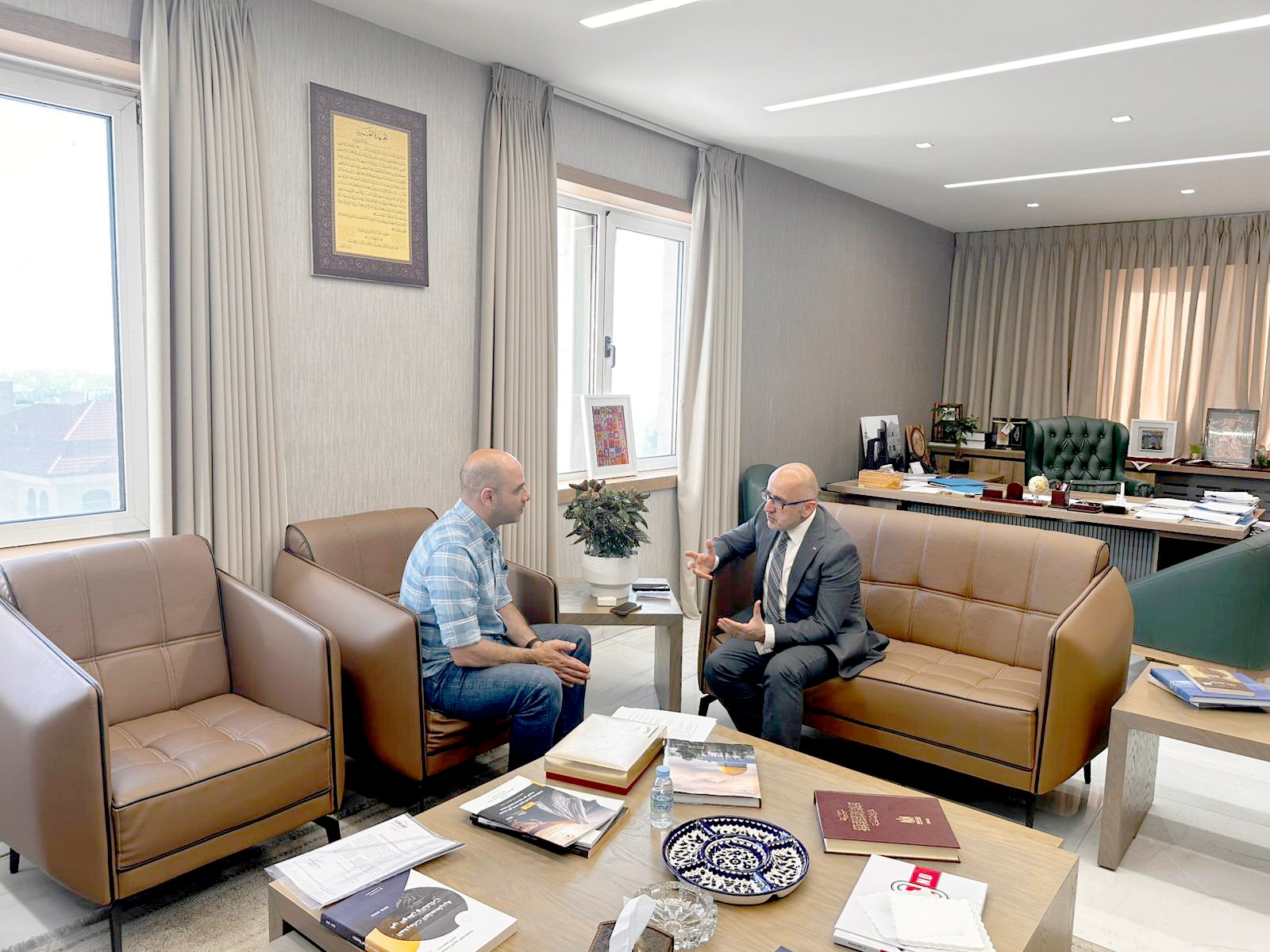
Minister of Finance and Planning Dr. Estefan Salameh in a special meeting with "Al-Quds": "Yaboos" is the nucleus of an integrated digital government portfolio that will be a lever for community resilience
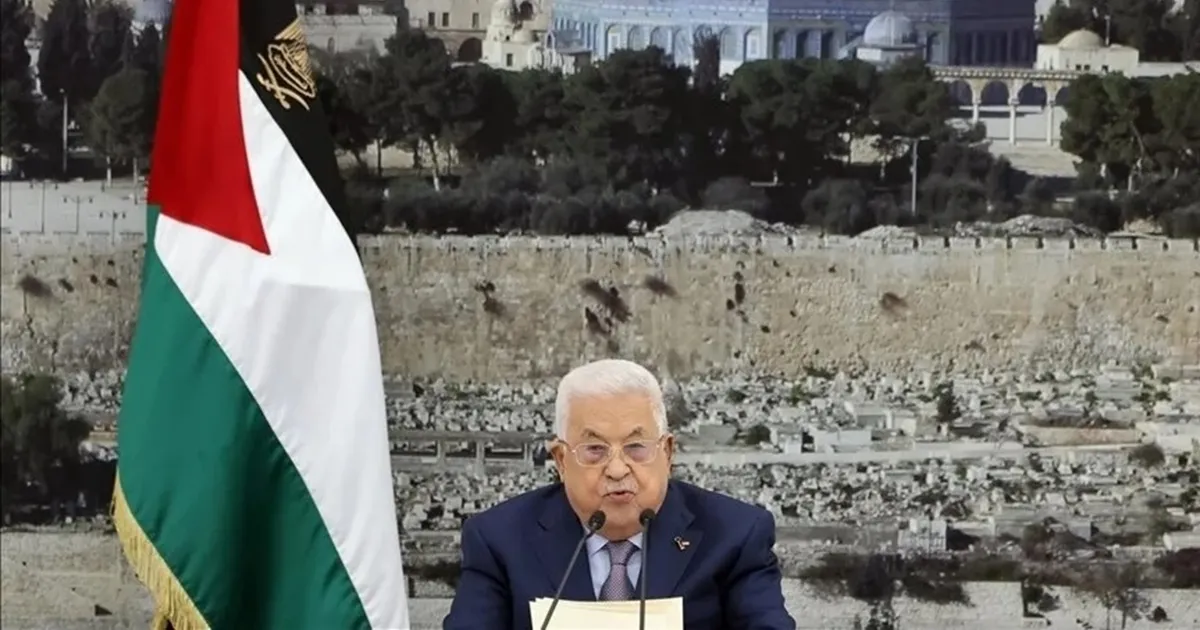
Erosion of Powers and Legitimacy: The Palestinian Authority Facing the New Civil Administration
Share your opinion
The head of the German mission to the Palestinian Authority, in an interview with Al-Quds before the end of his mission: The Palestinians have the right to self-determination.